
Refractive Errors Explained: Myopia, Hyperopia, Astigmatism, and Presbyopia

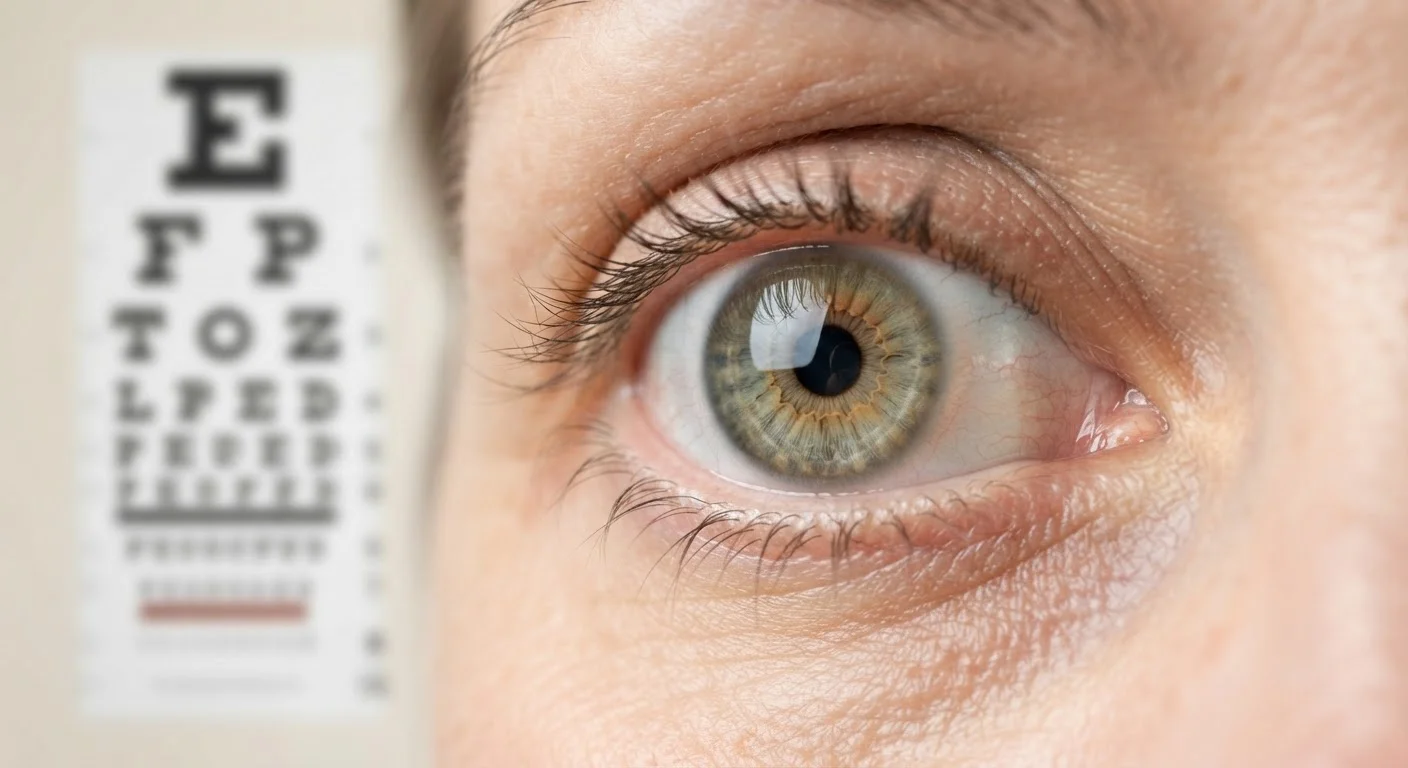
Photo: HerbHealWellness.com | Modern Guide To Wellness editorial
What Is a Refractive Error?
A refractive error occurs when the eye cannot bend — or refract — incoming light precisely onto the retina, the light-sensitive layer at the back of the eye. The result is blurred or distorted vision at some or all distances. Refractive errors are not diseases; they are optical mismatches between the shape of the eye, the curvature of the cornea, or the flexibility of the eye's lens.
They are also extremely common. The four main types — myopia, hyperopia, astigmatism, and presbyopia — can occur in isolation or in combination. Most are straightforwardly correctable with glasses, contact lenses, or refractive surgery. For a broader look at how correction works, see Glasses, Contact Lenses, and Surgery: Navigating Your Vision Correction Choices.
| Conditions covered | Myopia, Hyperopia, Astigmatism, Presbyopia |
| Global prevalence (myopia) | Affects roughly 30% of the world's population (World Health Organization estimates) |
| Age presbyopia typically begins | Around age 40 (American Academy of Ophthalmology) |
| Primary diagnosis method | Comprehensive eye examination with refraction test |
| Common correction approaches | Glasses, contact lenses, refractive surgery |
The Four Main Types at a Glance
Myopia (Nearsightedness)
Myopia occurs when the eyeball is slightly too long or the cornea is too curved, causing light to focus in front of the retina rather than on it. Distant objects appear blurry while close objects remain clear. Symptoms often include squinting to see faraway objects, eye strain, and headaches after activities such as driving or watching a screen across the room. Myopia typically emerges in childhood and may progress into the mid-20s.
Hyperopia (Farsightedness)
Hyperopia is essentially the opposite: the eyeball is too short or the cornea has too little curvature, so light focuses behind the retina. Mild hyperopia can go unnoticed because a young, flexible lens can compensate — but this compensation causes eye strain and headaches, particularly during prolonged near tasks such as reading. Severe hyperopia can blur vision at all distances.
Astigmatism
Astigmatism results from an irregularly shaped cornea or lens — more oval than spherical — that causes light to focus at two points rather than one. This produces blurring or distortion at any distance, along with halos around lights at night and general eye fatigue. Astigmatism frequently coexists with myopia or hyperopia.
Presbyopia
Presbyopia is an age-related refractive change rather than a structural abnormality. From around age 40, the eye's natural lens gradually stiffens and loses its ability to shift focus between near and far objects — a process called accommodation. The hallmark symptom is difficulty reading small print at a comfortable arm's length. Presbyopia is universal; virtually everyone experiences it to some degree with age.
Refraction
The bending of light as it passes through the eye's optical structures — the cornea and lens — to reach the retina. Accurate refraction is required for clear vision.
Myopia
A refractive error in which distant objects appear blurry because light focuses in front of the retina, typically due to an elongated eyeball or overly curved cornea.
Hyperopia
A refractive error in which nearby objects are harder to see clearly because light focuses behind the retina, associated with a shorter-than-average eyeball or flat cornea.
Astigmatism
A refractive error caused by an uneven curvature of the cornea or lens, resulting in blurred or distorted vision at multiple distances.
Presbyopia
An age-related loss of the eye's ability to focus on near objects, caused by the gradual stiffening of the natural lens. It typically becomes noticeable after age 40.
Accommodation
The eye's automatic ability to adjust its focus between near and far objects by changing the shape of the crystalline lens. This capacity diminishes with age, leading to presbyopia.
Retina
The light-sensitive tissue lining the back of the eye that converts incoming light into nerve signals sent to the brain, producing vision.
Recognizing Symptoms and Knowing When to Act
Blurry vision is the most obvious shared symptom across all four refractive errors, but the pattern matters. Ask yourself: Is blurring worse up close, at a distance, or at all distances? Does it worsen in dim light? Are you developing headaches after visually demanding tasks? These distinctions help an eye care professional identify which refractive error — or combination — is present.
~2.2 billion
People worldwide with a vision impairment
According to the World Health Organization, at least 1 billion of these cases involve refractive errors that have not been corrected.
~40
Age (years) when presbyopia typically becomes noticeable
The American Academy of Ophthalmology notes that the lens stiffening behind presbyopia is a universal aging process affecting virtually all adults.
Regular comprehensive eye exams are the most reliable way to detect and measure refractive errors, often before significant symptoms appear. The Eye Exam & Prevention hub outlines how often different age groups should be examined. For children in particular, undetected refractive errors can affect learning and development, making routine pediatric screening essential — see Children's Vision Problems: A Parent's Reference for more detail on related issues to watch for.
Refractive Errors Are Not Eye Disease
This article is for general informational purposes only and does not constitute medical advice. Always consult a qualified eye care professional for evaluation and guidance specific to your vision health.
The content on this site is for informational purposes only and is not a substitute for professional advice. Always consult a qualified professional for guidance specific to your situation.