
Children's Vision Problems: A Parent's Reference From Amblyopia to Strabismus

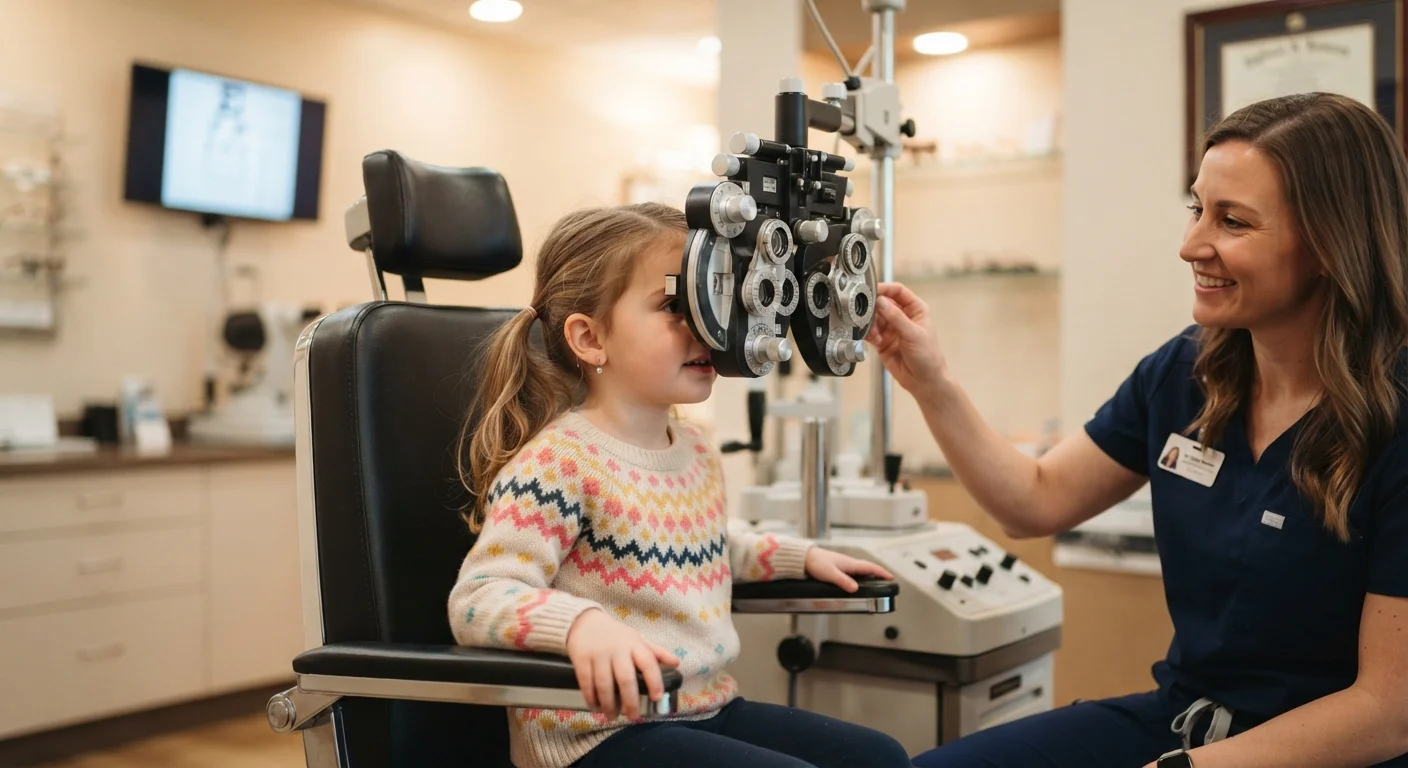
Photo: HerbHealWellness.com | Modern Guide To Wellness editorial
Why Childhood Vision Problems Demand Early Attention
A child's visual system is still developing through roughly the first decade of life. During this period — often called the critical window — the brain is actively learning to interpret signals from both eyes. Conditions that interfere with clear, aligned vision during this time can have lasting consequences if not identified and treated promptly.
The challenge for parents is that many children do not complain about vision problems; they simply assume their experience is normal. Conditions like amblyopia can progress silently, which is why routine professional evaluation is essential. As discussed in our article on silent vision loss, the absence of obvious symptoms does not mean the eyes are healthy.
| Prevalence of amblyopia | Affects approximately 2–3% of children (American Academy of Ophthalmology) |
| Strabismus prevalence | Occurs in about 4% of children under age 6 (National Eye Institute) |
| Critical window for treatment | Visual system most responsive before age 7–8 (American Association for Pediatric Ophthalmology and Strabismus) |
| Children with undetected vision problems | 1 in 4 school-age children estimated to have a vision issue (American Optometric Association) |
| First recommended eye exam | Between 6 and 12 months of age (American Optometric Association) |
The Most Common Conditions: A Quick-Reference Overview
The following are the conditions pediatric eye specialists most frequently diagnose and manage. Understanding each one helps parents recognize warning signs and advocate for timely care.
Amblyopia
Often called 'lazy eye,' amblyopia is a condition where one eye develops weaker vision because the brain favors the other eye. Without treatment during childhood, the affected eye may never reach normal visual acuity.
Strabismus
A misalignment of the eyes in which one or both eyes turn inward, outward, upward, or downward. It can be constant or intermittent and may lead to amblyopia if left untreated.
Refractive Error
An imperfection in the eye's shape that prevents light from focusing correctly on the retina, resulting in blurry vision. Common types include myopia, hyperopia, and astigmatism.
Visual Acuity
A measure of the eye's ability to distinguish fine detail, typically expressed as a fraction (e.g., 20/20). It is one of the primary measures assessed during an eye examination.
Occlusion Therapy
A treatment for amblyopia that involves patching the stronger eye for prescribed periods to encourage the weaker eye to work harder and develop stronger neural connections.
Convergence Insufficiency
A condition where the eyes have difficulty working together when looking at near objects, causing eye strain, double vision, or difficulty reading.
Amblyopia (Lazy Eye)
Amblyopia develops when the brain suppresses vision from one eye, often because that eye has a significantly stronger refractive error, is misaligned (strabismus), or is obstructed (for example, by a drooping eyelid). Treatment typically involves correcting the underlying cause with glasses and using occlusion therapy to stimulate the weaker eye. Earlier intervention generally produces better outcomes.
Strabismus (Crossed or Wandering Eyes)
When the eyes do not point in the same direction simultaneously, one eye may turn inward (esotropia), outward (exotropia), upward, or downward. Strabismus can cause double vision or, over time, amblyopia. Treatment options range from corrective lenses and prism glasses to patching or eye muscle surgery, depending on the type and severity. Parents who notice a child's eyes drifting — even occasionally — should arrange an evaluation without delay.
Refractive Errors in Children
Myopia (nearsightedness), hyperopia (farsightedness), and astigmatism affect millions of children. Myopia in particular has become more prevalent over recent decades. A child who squints at the board, holds books very close, or complains of headaches after reading may have an uncorrected refractive error. Our plain-language guide to refractive errors covers how each type affects vision and daily life.
Convergence Insufficiency
This binocular vision disorder is a common but underdiagnosed cause of reading difficulty. Children may report words blurring or doubling on the page, lose their place while reading, or experience eye fatigue. It is often missed because standard distance-acuity screenings do not assess near-vision coordination. A comprehensive eye exam that includes binocular vision testing is needed to identify it.
2–3%
Children affected by amblyopia
According to the American Academy of Ophthalmology, amblyopia is the leading cause of vision loss in children.
1 in 4
School-age children with a vision problem
The American Optometric Association estimates that a significant portion of children have an undetected vision issue affecting learning.
Warning Signs Parents Should Not Ignore
Because children rarely describe visual symptoms the way adults do, behavioral and physical cues become the primary signals. Seek a professional eye evaluation if you observe any of the following:
- One or both eyes appearing turned, crossed, or wandering — even intermittently
- Squinting, excessive blinking, or frequent eye rubbing
- Tilting the head or closing one eye when looking at things
- Holding reading material unusually close or far away
- Complaints of headaches, double vision, or tired eyes after reading or screen use
- Difficulty tracking moving objects or poor hand-eye coordination
- A white or grayish reflection in the pupil in photographs (this warrants urgent evaluation)
Vision Screening vs. Comprehensive Eye Exam
Children who have a family history of amblyopia, strabismus, or significant refractive error face a higher baseline risk and may benefit from earlier or more frequent examinations. Consult a pediatric optometrist or ophthalmologist to determine the right schedule. Our eye exam frequency guide outlines recommendations by age and risk factor.
This article is for general informational purposes only and does not constitute medical advice. If you have concerns about your child's vision or eye health, please consult a qualified eye care professional or your child's pediatrician.
The content on this site is for informational purposes only and is not a substitute for professional advice. Always consult a qualified professional for guidance specific to your situation.