
LASIK vs. PRK: Understanding the Two Most Common Laser Eye Surgeries

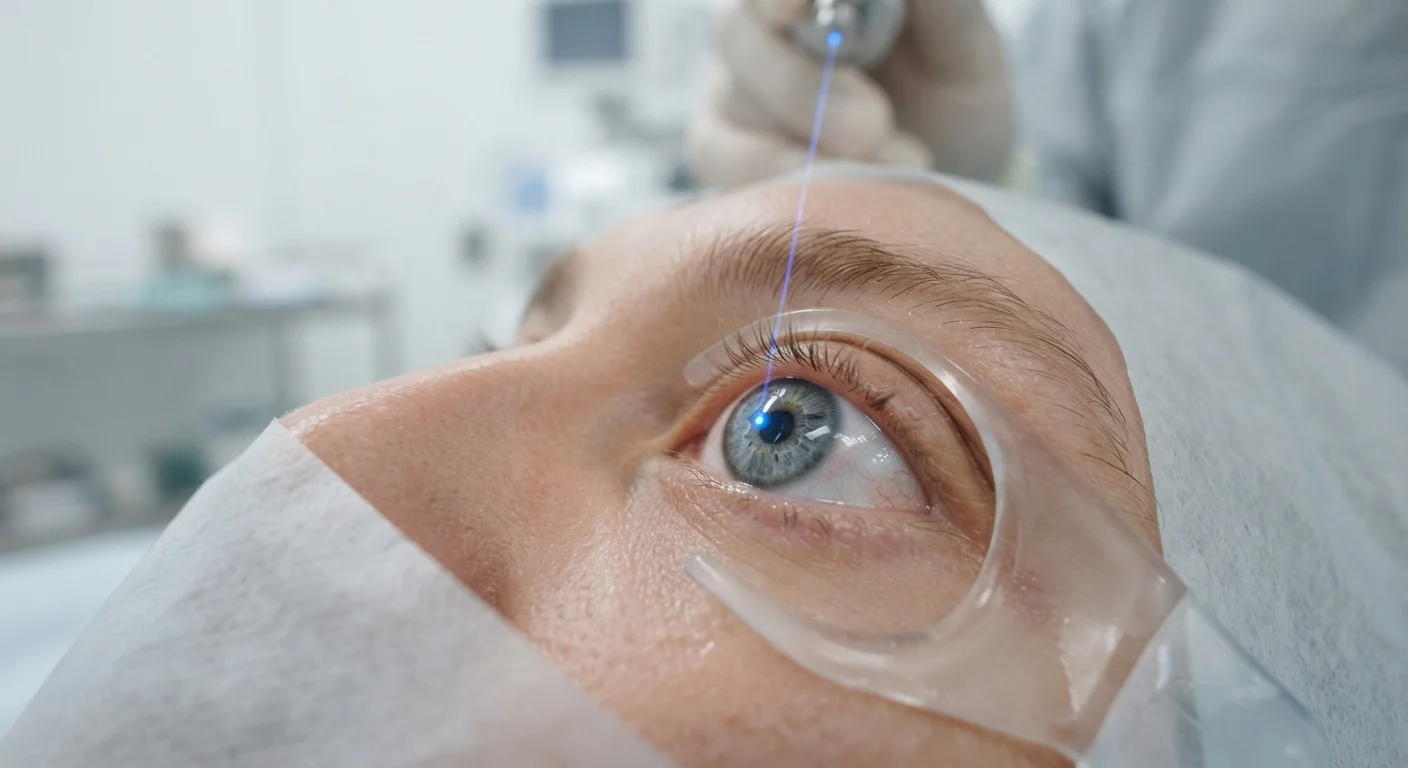
Photo: HerbHealWellness.com | Modern Guide To Wellness editorial
Key Takeaways
- Both LASIK and PRK use an excimer laser to reshape the cornea and correct refractive errors such as myopia, hyperopia, and astigmatism.
- LASIK creates a thin corneal flap before laser treatment; PRK removes the outer epithelial layer entirely, with no flap involved.
- LASIK typically offers faster visual recovery—often within 24–48 hours—while PRK recovery takes several days to weeks.
- PRK may be preferred for patients with thin corneas, dry eyes, or high-impact lifestyles where flap dislodgement is a concern.
- Long-term visual outcomes for LASIK and PRK are generally comparable in suitable candidates.
- A comprehensive eye exam and consultation with an ophthalmologist are essential before choosing either procedure.
How Each Procedure Works
Both LASIK (Laser-Assisted In Situ Keratomileusis) and PRK (Photorefractive Keratectomy) correct refractive errors by reshaping the cornea—the clear front surface of the eye—using a precisely calibrated excimer laser. The critical difference lies in how the surgeon accesses the corneal tissue before that laser is applied.
In LASIK, a thin flap is created in the outer corneal tissue using either a microkeratome blade or a femtosecond laser. The surgeon lifts this flap, applies the excimer laser to reshape the underlying stroma, and then repositions the flap. It acts as a natural bandage, which is why visual recovery is swift.
In PRK, there is no flap. Instead, the surgeon removes the cornea's outer epithelial layer entirely. The laser then reshapes the exposed stromal surface. Over the following days, the epithelium regenerates naturally. A bandage contact lens is placed on the eye after surgery to protect the surface during healing.
For a broader look at how these procedures fit within the full spectrum of vision correction, see Glasses, Contact Lenses, and Surgery: Navigating Your Vision Correction Choices.
| Criterion | LASIK | PRK |
|---|---|---|
| Tissue access method | Corneal flap created | Epithelium removed, no flap |
| Visual recovery speed | 24–48 hours | Several days to weeks |
| Initial discomfort | Mild, short-lived | Moderate, 3–5 days |
| Corneal thickness required | More (flap needs depth) | Less (no flap created) |
| Dry eye impact | Higher short-term risk | Generally lower risk |
| Trauma/displacement risk | Small long-term flap risk | No flap, no displacement risk |
| Long-term visual outcomes | Comparable in suitable patients | Comparable in suitable patients |
Recovery, Comfort, and Candidacy
Recovery timelines differ meaningfully. LASIK patients typically notice significantly improved vision within 24 to 48 hours. Mild discomfort, light sensitivity, and halos around lights are common in the first day or two but usually resolve quickly. PRK involves a longer healing window: initial discomfort can last three to five days while the epithelium regrows, and vision may fluctuate for several weeks before stabilizing.
Not every patient qualifies for LASIK. Surgeons evaluate corneal thickness, pupil size, prescription stability, tear production, and overall ocular health before recommending a procedure. Patients whose corneas are too thin for safe flap creation—or who have conditions such as keratoconus—may find PRK is the only viable laser option. Those with moderate to severe dry eye may also be directed toward PRK, as LASIK temporarily reduces corneal nerve sensitivity and can intensify dry eye symptoms in the early postoperative period.
~96%
Patient satisfaction rate for laser vision correction
Large-scale studies and systematic reviews consistently report patient satisfaction rates at or above 95% for both LASIK and PRK in appropriately selected candidates.
700,000+
LASIK procedures performed annually in the US
The American Refractive Surgery Council has reported that approximately 700,000 LASIK procedures are performed each year in the United States.
People in high-contact occupations or sports should discuss trauma risk with their surgeon. Because the LASIK flap never fully adheres with the strength of native tissue, a significant blow to the eye can, in rare cases, displace it years after surgery. PRK carries no such risk.
If you are unsure which factors determine your eligibility, Am I a Candidate for Laser Eye Surgery? outlines the clinical criteria ophthalmologists use to assess suitability. And if neither LASIK nor PRK turns out to be appropriate, Surgical Vision Correction Beyond LASIK covers additional options worth exploring with your care team.
This article is for informational purposes only and is not a substitute for professional medical advice, diagnosis, or treatment. Always consult a qualified ophthalmologist or eye care provider before making decisions about vision correction surgery.
The content on this site is for informational purposes only and is not a substitute for professional advice. Always consult a qualified professional for guidance specific to your situation.