
Blood Glucose Meters vs Continuous Glucose Monitors: How Each Tracks Blood Sugar

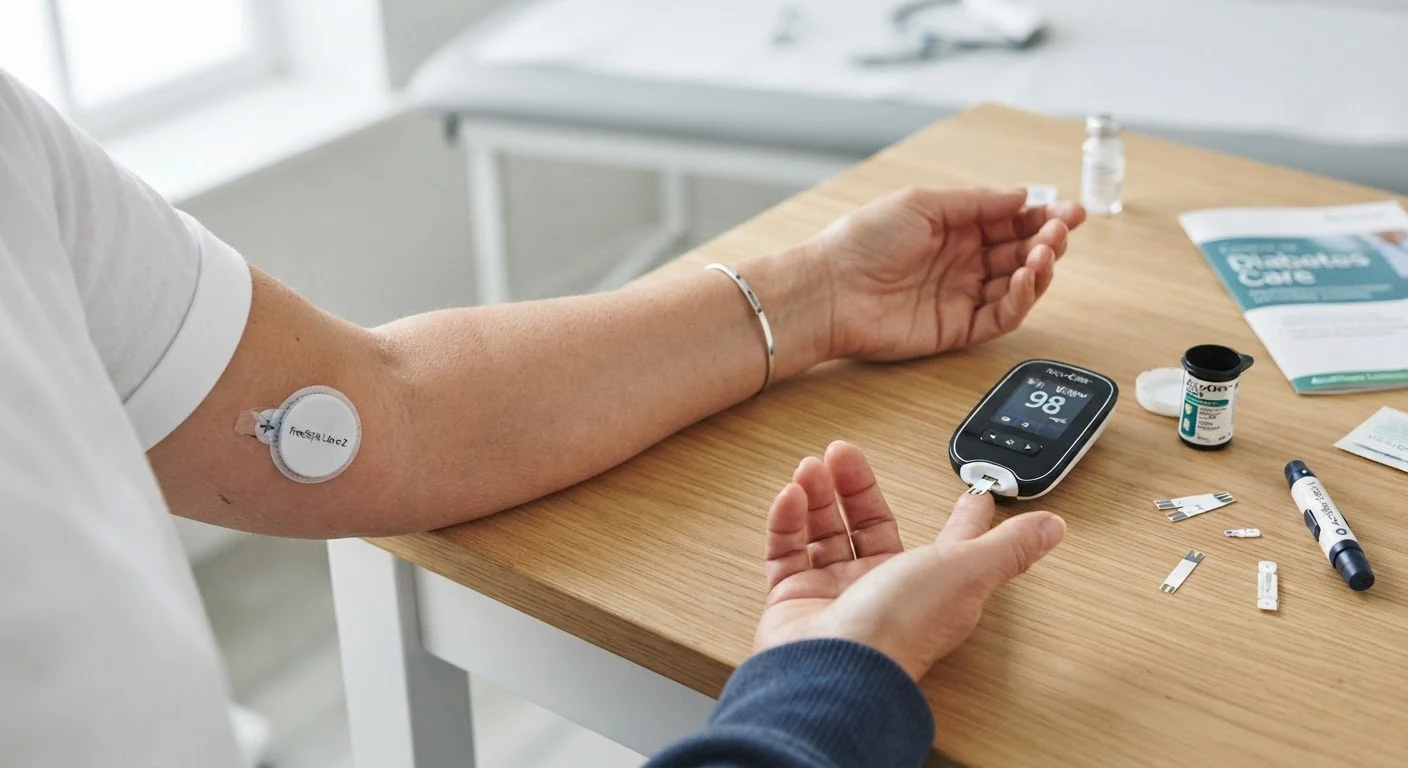
Photo: HerbHealWellness.com | Modern Guide To Wellness editorial
Key Takeaways
- Blood glucose meters measure glucose in a blood sample; CGMs measure glucose in interstitial fluid beneath the skin.
- BGMs provide a single snapshot in time; CGMs generate readings every one to five minutes continuously.
- CGM data includes trend arrows showing whether glucose is rising, falling, or stable — information a BGM cannot provide.
- BGMs are generally less expensive upfront; CGMs carry higher ongoing costs but reduce daily fingerprick burden.
- Both devices are regulated by the FDA, but they have distinct accuracy standards and clinical use cases.
- Always consult a healthcare professional to determine which monitoring approach suits your individual health situation.
How Each Technology Works
Blood glucose meters (BGMs) and continuous glucose monitors (CGMs) both measure glucose — but they analyze different biological fluids using fundamentally different mechanisms.
A BGM uses electrochemical detection. The user lances a fingertip, places a small blood droplet on a test strip, and the strip's enzyme (typically glucose oxidase) reacts with glucose in the blood. The resulting electrical current is converted into a milligrams-per-deciliter (mg/dL) reading in seconds. The process directly samples capillary blood, which is considered the clinical reference standard for glucose concentration.
A CGM uses a tiny subcutaneous sensor — a flexible filament inserted just beneath the skin — to measure glucose in interstitial fluid, the fluid surrounding tissue cells. A transmitter attached to the sensor sends data wirelessly to a receiver or smartphone every one to five minutes. Because interstitial glucose lags behind blood glucose by roughly five to fifteen minutes, CGM readings may diverge from fingerstick values during periods of rapid glucose change, such as after a meal or during exercise. See how CGM sensors measure glucose in real time for a deeper look at the underlying technology.
| Criterion | Blood Glucose Meter | Continuous Glucose Monitor |
|---|---|---|
| Fluid sampled | Capillary blood | Interstitial fluid |
| Reading frequency | On demand (manual) | Every 1–5 minutes automatically |
| Trend data | None | Yes — direction and rate arrows |
| Sensor wear period | No sensor; single-use strip | 7–15 days per sensor |
| Fingerprick required | Every reading | Rarely or never (device-dependent) |
| Typical accuracy metric | ISO 15197 (±15%) | MARD ~8–10% |
| Upfront cost | Lower | Higher |
| Hypoglycemia alerts | None | Yes — audible or vibration alerts |
Data Output: Snapshot vs. Stream
The most clinically meaningful difference between the two devices is the type of information they provide.
A BGM delivers a single data point: your glucose concentration at the exact moment of the test. That number is valuable but context-free — it cannot tell you whether glucose is rapidly rising after breakfast or slowly drifting down toward hypoglycemia.
CGMs generate a continuous data stream and display trend arrows indicating the direction and rate of glucose change. A reading of 110 mg/dL with a rapidly falling arrow carries entirely different clinical implications than a stable 110 mg/dL. This dynamic information helps clinicians and patients make more timely decisions around meals, activity, and medication timing.
~288
Daily CGM readings per 24 hours
A CGM reading every 5 minutes produces approximately 288 data points per day, compared to the handful of fingerstick checks most people perform.
5–15 min
Interstitial fluid glucose lag time
Research published in diabetes technology literature notes that interstitial glucose typically lags behind blood glucose by five to fifteen minutes during rapid changes.
~8–10%
MARD for current-generation CGMs
Mean absolute relative difference figures for FDA-cleared CGM devices from major manufacturers have generally fallen in the 8–10% range in clinical evaluations.
CGMs also produce ambulatory glucose profiles (AGPs) — standardized reports summarizing glucose variability, time-in-range, and hypoglycemia exposure over days or weeks. These reports have become a recognized tool for diabetes management review. BGMs can generate logbooks of individual readings, but they cannot replicate trend analysis without very frequent manual testing.
For a broader overview of devices that track vital health metrics at home, the field guide to home health monitoring devices provides useful context.
Accuracy, Calibration, and Clinical Use
The FDA evaluates both device types under distinct accuracy frameworks. BGMs are assessed against ISO 15197 standards, which require that 95% of readings fall within 15 mg/dL of a laboratory reference value (for readings below 100 mg/dL) or within 15% (for higher readings). Modern BGMs from cleared manufacturers generally meet or exceed these thresholds when used correctly.
CGMs are evaluated for mean absolute relative difference (MARD) against venous or capillary reference values. MARD figures for current-generation devices typically range from approximately 8% to 10%, though accuracy can be affected by sensor placement, hydration status, certain medications, and periods of rapid glucose change.
Some CGM systems are cleared as iCGM (integrated CGM), meaning their data can be used to drive automated insulin delivery systems without routine fingerstick confirmation. Others still recommend periodic BGM verification. Clinicians determine which approach is appropriate based on the patient's condition, therapeutic goals, and the specific devices involved.
iCGM Designation and Automated Insulin Delivery
You can explore how these two approaches compare in practice at CGMs vs. traditional fingerstick testing, which covers trade-offs relevant to conversations with your care team.
This article is for informational purposes only and does not constitute medical advice. Consult a qualified healthcare professional before making any decisions about glucose monitoring or diabetes management.
The content on this site is for informational purposes only and is not a substitute for professional advice. Always consult a qualified professional for guidance specific to your situation.