
Continuous Glucose Monitors vs. Traditional Fingerstick Testing

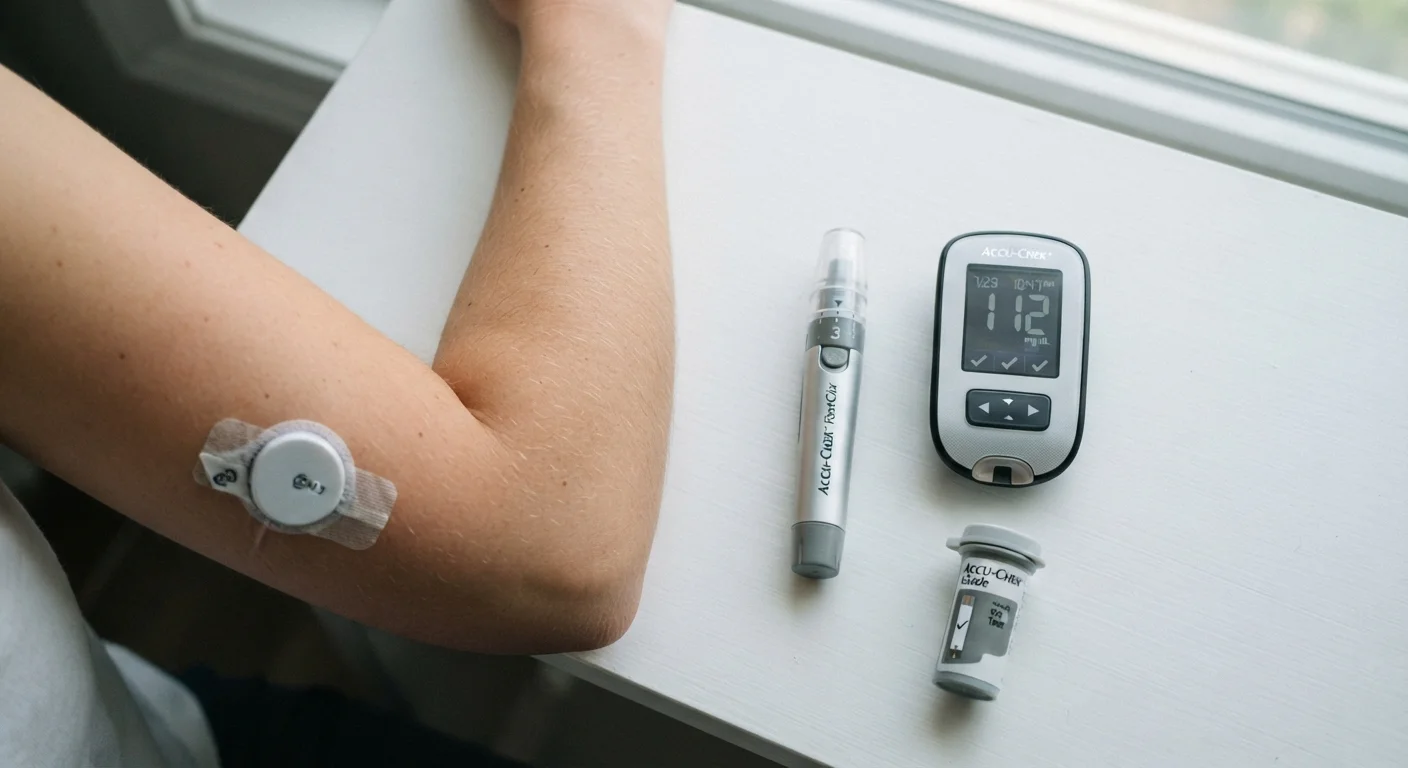
Photo: HerbHealWellness.com | Modern Guide To Wellness editorial
Key Takeaways
- CGMs measure glucose continuously in interstitial fluid; fingerstick meters measure glucose directly in capillary blood.
- CGMs provide trend data and alerts, while fingerstick testing delivers a precise single-point reading.
- Fingerstick meters are generally less expensive upfront; CGMs carry higher ongoing costs but may reduce testing burden.
- CGM accuracy can lag behind blood glucose by up to 10–15 minutes due to interstitial fluid dynamics.
- Both methods require calibration awareness and proper technique to produce reliable readings.
- Always consult a healthcare provider to determine which monitoring approach suits your clinical situation.
How Each Device Measures Glucose
Blood glucose monitoring is a cornerstone of diabetes management, and the method you use shapes both the quantity and quality of data you receive. Understanding how each device works helps frame every other comparison. For a broader look at what home monitoring devices measure, see our guide to home health monitoring devices.
Fingerstick meters analyze a small drop of capillary blood obtained by pricking the fingertip with a lancet. The blood is applied to a test strip containing glucose-oxidase enzymes; an electrochemical reaction produces a current proportional to glucose concentration, and the meter converts this into a milligrams-per-deciliter (mg/dL) reading within seconds. The result reflects glucose in whole blood at that precise moment.
Continuous glucose monitors (CGMs) use a small filament sensor inserted just beneath the skin — typically on the abdomen or upper arm — to measure glucose in interstitial fluid (the fluid surrounding cells in tissue) rather than blood. The sensor transmits readings to a receiver or smartphone app every few minutes, creating a rolling graph of glucose levels over time. Because glucose must diffuse from blood into interstitial fluid, CGM readings can lag blood values by roughly 10–15 minutes. For a deeper look at the underlying technology, see the science behind continuous glucose monitoring.
| Criterion | CGM | Fingerstick Meter |
|---|---|---|
| What it measures | Interstitial fluid glucose | Capillary blood glucose |
| Reading frequency | Every 1–5 minutes, automated | On demand, manually initiated |
| Data type | Continuous trend with alerts | Single point-in-time value |
| Lag time | Up to 10–15 minute lag possible | Reflects current blood glucose immediately |
| Typical wear / replacement | Sensor every 7–14 days | New strip and lancet each use |
| Upfront cost | Higher (reader + sensors) | Lower (meter + strips) |
| Skin puncture per day | One insertion per sensor period | One prick per test (often 2–4/day) |
| Alerts and alarms | Yes — high, low, rapid change alerts | No automated alerts |
Data Depth: Single Points vs. Continuous Trends
The most meaningful functional difference between these two approaches is the type of data they generate. Fingerstick testing produces discrete snapshots — accurate and actionable in the moment, but unable to reveal what happened between readings. A person testing four times daily may still miss significant overnight lows or the sharp rise that follows a particular meal.
CGMs generate a continuous data stream that clinicians and patients can review as a graph, identifying patterns that isolated checks would never capture. Metrics like Time in Range (TIR) — the percentage of time glucose stays within a target band — have become clinically meaningful benchmarks supported by diabetes care guidelines, and they are only calculable with continuous data. CGMs can also trigger alerts when glucose rises or falls rapidly, providing a safety layer that fingerstick tests cannot.
~70%
Target Time in Range for most adults with diabetes
The American Diabetes Association recommends that most adults with diabetes spend at least 70% of the day with glucose between 70–180 mg/dL, a metric only CGMs can directly calculate.
<10%
MARD achieved by leading CGM systems
Several FDA-cleared CGM sensors have demonstrated mean absolute relative differences below 10% compared to laboratory reference values in clinical validation studies.
4–8x
More daily readings with CGM vs. fingerstick
A CGM generating a reading every five minutes produces 288 data points per day, compared to the typical 4–8 fingerstick checks most patients perform.
That said, trend data does not automatically translate to better outcomes without proper education on how to interpret and act on it. A detailed comparison of how glucose meters and CGMs differ in clinical use offers additional clinical context on data interpretation.
Practical Considerations: Cost, Access, and Accuracy
Both methods carry important practical trade-offs that go beyond how they measure glucose.
Cost and Coverage
Fingerstick meters themselves are relatively inexpensive, but ongoing costs — test strips and lancets — add up, particularly for those testing multiple times daily. CGM systems carry a higher upfront cost, and sensors typically need replacing every 7–14 days depending on the device. Insurance coverage for CGMs has expanded significantly for people with Type 1 diabetes and insulin-using Type 2 patients, but coverage remains inconsistent for broader populations. Verifying coverage with your insurer and care team before adopting a CGM is an important practical step.
Accuracy and Reliability
Fingerstick meters approved by the U.S. Food and Drug Administration (FDA) must generally fall within 15% of a laboratory reference value for most readings. CGM accuracy is typically expressed as Mean Absolute Relative Difference (MARD) — many current systems achieve MARD values below 10%, which is clinically acceptable. However, CGM accuracy can be affected by rapid glucose change, sensor placement, hydration, and certain medications. Some clinical situations still call for a confirmatory fingerstick reading even when a CGM is in use.
When Fingerstick Confirmation Is Still Recommended
CGM sensors also qualify as wearable diagnostic tools — for context on how wearable sensors fit into the broader monitoring landscape, see our article on wearable diagnostic sensors in everyday clinical use.
This article is for general informational purposes only and does not constitute medical advice. Always consult a qualified healthcare professional regarding your glucose monitoring needs, device selection, and diabetes management plan.
The content on this site is for informational purposes only and is not a substitute for professional advice. Always consult a qualified professional for guidance specific to your situation.