
The Science Behind Continuous Glucose Monitoring

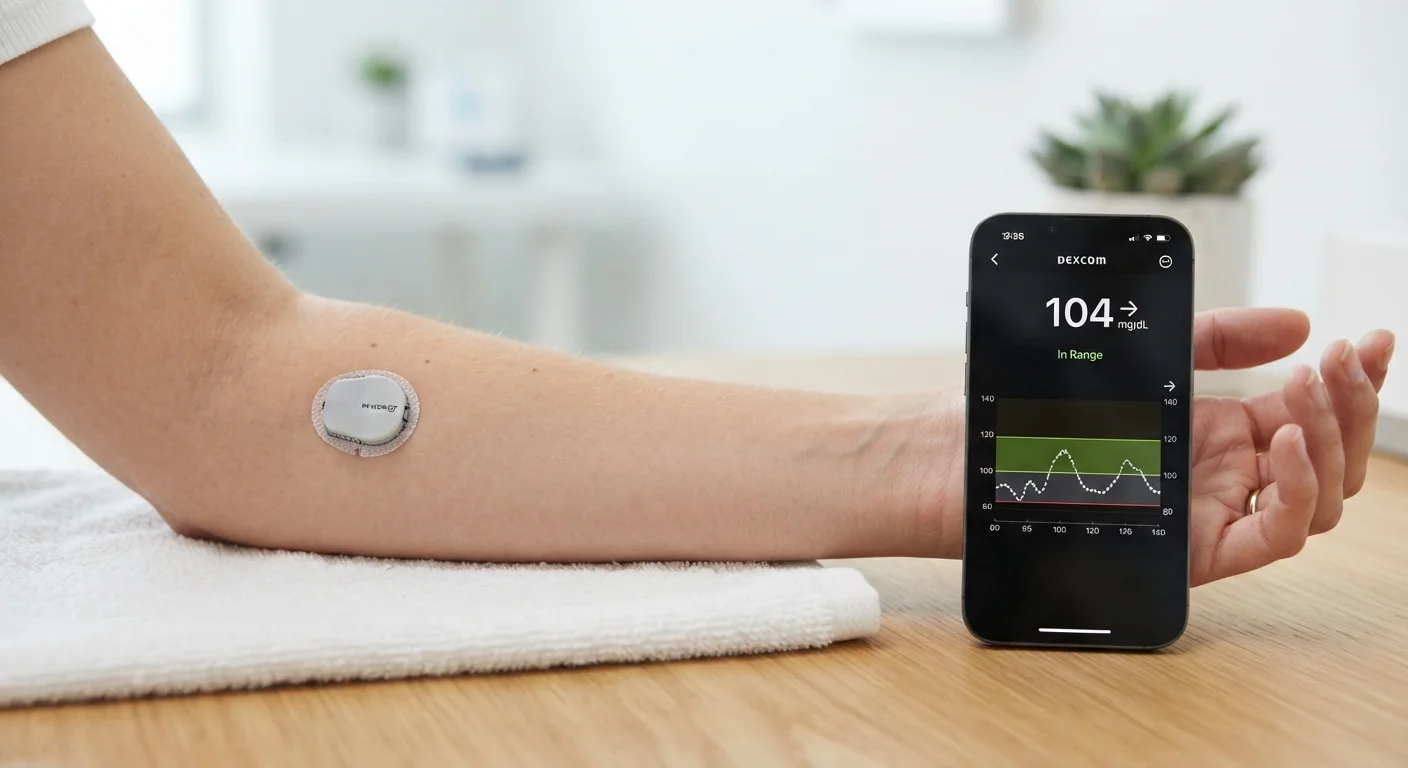
Photo: HerbHealWellness.com | Modern Guide To Wellness editorial
Key Takeaways
- CGM sensors measure glucose in interstitial fluid, not directly in blood.
- Electrochemical reactions at the sensor tip convert glucose concentration into electrical signals.
- A physiological lag means CGM readings may trail blood glucose by 5–15 minutes.
- Accuracy is assessed using a metric called Mean Absolute Relative Difference (MARD).
- CGMs require FDA clearance or approval and are used in both clinical and personal health contexts.
- Always consult a healthcare provider to interpret CGM data and guide any treatment decisions.
From Fingerstick to Continuous: The Core Idea
Traditional blood glucose meters give a single reading at a single moment — useful, but limited. A continuous glucose monitor changes the paradigm by generating a data stream: a new reading every one to five minutes, around the clock. The result is not just a number but a trend — whether glucose is rising quickly, falling, or holding steady — which is clinically meaningful information a snapshot cannot provide.
CGMs are part of a broader ecosystem of wearable health sensors. For context on how they fit alongside other monitoring technologies, see our overview of wearable diagnostic sensors.
5–15 min
Physiological lag between blood and interstitial glucose
This delay is an inherent characteristic of measuring glucose in interstitial fluid rather than directly in the bloodstream, and is most significant during rapid glucose changes.
~8–10%
Typical MARD for FDA-cleared CGM devices
MARD (Mean Absolute Relative Difference) is the standard accuracy metric for CGMs; lower values indicate closer agreement with reference blood glucose measurements.
7–15 days
Typical sensor wear duration before replacement
Wear life varies by device design and FDA-cleared labeling; some newer sensors are approved for up to 15 days of continuous use.
The Electrochemical Engine Inside the Sensor
The core of any CGM sensor is an electrochemical biosensor. A thin, flexible filament — typically 4 to 8 millimeters long — is inserted into the subcutaneous layer of tissue just beneath the skin, usually on the abdomen or upper arm. The tip of this filament is coated with glucose oxidase, an enzyme that catalyzes the reaction between glucose and oxygen in the surrounding interstitial fluid.
That reaction produces hydrogen peroxide as a byproduct. An electrode at the sensor tip detects this peroxide and generates a small electrical current. The sensor's electronics amplify and convert that current into a glucose concentration value using a calibration algorithm. The reading is then transmitted via Bluetooth or a near-field communication protocol to a paired receiver, smartphone, or insulin pump.
Interstitial Fluid vs. Blood Glucose
Because interstitial fluid is not blood, there is an inherent physiological delay between a change in blood glucose and when that change appears in the sensor's reading. This lag — generally 5 to 15 minutes — is most consequential when glucose is changing rapidly, such as immediately after a meal or during intense exercise.
Accuracy, Calibration, and What MARD Means
CGM accuracy is most commonly reported as Mean Absolute Relative Difference (MARD) — the average percentage difference between the CGM reading and a reference blood glucose measurement taken at the same time. A lower MARD indicates a more accurate device. Most FDA-cleared CGMs achieve MARD values in the 8–10% range under controlled study conditions, though real-world performance can vary.
Early CGM designs required users to enter fingerstick readings at regular intervals to calibrate the sensor's algorithm. Many current devices use factory calibration, eliminating routine fingersticks for most users. However, accuracy can still be affected by factors such as sensor placement, skin temperature, local compression (for example, sleeping on the sensor), certain medications including acetaminophen, and rapid changes in glucose levels.
Maximizing CGM Accuracy in Daily Use
Understanding these factors helps explain why CGM readings should always be interpreted in clinical context. For a direct comparison of how CGMs and fingerstick meters handle the same measurement task, see blood glucose meters vs. continuous glucose monitors.
Clinical Use and Regulatory Context
In the United States, CGM devices are regulated by the FDA. Depending on their intended use and demonstrated accuracy, they may be cleared as adjunctive devices — meaning CGM data supports decisions but a fingerstick confirms them — or as integrated CGMs (iCGMs), which meet stricter accuracy standards and can be used to make treatment decisions, including insulin dosing, without a confirmatory test.
CGMs are most established in the management of type 1 and type 2 diabetes, especially for people using insulin therapy. Clinical evidence supports their role in reducing episodes of hypoglycemia (dangerously low blood sugar) and improving overall glycemic control. They are also used in hospital settings and in remote patient monitoring programs that allow clinicians to track patients with chronic conditions from a distance.
Some CGMs are now available without a prescription, broadening access. Regardless of how a device is obtained, interpreting its data — and acting on it — should involve a qualified healthcare provider. CGM technology is a powerful informational tool, not a substitute for clinical judgment.
This article is for informational purposes only and does not constitute medical advice. Always consult a qualified healthcare professional before making any changes to your diabetes management or health routine.
Frequently Asked Questions
The content on this site is for informational purposes only and is not a substitute for professional advice. Always consult a qualified professional for guidance specific to your situation.