
Remote Patient Monitoring: How Clinical-Grade Tracking Works Outside the Hospital

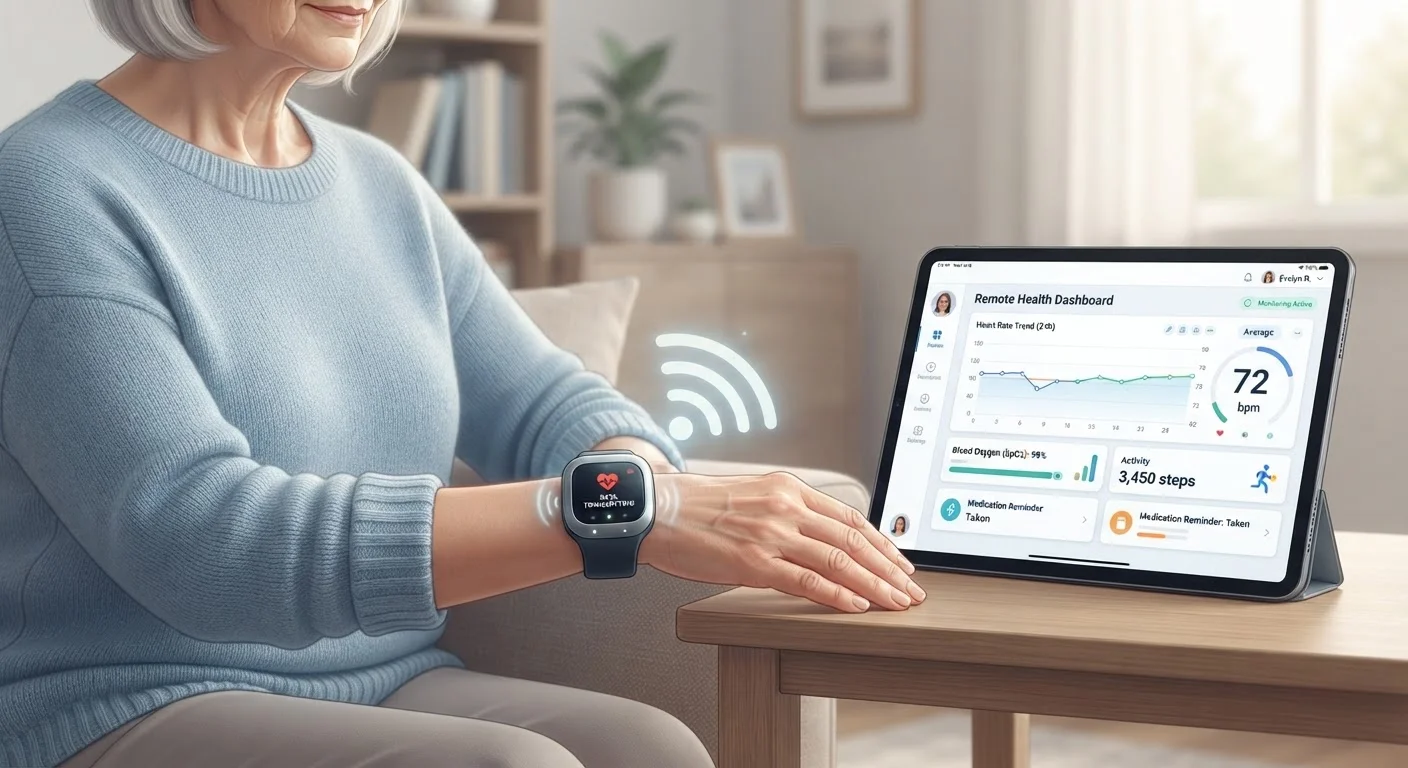
Photo: HerbHealWellness.com | Modern Guide To Wellness editorial
Key Takeaways
- RPM uses FDA-regulated devices to collect and transmit clinical data from patients' homes to their care teams.
- It is most widely used for chronic conditions like hypertension, heart failure, COPD, and diabetes.
- Data is transmitted automatically or manually through cellular, Bluetooth, or Wi-Fi connections.
- RPM differs fundamentally from consumer fitness trackers in accuracy standards and clinical accountability.
- Patients should always discuss RPM program participation and data interpretation with their healthcare provider.
What Makes RPM Different from a Fitness Tracker
The proliferation of smartwatches and wellness apps has made health tracking feel routine. But remote patient monitoring operates in a fundamentally different category. Where consumer devices prioritize convenience and general wellness trends, clinical RPM systems are designed to meet specific accuracy and reliability standards set by the U.S. Food and Drug Administration (FDA).
An FDA-cleared blood pressure cuff used in an RPM program, for example, must demonstrate validated measurement accuracy under defined conditions. That distinction matters because clinicians make treatment decisions — adjusting medications, ordering tests, escalating care — based on the data these devices generate.
RPM also involves a formal care relationship. A licensed provider reviews the transmitted data, interprets it in the context of a patient's full medical history, and responds when values fall outside agreed thresholds. Consumer wearables, by contrast, generate data that users interpret largely on their own. For a deeper look at how wearable technology bridges these two worlds, see our article on wearable diagnostic sensors.
Consumer Wellness Devices Are Not the Same as RPM
How the Technology Actually Works
A typical RPM program involves three interconnected components: a measurement device, a data transmission pathway, and a clinical review platform.
The Measurement Device
Devices vary by the condition being monitored. Common examples include:
- Blood pressure monitors — Used in hypertension and heart failure management
- Pulse oximeters — Track blood oxygen saturation, relevant for COPD and respiratory conditions
- Continuous glucose monitors (CGMs) — Subcutaneous sensors that measure interstitial glucose in near-real time for diabetes management. See how CGM technology works for a detailed explanation.
- Weight scales — Daily weight changes can signal fluid retention in heart failure patients
- Cardiac rhythm monitors — Patch-based or wearable ECG devices that detect arrhythmias
Data Transmission
Readings are transmitted — automatically in many cases — via Bluetooth to a paired smartphone app, or directly through a cellular-enabled hub device. This eliminates manual logging errors and ensures clinicians receive timely data without depending on patient recall.
Clinical Review Platform
On the provider side, data flows into a dashboard where care team members monitor trends, receive automated alerts for out-of-range readings, and document clinical responses. Some programs employ dedicated RPM nurses or care coordinators as the first point of review before escalating to the prescribing physician.
~23M
US patients expected to use RPM by the mid-2020s
Industry analyses have projected significant growth in RPM adoption as reimbursement frameworks expand and device costs decline.
38%
Reduction in heart failure readmissions in some RPM studies
Published research in journals including the Journal of the American Medical Association has associated structured RPM programs with meaningful reductions in 30-day readmission rates for heart failure patients.
2019
Year Medicare introduced dedicated RPM billing codes
The Centers for Medicare & Medicaid Services established specific reimbursement codes for RPM in 2019, accelerating clinical adoption across health systems.
Conditions RPM Is Designed to Support
RPM programs are not one-size-fits-all. They are structured around specific clinical goals tied to the condition being managed. Understanding which conditions are most commonly addressed helps patients recognize when RPM may be relevant to their own care.
Hypertension: Blood pressure readings taken at home over days or weeks give clinicians a more accurate picture than isolated office measurements, which can be affected by the stress of a clinical visit — sometimes called "white coat hypertension."
Heart failure: Daily weight monitoring and symptom tracking can identify early signs of fluid overload before they become an emergency, potentially preventing hospitalizations.
Chronic obstructive pulmonary disease (COPD): Pulse oximetry and respiratory symptom tracking allow clinicians to detect exacerbations early and intervene before they require emergency care.
Diabetes: CGM data streams provide clinicians with detailed glucose patterns that point-in-time finger-stick tests cannot capture, supporting more precise medication and lifestyle adjustments.
For readers interested in how monitoring needs shift across different life stages, the article on health monitoring devices across the lifespan offers useful context. Understanding the broader landscape of home devices is also covered in our field guide to home health monitoring devices.
Questions to Ask Before Starting an RPM Program
Current Limitations and What to Discuss with Your Provider
RPM is a significant advance in chronic disease management, but it is not without limitations that patients and clinicians must navigate together.
Data without context can mislead. A single abnormal reading does not necessarily indicate a crisis. RPM systems are most valuable when readings are interpreted as part of a trend and within a patient's broader clinical picture — something only a qualified clinician can do reliably.
Technology access is not universal. Reliable internet or cellular connectivity, a compatible smartphone, and the technical confidence to operate devices are not available to all patients. Programs must account for these disparities to avoid widening health inequities.
Alert fatigue is a real risk. When monitoring systems generate frequent alerts, care teams may become desensitized to notifications, potentially missing genuine deterioration. Program design and alert threshold calibration matter significantly.
RPM is not a substitute for clinical judgment. Devices can flag that something may be changing — they cannot diagnose a cause or determine the appropriate treatment response. For a useful comparison of what patients can realistically assess at home versus what requires clinical evaluation, see self-monitoring vs. clinical screening.
If your provider suggests enrolling in an RPM program, asking about device validation, data security, how alerts are handled, and what clinical response protocols are in place will help you participate with confidence. For guidance on building a consistent home monitoring routine, the article on setting up a home health monitoring routine offers practical steps.
This article is for general informational and educational purposes only and does not constitute medical advice. Always consult a qualified healthcare professional regarding any health condition, symptoms, or decisions about monitoring programs or treatments.
Frequently Asked Questions
The content on this site is for informational purposes only and is not a substitute for professional advice. Always consult a qualified professional for guidance specific to your situation.