
Transcranial Magnetic Stimulation: How a Non-Invasive Brain Device Works

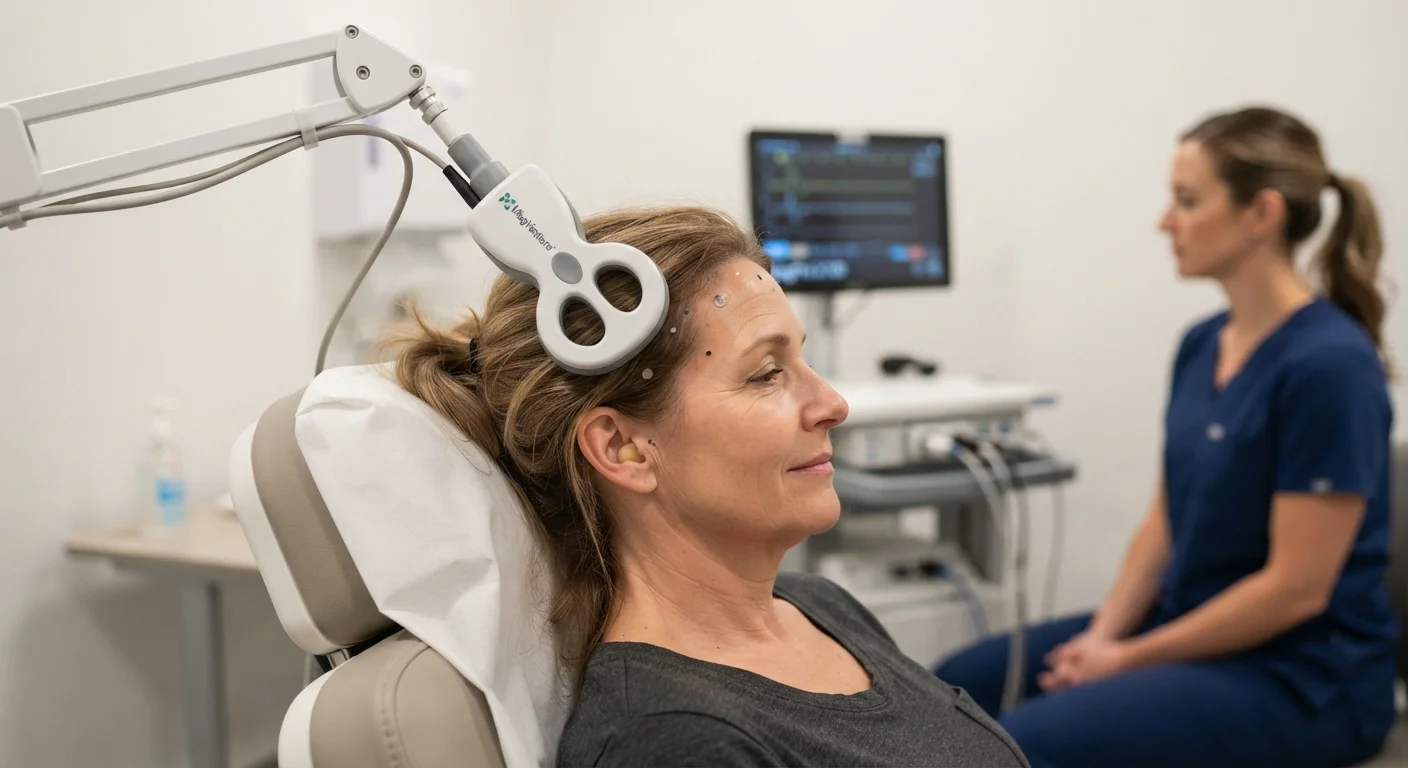
Photo: HerbHealWellness.com | Modern Guide To Wellness editorial
Key Takeaways
- TMS uses magnetic pulses — not electrical wires — to reach brain tissue through the intact skull.
- The procedure is non-invasive, meaning no surgery, cuts, or anesthesia is involved.
- The FDA has cleared TMS for major depressive disorder and obsessive-compulsive disorder, among other uses.
- Sessions typically take place in a clinical setting and are administered by trained healthcare professionals.
- TMS is distinct from electroconvulsive therapy (ECT) and does not cause seizures under standard protocols.
- Ongoing research is evaluating TMS for additional neurological and psychiatric applications.
The Core Principle: Magnetism as a Neural Tool
TMS works on a straightforward physical principle: a changing magnetic field can induce an electrical current in a nearby conductor. In the brain's case, that conductor is neural tissue. A tightly wound wire coil — held against the scalp — is energized with rapid electrical pulses, generating a magnetic field that passes through the skull and into the cortex beneath it.
Unlike implanted devices or surgical electrodes, the TMS coil never contacts brain tissue directly. The magnetic field passes through skin, bone, and cerebrospinal fluid before generating a small, localized electrical current in targeted neurons. This current is enough to depolarize neurons — essentially firing them — or to modulate their activity depending on the stimulation pattern used.
For context on how TMS compares to other stimulation-based therapies, see our overview of TENS and EMS, which use electrical rather than magnetic energy to influence nerve and muscle tissue.
TMS vs. Deep Brain Stimulation
Repetitive TMS: Turning Stimulation into Therapy
A single magnetic pulse is a research or diagnostic tool. Therapeutic use typically involves repetitive TMS (rTMS), in which pulses are delivered in structured sequences across multiple sessions. The pattern matters: high-frequency rTMS (generally 10 Hz or above) tends to increase cortical excitability, while low-frequency rTMS (around 1 Hz) may reduce it.
This ability to either up-regulate or down-regulate neural activity in specific brain regions is what makes rTMS therapeutically interesting. In major depressive disorder, for example, a region of the prefrontal cortex called the left dorsolateral prefrontal cortex (DLPFC) is commonly targeted, as activity in this area is associated with mood regulation.
~50–60%
Response rate in treatment-resistant depression
Clinical studies and meta-analyses have reported response rates in this range for rTMS in patients who have not responded to antidepressants, though results vary across studies and populations.
3 minutes
Duration of some theta burst TMS sessions
Accelerated theta burst stimulation protocols can deliver a full session in as little as three minutes, compared to 30–40 minutes for older standard rTMS protocols.
A newer variation, theta burst stimulation (TBS), delivers bursts of pulses in patterns that mimic natural brain rhythms, often in significantly shorter sessions. TBS protocols have received FDA clearance for depression and are increasingly studied for other applications.
What TMS Is Cleared and Studied For
The U.S. Food and Drug Administration (FDA) has cleared TMS devices for several indications, including major depressive disorder (particularly treatment-resistant cases where antidepressants have not been effective), obsessive-compulsive disorder (OCD), migraines with aura, and smoking cessation, among others. Cleared indications reflect a regulatory determination of safety and effectiveness for a specific use — not a blanket endorsement of TMS for all conditions.
Research is actively ongoing into TMS applications for post-traumatic stress disorder (PTSD), anxiety disorders, chronic pain, and certain cognitive rehabilitation goals following stroke. These remain investigational to varying degrees, and readers should not interpret ongoing research as established clinical evidence.
TMS fits within a broader category of therapeutic neurostimulation devices. Our guide to therapeutic devices explains this category more broadly.
Questions to Ask Before Starting TMS
What to Expect in a Clinical Setting
TMS is administered in a clinical environment by trained healthcare professionals — typically psychiatrists, neurologists, or supervised technicians. During a session, the patient sits in a reclined chair while the coil is positioned against the scalp, usually over the forehead region. A brief mapping procedure called motor threshold determination establishes the minimum pulse intensity needed to produce a visible finger or hand twitch, which helps calibrate settings safely for each individual.
Sessions vary in duration depending on the protocol, ranging from a few minutes (theta burst) to 30–40 minutes (standard rTMS). Patients remain awake and alert throughout, can typically resume normal activities afterward, and do not require a driver home — unlike ECT. Common side effects include scalp discomfort at the coil site and mild headache. Rare but more serious risks, such as seizure, are discussed during the informed consent process.
For comparison with other non-invasive neurostimulation approaches used in rehabilitation, see our article on neuromuscular electrical stimulation.
This article is for general informational purposes only and is not a substitute for professional medical advice, diagnosis, or treatment. Always consult a qualified healthcare provider before making decisions about your health or any therapeutic procedure.
Frequently Asked Questions
The content on this site is for informational purposes only and is not a substitute for professional advice. Always consult a qualified professional for guidance specific to your situation.