
Over-the-Counter vs. Prescription Medicines: How the Line Is Drawn

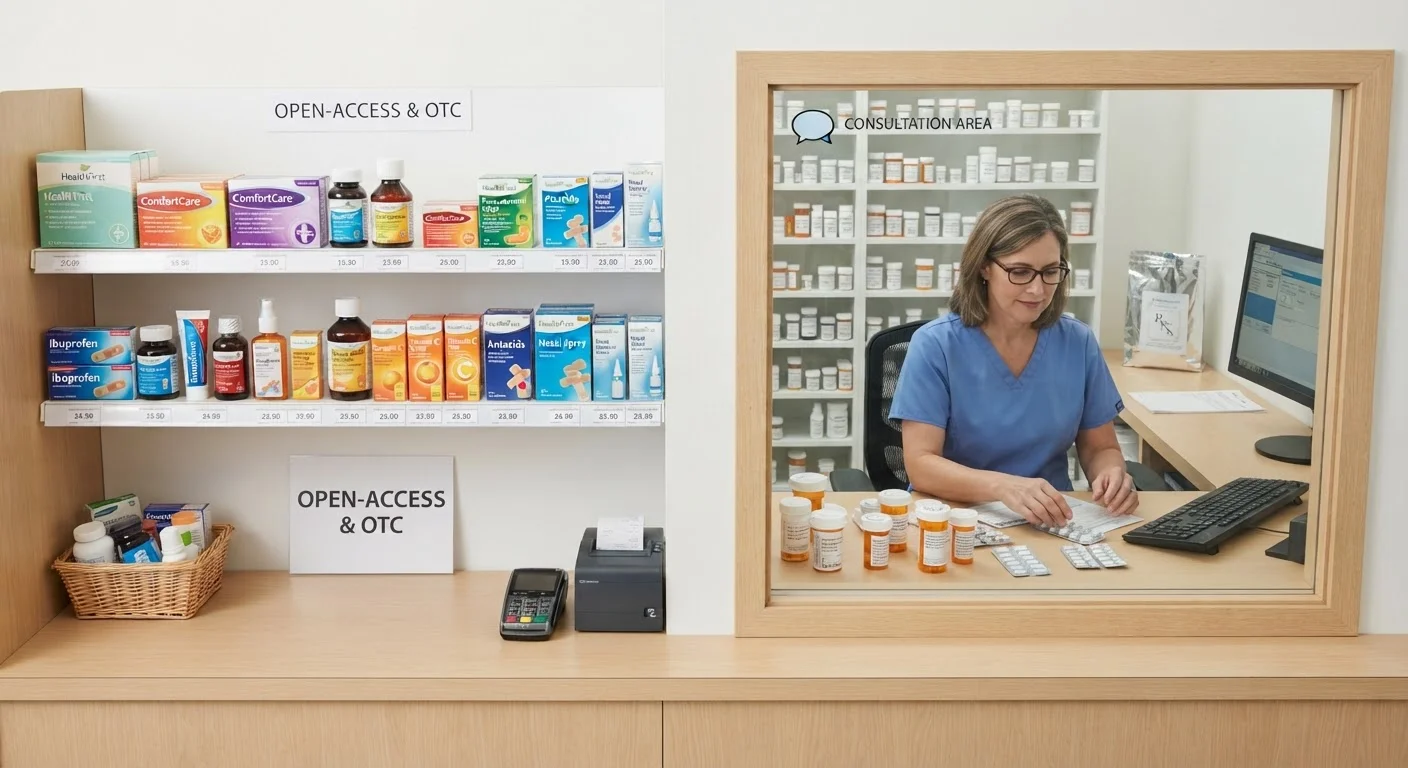
Photo: HerbHealWellness.com | Modern Guide To Wellness editorial
Key Takeaways
- The FDA determines OTC or prescription status based on a drug's safety profile, misuse potential, and the need for professional diagnosis.
- OTC medicines are considered safe and effective for self-directed use when label instructions are followed.
- Prescription medicines require a licensed prescriber's order because their risks or complexity demand clinical oversight.
- Some medicines can move from prescription-only to OTC status as evidence of safe self-use accumulates.
- Both OTC and prescription medicines carry real risks — reading labels and following prescriber guidance matters for both.
Who Decides Which Shelf a Medicine Lives On?
In the United States, the FDA is responsible for classifying every approved medicine as either over-the-counter (OTC) or prescription-only. This classification isn't arbitrary — it's rooted in a formal safety and risk assessment that asks a core question: Can a typical consumer safely select, dose, and use this medicine without the guidance of a licensed healthcare professional?
If the answer is yes, the drug may be approved for OTC sale. If the answer is no — because the condition is hard to self-diagnose, the dosing is complex, or the side-effect profile requires monitoring — the drug stays prescription-only.
The FDA applies specific criteria when evaluating a drug's appropriate access level, including its toxicity risk, potential for misuse or dependence, and whether labeling alone can communicate safe use to an average consumer. This isn't a one-time verdict, either. A drug's classification can change over time as real-world evidence accumulates.
Behind-the-Counter: A Third Category
How OTC and Prescription Medicines Compare
The differences go beyond whether you need a doctor's note. They shape how a medicine is labeled, dispensed, monitored, and even priced. Here's a side-by-side look at the key distinctions:
| Criterion | OTC Medicines | Prescription Medicines |
|---|---|---|
| Requires prescriber order | No | Yes |
| Dispensed by | Any retail outlet | Licensed pharmacy only |
| Label type | Standardized Drug Facts panel | Pharmacist-generated prescription label |
| Dosing oversight | Consumer self-directed | Determined by prescriber |
| Intended conditions | Common, self-limiting conditions | Complex, serious, or chronic conditions |
| Misuse or dependence risk | Generally lower | Often higher; subject to stricter controls |
| Insurance coverage | Typically not covered | Often partially covered by insurance |
For a closer look at what happens once a prescription reaches the pharmacy, see our walkthrough of the prescription process. And if you're navigating your first fill, the plain-language guide for first-time prescription fillers covers exactly what to expect.
When a Prescription Drug Becomes OTC
One of the most misunderstood facts about drug classification is that it isn't permanent. Medicines can — and regularly do — shift from prescription-only to OTC status through a formal FDA review process. Manufacturers submit applications showing that consumers can safely self-select and use the drug based on labeling alone, without a provider's involvement.
Common examples include certain antihistamines, proton pump inhibitors for heartburn, and low-dose statins in some markets. Each of these was once prescription-only before evidence supported broader access.
Crucially, a drug's active ingredient doesn't change when it moves to OTC — what changes is the approved use case, dosage, and the populations cleared for self-use. This is worth understanding when you compare OTC and prescription versions of similar medicines. Our article on generic and brand-name drug differences also sheds light on how active ingredients relate to drug identity.
100+
Rx-to-OTC ingredient switches since 1975
The FDA reports that more than 100 active ingredients previously available only by prescription are now found in OTC products.
~80%
Of adults who use OTC medicines as first response
According to the Consumer Healthcare Products Association, roughly 8 in 10 US adults turn to OTC medicines to address minor ailments before seeking professional care.
Safe Use Starts with Reading the Label
Whether a medicine is OTC or prescription, the label is your primary safety tool. OTC drug labels are required by the FDA to follow a standardized Drug Facts format, covering active ingredients, uses, warnings, and dosage directions. Prescription labels come with additional pharmacist-generated information tailored to your specific fill.
Neither label should be treated as optional reading. Misusing OTC medicines — taking higher doses than directed, combining products with overlapping ingredients, or using them for longer than recommended — carries real health risks. Learn how to interpret every section of a medication label in our guide to reading a medicine label without the guesswork.
If you're ever uncertain whether a medicine is appropriate for your situation, a pharmacist is a readily accessible resource — no appointment necessary. They can flag potential interactions, clarify dosing, and help you decide whether your symptoms warrant a provider visit.
This article is for general informational purposes only and does not constitute medical advice. Always consult a qualified healthcare professional before starting, stopping, or changing any medication.
The content on this site is for informational purposes only and is not a substitute for professional advice. Always consult a qualified professional for guidance specific to your situation.