
Dental Abscess vs. Gum Abscess: Understanding Two Different Infections

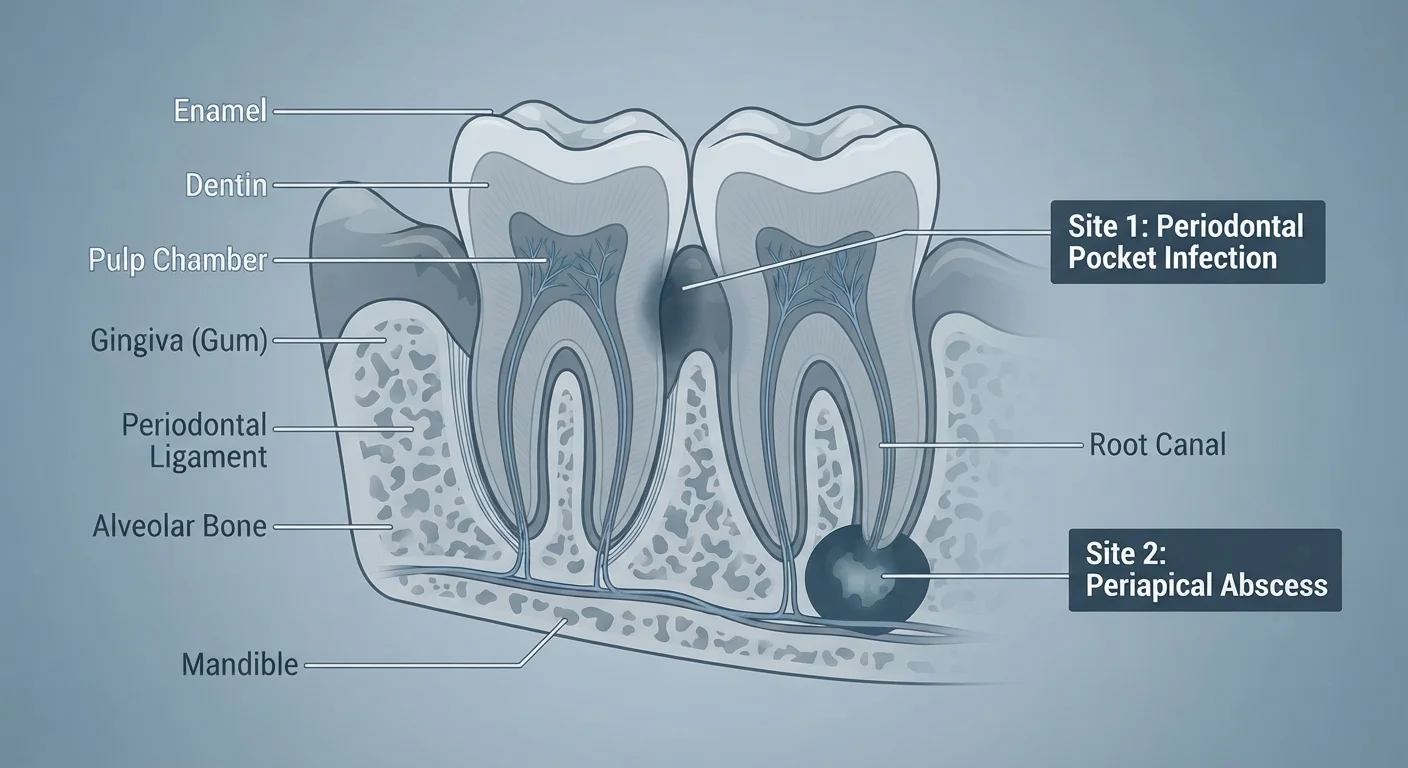
Photo: HerbHealWellness.com | Modern Guide To Wellness editorial
Key Takeaways
- A dental abscess originates inside the tooth's pulp; a gum abscess begins in the surrounding gum tissue.
- Both types cause swelling, pain, and possible fever — making professional diagnosis essential.
- Neither abscess resolves on its own; both require prompt dental treatment to prevent spread.
- Underlying causes differ, so treatment approaches — from root canals to periodontal drainage — also vary.
- People with diabetes or compromised immunity face elevated risk for both types of abscess.
What Sets These Two Infections Apart
Both a dental abscess and a gum abscess involve a pocket of bacterial infection in the mouth, and both demand prompt professional care. The critical difference lies in where the infection starts — and that origin determines everything from diagnostic approach to treatment.
A dental abscess — more precisely called a periapical abscess — forms at the tip of a tooth's root. It typically begins inside the tooth's pulp (the soft, nerve-containing tissue at the center) after bacteria enter through deep decay, a crack, or a compromised dental restoration. As the pulp becomes infected and dies, bacteria and inflammatory byproducts migrate to the bone surrounding the root tip, forming an abscess there.
A gum abscess — or periodontal abscess — originates in the gum tissue and the structures that support the tooth, not within the tooth itself. It most commonly develops inside a periodontal pocket, the space that forms between the tooth and gum when gum disease progresses. Trapped food debris, calculus (hardened plaque), or a foreign body can seed bacterial growth in these pockets, triggering a localized infection. For a deeper look at how these and other diagnoses are defined, our dental conditions reference guide offers plain-language explanations.
| Criterion | Dental Abscess | Gum Abscess |
|---|---|---|
| Origin site | Inside the tooth pulp / root tip | Gum tissue / periodontal pocket |
| Primary cause | Deep decay, crack, failed restoration | Gum disease, trapped debris, calculus |
| Pain character | Throbbing; worsens with bite pressure or temperature | Localized gum tenderness; may be less temperature-sensitive |
| Swelling location | Cheek or jaw near affected root | Alongside gumline at specific site |
| Tooth vitality | Tooth often non-vital (pulp dead) | Tooth may still be vital |
| Visible on X-ray | Dark area around root tip | Bone loss pattern along root side |
| Common treatment | Root canal therapy or extraction | Periodontal drainage and deep cleaning |
| Antibiotics role | Adjunct when infection has spread | Adjunct when infection has spread |
Symptoms, Risk Factors, and When to Act
Because both types of abscess involve active infection, their symptoms overlap considerably — which is why self-diagnosis is unreliable.
Shared warning signs
- Persistent, throbbing pain that may radiate to the jaw, neck, or ear
- Swelling of the face, cheek, or lymph nodes under the jaw
- Fever or general feeling of illness
- A foul taste or odor caused by pus drainage
- Difficulty opening the mouth, chewing, or swallowing in severe cases
How symptoms may differ
A periapical (dental) abscess often causes heightened sensitivity to hot or cold temperatures and pain that intensifies when biting down — reflecting the pulp's nerve involvement. A periodontal abscess is more likely to present as localized gum swelling and tenderness at a specific site along the gumline, sometimes with visible pus and deep bleeding when probed. Bleeding, swelling, or recession along the gumline can signal early gum problems worth investigating before an abscess develops.
Who faces higher risk?
People with uncontrolled diabetes, immune-suppressing conditions, or dry mouth (reduced saliva flow) are at elevated risk for both types. Poorly managed gum disease is the primary driver of periodontal abscess risk. If you have diabetes, understanding the two-way relationship between blood sugar control and oral health is especially important, as infection can disrupt glycemic management. Consult your healthcare provider if you have systemic conditions that may affect your dental care.
~1 in 7
Adults affected by periodontal disease
CDC data indicate that approximately 47% of U.S. adults aged 30 and older have some form of periodontal disease, the primary driver of periodontal abscesses.
3×
Higher abscess risk in people with diabetes
Research consistently links poorly controlled diabetes to increased susceptibility to oral infections, including periodontal and periapical abscesses, due to impaired immune response.
Abscesses are dental emergencies. If swelling is spreading rapidly, you develop difficulty breathing or swallowing, or your fever is high, seek emergency care immediately. Infection can spread to the jaw, neck, and beyond if left untreated.
This article is for general informational purposes only and does not constitute medical or dental advice. Always consult a qualified dental professional for evaluation and treatment of any oral health concern.
The content on this site is for informational purposes only and is not a substitute for professional advice. Always consult a qualified professional for guidance specific to your situation.