
Gum Disease: Gingivitis, Periodontitis, and the Line Between Them

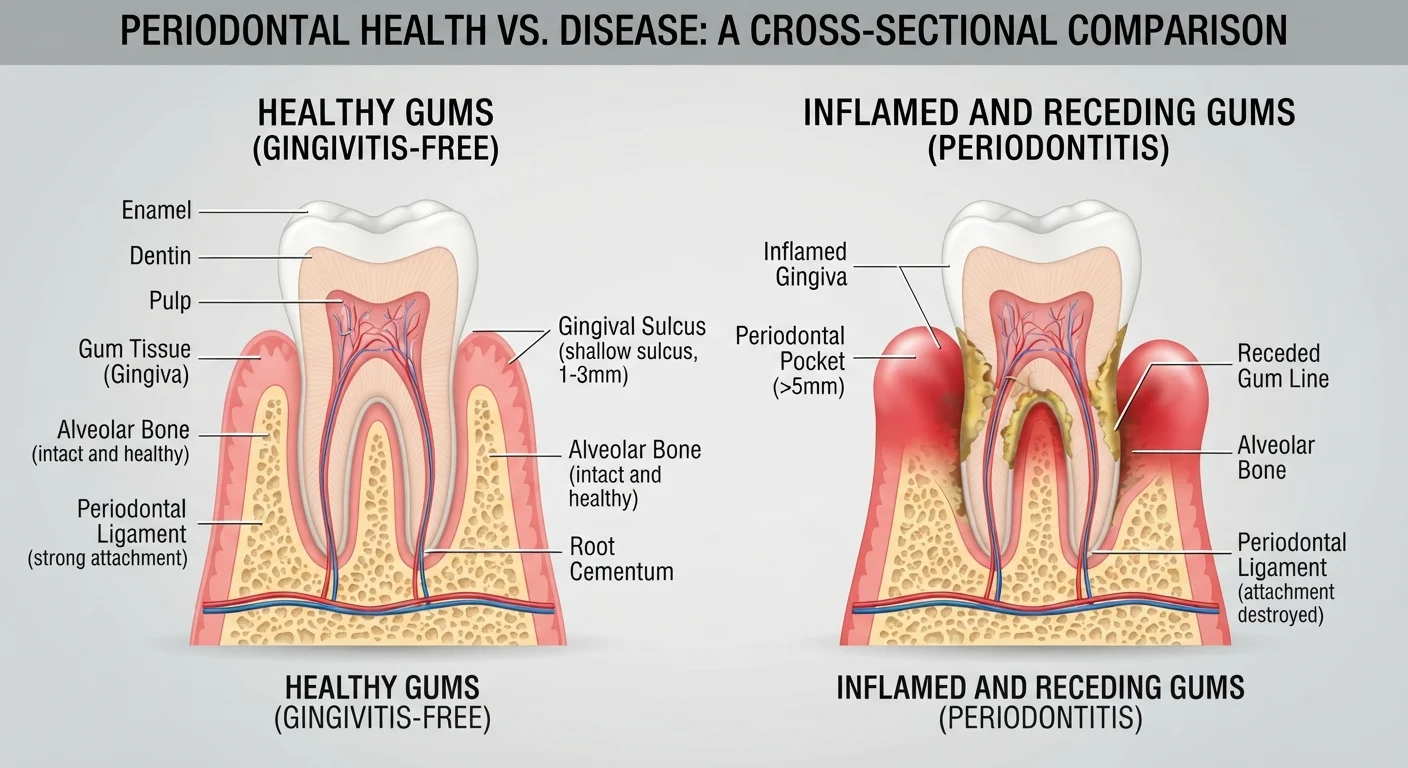
Photo: HerbHealWellness.com | Modern Guide To Wellness editorial
Key Takeaways
- Gingivitis is inflammation limited to the gums and is fully reversible with proper care.
- Periodontitis involves destruction of the bone and connective tissue supporting your teeth — damage that cannot be undone.
- Both conditions are caused by bacterial plaque buildup, but periodontitis requires additional risk factors to develop.
- Early treatment of gingivitis is the most effective way to prevent periodontitis.
- Periodontitis has been associated with systemic health conditions, including cardiovascular disease.
- A dentist or periodontist can diagnose which condition is present — self-diagnosis is unreliable.
Same Disease, Different Stages
Gingivitis and periodontitis are not two separate diseases — they are two stages of the same underlying disease process. Gingivitis always comes first. Periodontitis is what happens when gingivitis is left unaddressed and the infection spreads beyond the gum tissue into the bone and ligaments that anchor teeth in place.
The distinction matters clinically because it determines what treatment is needed and what outcomes are realistically achievable. Gingivitis is fully reversible. Periodontitis causes structural damage that, once established, cannot be undone — only halted or slowed.
For a broader look at how periodontitis develops and why clinicians treat it as a whole-body concern, see our plain-language guide to periodontal disease.
| Criterion | Gingivitis | Periodontitis |
|---|---|---|
| Tissues affected | Gums only | Gums, bone, and ligament |
| Reversibility | Fully reversible | Structural damage is permanent |
| Bone loss | None | Present — visible on X-ray |
| Pain level | Usually painless | Often painless until advanced |
| Bleeding gums | Common | Common |
| Gum recession | Absent | Frequently present |
| Pocket depth | Normal (1–3 mm) | Deep pockets (4 mm or more) |
| Standard treatment | Professional cleaning + home care | Scaling and root planing; possible surgery |
Causes, Risk Factors, and Who Is Most Vulnerable
Both conditions begin with dental plaque — the sticky bacterial film that constantly forms on teeth. When plaque is not removed by brushing and flossing, it irritates the gums and triggers an inflammatory response. That inflammation is gingivitis.
Most people will experience gingivitis at some point. However, not everyone who has gingivitis will develop periodontitis. The progression depends on a combination of factors:
- Bacterial virulence: Some strains of oral bacteria are more destructive than others.
- Immune response: An exaggerated or dysregulated immune reaction can accelerate tissue breakdown.
- Tobacco use: Smoking is one of the strongest modifiable risk factors for periodontitis and also masks some early warning signs like bleeding.
- Diabetes: Poorly controlled blood sugar is strongly associated with more severe and harder-to-treat periodontitis.
- Genetics: Some individuals inherit a higher inflammatory susceptibility regardless of their hygiene habits.
- Medications: Certain drugs — including some calcium channel blockers and immunosuppressants — can cause gum changes that raise risk.
~46%
U.S. adults with some form of periodontal disease
According to CDC-funded research published in the Journal of Dental Research, nearly half of American adults aged 30 and older have periodontitis in mild, moderate, or severe form.
~70%
Adults 65+ affected by periodontitis
The same CDC-funded surveillance data found periodontitis prevalence rises sharply with age, affecting approximately 70% of adults 65 and older.
2–7x
Increased periodontitis risk for smokers
The American Academy of Periodontology notes that tobacco use is among the most significant risk factors, with smokers facing substantially higher odds of developing severe periodontitis.
Understanding these risk factors helps explain why two people with similar hygiene habits can have very different outcomes.
Recognizing the Symptoms
Gingivitis symptoms are often subtle, which is one reason the condition is frequently dismissed or missed:
- Gums that bleed during brushing or flossing
- Red or swollen gum tissue (healthy gums are pink and firm)
- Mild tenderness along the gum line
- No pain in many cases — gingivitis is often painless
Periodontitis shares some of those features but adds more serious signs reflecting structural damage:
- Gum recession — teeth appear longer as gum tissue pulls back
- Persistent bad breath (halitosis) that doesn't respond to brushing
- Teeth that feel loose or have shifted position
- Deep pockets between teeth and gums (measured by a dentist with a small probe)
- Pus between the gum and tooth
- Pain when chewing in advanced cases
Because periodontitis can progress with little pain, many people do not realize how advanced their condition is until a dentist takes measurements and X-rays. Self-diagnosis based on symptoms alone is unreliable. If you're unsure whether you have a gum infection or a different type of oral abscess, our comparison of dental and gum abscesses may help clarify the differences.
Probing Depth: The Key Diagnostic Measure
Treatment: What Each Stage Requires
Gingivitis typically resolves with a professional dental cleaning (called a prophylaxis) combined with consistently improved home care — brushing twice daily, flossing once daily, and follow-up appointments as recommended by a dentist. No surgical intervention is needed.
Periodontitis requires more intensive treatment. The standard first-line approach is scaling and root planing (sometimes called a deep cleaning), which removes calculus — hardened plaque — from below the gum line and smooths root surfaces to discourage bacterial reattachment. In moderate-to-severe cases, surgical procedures or additional therapies may be necessary. Maintenance visits every three to four months — rather than the standard six — are typically recommended to keep the disease from progressing further.
Importantly, treating periodontitis does not restore lost bone or reattach destroyed ligament. The goal of treatment is to stop the destruction and create conditions for the gum tissue to stabilize. Some emerging research suggests that treating periodontitis may have benefits beyond the mouth — a grounded look at what those trials show.
For a nuanced look at how oral inflammation connects to systemic conditions like heart disease, see what the research actually says about gum disease and heart disease.
This article is for general informational purposes only and does not constitute medical or dental advice. If you have concerns about your gum health, please consult a licensed dentist or periodontist for an evaluation tailored to your individual circumstances.
The content on this site is for informational purposes only and is not a substitute for professional advice. Always consult a qualified professional for guidance specific to your situation.