
Oral Thrush: Recognising the White Patches That Aren't Normal

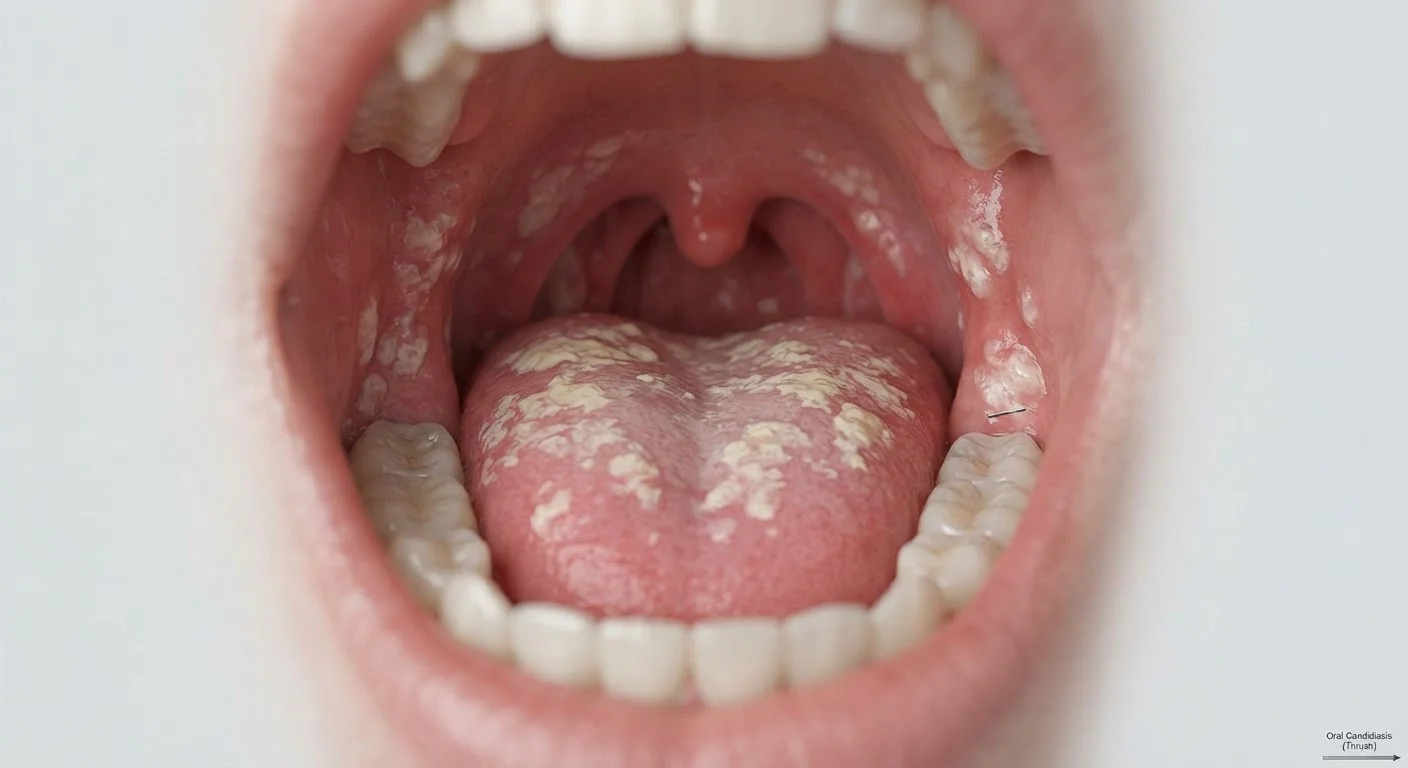
Photo: HerbHealWellness.com | Modern Guide To Wellness editorial
Key Takeaways
- Oral thrush is caused by an overgrowth of Candida albicans fungus, not bacteria.
- White patches that scrape off and leave a red, sore surface are a key distinguishing feature.
- Certain medications, immune conditions, and dry mouth significantly raise your risk.
- Oral thrush is treatable, but identifying and addressing the underlying cause is equally important.
- A dentist or physician should evaluate any unexplained white patches in the mouth.
What Oral Thrush Actually Looks Like
Not every white patch in the mouth signals a problem — a minor bite injury or food residue can look alarming briefly. But oral thrush has a distinct signature that sets it apart. The patches are typically creamy or cottage cheese-like in texture, slightly raised, and most commonly appear on the tongue, the inner cheeks, the roof of the mouth, and occasionally the throat.
The clearest distinguishing feature is what happens when you gently scrape a patch with a soft object: thrush lesions usually wipe away, revealing inflamed, red, and sometimes raw-looking tissue underneath. This differentiates thrush from conditions like leukoplakia, where patches are firmly attached and cannot be rubbed off.
Additional symptoms may include a burning or sore sensation in the mouth, a cotton-like feeling, altered taste, or cracking at the corners of the mouth (a related condition called angular cheilitis). In severe cases, particularly in people with weakened immune systems, thrush can spread to the throat and esophagus, causing difficulty swallowing.
Not All White Patches Are the Same
Who Is at Risk and Why
Candida albicans lives in the mouths of most healthy people without causing harm. It is only when the body's defenses are compromised — or the oral environment shifts — that an overgrowth occurs. Several factors are well-established as raising that risk:
- Medications: Inhaled corticosteroids (used for asthma) and broad-spectrum antibiotics are common culprits. Corticosteroids suppress local immunity; antibiotics reduce competing beneficial bacteria.
- Dry mouth (xerostomia): Saliva contains proteins that naturally inhibit Candida. Reduced saliva flow — caused by certain medications, radiation therapy, or conditions like Sjögren's syndrome — removes this protection.
- Immune suppression: People living with HIV/AIDS, those undergoing chemotherapy, or individuals on long-term immunosuppressant medications face substantially higher risk.
- Dentures: Ill-fitting or poorly cleaned dentures create warm, moist environments where Candida thrives.
- Infants and older adults: Immune systems at both ends of the age spectrum are less robust, making these groups more susceptible.
- Uncontrolled diabetes: Elevated blood sugar provides a favorable environment for yeast growth.
Because oral thrush can sometimes be the first visible sign of a broader health change, it's worth understanding how your mouth can flag systemic problems that haven't yet been diagnosed elsewhere.
~5–7%
General adult population affected by oral thrush
Estimates from clinical literature suggest oral candidiasis affects approximately 5–7% of the general adult population, with significantly higher rates among immunocompromised individuals.
Up to 90%
HIV-positive individuals affected at some point
Research has found that oropharyngeal candidiasis affects up to 90% of people with HIV/AIDS at some point during their illness, making it one of the most common opportunistic infections in this group.
30–60%
Denture wearers with some degree of oral candidiasis
Studies estimate that between 30% and 60% of complete denture wearers have some degree of denture-related candidiasis, though many cases are mild or asymptomatic.
Distinguishing Thrush From Other White Lesions
Not all white patches in the mouth are thrush, and accurate identification matters because the appropriate response differs significantly. The main conditions that can be confused with oral thrush include:
- Leukoplakia
- Thick, whitish patches that cannot be scraped off. They develop most often from chronic irritation (such as tobacco use) and, unlike thrush, may carry a small risk of malignant change — making professional evaluation essential.
- Canker sores (aphthous ulcers)
- These are painful, shallow ulcers with a white or yellowish center and a red border, typically occurring singly. They are not fungal and are not contagious.
- Geographic tongue
- A benign condition where smooth red patches surrounded by white borders appear on the tongue surface, shifting in pattern over days. It is not infectious and usually requires no treatment.
- Hairy leukoplakia
- White, ridged or corrugated patches on the sides of the tongue caused by Epstein-Barr virus reactivation, often seen in immunocompromised individuals.
Because these conditions can look similar to the untrained eye, self-diagnosis is unreliable. A dentist or physician can visually assess the lesion and, if needed, order a swab or biopsy. As described in what your dentist can detect before your doctor does, routine dental visits play a meaningful role in catching conditions like these early.
“The mouth is a window into the rest of the body, and changes in the oral mucosa — including fungal overgrowth — can reflect what is happening systemically. A persistent white lesion should never simply be watched and ignored.”
— American Academy of Oral Medicine, Professional organization representing oral medicine specialists
What Happens After Diagnosis
Oral thrush is generally responsive to antifungal treatment when addressed promptly. The approach a clinician takes depends on the severity of infection, the patient's overall health, and what underlying factors may have triggered the overgrowth.
Beyond medication, managing contributing factors is equally important. This means rinsing the mouth after using inhaled corticosteroids, ensuring dentures are cleaned and removed at night, staying hydrated to support saliva production, and working with a physician to address conditions like uncontrolled diabetes or immune dysfunction.
For individuals who experience recurrent thrush despite treatment, a more thorough investigation into immune function or other systemic factors is warranted. Recurring infections may also point to an underlying condition that hasn't yet been identified — reinforcing why systemic health conditions can show up in the mouth first and shouldn't be dismissed as an isolated oral issue.
Simple Steps to Reduce Your Risk
This article is for general informational purposes only and does not constitute medical or dental advice. If you notice persistent white patches or other unusual changes in your mouth, consult a qualified dentist or healthcare professional for an accurate diagnosis and appropriate care.
Frequently Asked Questions
The content on this site is for informational purposes only and is not a substitute for professional advice. Always consult a qualified professional for guidance specific to your situation.