
The Stages of Gum Disease Most People Don't Notice Until It's Advanced

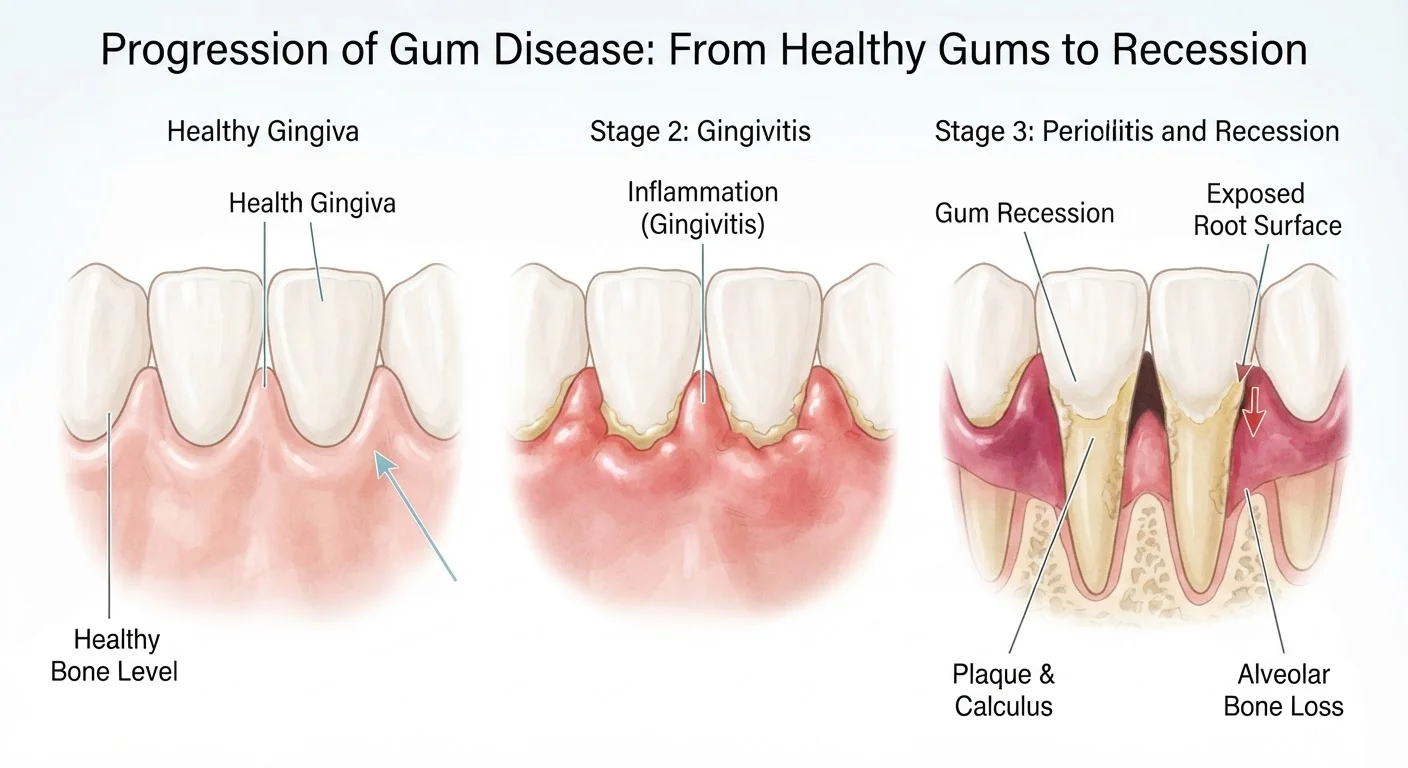
Photo: HerbHealWellness.com | Modern Guide To Wellness editorial
Key Takeaways
- Gum disease begins as painless inflammation and rarely causes discomfort until it is well advanced.
- Gingivitis is fully reversible with professional cleaning and improved home care; later stages are not.
- Bone and connective tissue loss are hallmarks of periodontitis and cannot be restored without treatment.
- Smoking, diabetes, and certain medications significantly increase the risk of rapid disease progression.
- Regular dental check-ups are the most reliable way to detect gum disease before noticeable damage occurs.
Why Gum Disease Goes Unnoticed for So Long
Gum disease shares something unsettling with conditions like glaucoma: it progresses largely in silence. Most people experience little to no pain during the early and middle stages, which is precisely why the CDC has estimated that nearly half of American adults aged 30 and older show signs of periodontal disease — many without realizing it.
The underlying process begins with dental plaque — a sticky film of bacteria that forms continuously on teeth and at the gumline. When plaque is not consistently removed through brushing and flossing, the bacteria within it trigger an inflammatory response in the surrounding gum tissue. Left unaddressed, that inflammation can silently erode the bone and connective tissue that anchor your teeth in place.
Understanding each stage of this progression is the first step toward protecting your gums before the damage becomes irreversible. For context on how a similar silent process unfolds with tooth decay, see our guide on what actually happens inside a cavity.
Plaque
A soft, sticky film of bacteria that forms on teeth throughout the day. It is the primary cause of both gum disease and tooth decay when not removed regularly.
Calculus (tartar)
Hardened plaque that has mineralized on the tooth surface. It cannot be removed by brushing alone and requires professional dental instruments to clear.
Gingivitis
The earliest stage of gum disease, involving inflammation of the gum tissue only. It is fully reversible with proper cleaning and care.
Periodontitis
An advanced form of gum disease in which infection spreads below the gumline and begins destroying the bone and tissue that support the teeth.
Periodontal pocket
A deepened gap that forms between the gum and tooth as gum disease progresses. Deeper pockets harbor more bacteria and are harder to clean.
Scaling and root planing
A non-surgical deep-cleaning procedure performed by a dental professional to remove plaque and calculus from below the gumline and smooth the root surface.
Stage 1: Gingivitis — The Reversible Beginning
Gingivitis is the earliest and only fully reversible stage of gum disease. It is defined by inflammation confined to the gum tissue itself — no bone or connective tissue has been affected yet.
What you might notice:
- Gums that appear red or swollen rather than their normal pale pink
- Bleeding during brushing or flossing (often dismissed as brushing too hard)
- Mild tenderness along the gumline
- Possible bad breath that does not resolve with brushing
Many people never connect these signs to infection. Because there is no pain and the changes are subtle, gingivitis frequently goes unaddressed for months or years.
What reverses it: A professional dental cleaning to remove hardened plaque (called calculus or tartar) combined with consistent daily brushing and flossing is typically sufficient to resolve gingivitis entirely. No structural damage means complete recovery is possible at this stage.
Catch It Early With These Home Checks
Stage 2: Early Periodontitis — When the Damage Begins
When gingivitis is untreated, the bacterial infection can extend below the gumline. The body's immune response, while attempting to contain the infection, also begins to break down the bone and ligament that support the tooth root. This transition marks the beginning of periodontitis — a condition that is manageable but not fully reversible.
Key developments at this stage:
- Pocket formation: The gum separates slightly from the tooth, creating a space (called a periodontal pocket) that harbors more bacteria and is difficult to clean at home.
- Early bone loss: X-rays taken by a dentist may reveal the first signs of bone deterioration around the tooth roots.
- Gum recession: Teeth may begin to appear slightly longer as gum tissue pulls back.
Symptoms remain mild. A person at this stage might notice occasional gum sensitivity or slightly worse breath, but rarely experiences pain. Professional treatment — typically a deeper cleaning procedure called scaling and root planing — can halt progression effectively when detected here.
Stage 3: Moderate to Advanced Periodontitis — Bone Loss and Beyond
Without intervention, periodontitis continues to destroy the supporting structures of the teeth. At moderate to advanced stages, the changes become increasingly difficult to treat and, in severe cases, result in tooth loss.
Signs that may finally become noticeable:
- Teeth that feel loose or have shifted position
- Visible gaps opening between teeth
- Pus visible between the gum and tooth
- Persistent, pronounced bad breath
- Significant gum recession exposing tooth roots
- Pain when chewing (a late-stage symptom)
The bone loss at this stage is permanent. Treatment focuses on controlling infection, preventing further destruction, and in some cases may involve surgical intervention. For some patients, certain teeth may no longer be salvageable.
It is also worth noting that periodontal disease has been associated with systemic health conditions including diabetes and cardiovascular disease — a connection explored further in our article on periodontal disease as a whole-body concern.
Pain Is Not a Reliable Warning Sign
Risk Factors That Accelerate Progression
Gum disease does not affect everyone equally. Several factors can significantly speed its progression or increase susceptibility:
- Tobacco use: Smoking impairs the immune response and reduces blood flow to gum tissue, making both detection and healing harder.
- Diabetes: Poorly controlled blood sugar increases inflammatory response and slows the body's ability to fight infection in gum tissue.
- Certain medications: Drugs that cause dry mouth (reducing saliva's natural protective role) or that cause gum overgrowth can raise risk.
- Genetics: Some individuals are more susceptible to aggressive forms of periodontitis regardless of oral hygiene habits.
- Hormonal changes: Pregnancy, puberty, and menopause can temporarily make gum tissue more reactive to plaque.
- Immune-compromising conditions: Conditions that affect immune function can reduce the body's ability to contain gum infections.
Systemic health and oral health are deeply interconnected. Conditions such as diabetes or anaemia can sometimes first appear as oral changes — a topic covered in depth in our article on how systemic health conditions can show up in your mouth.
When to See a Dentist
Because gum disease is largely symptom-free in its early stages, routine dental examinations — typically recommended every six months for most adults — remain the most reliable detection tool. A dentist or dental hygienist can identify changes in gum health long before symptoms appear.
Seek a dental evaluation sooner if you notice any of the following:
- Gums that bleed regularly when brushing or flossing
- Gum tissue that looks persistently red, swollen, or tender
- Teeth that feel loose or have shifted
- Persistent bad breath not relieved by brushing
- Visible changes in how your teeth fit together when you bite
For a broader look at what gum changes may indicate, see our guide on signs your gums are trying to tell you something.
This article provides general oral health information and is not a substitute for professional dental advice, diagnosis, or treatment. If you have concerns about your gum health, consult a qualified dental professional.
Frequently Asked Questions
The content on this site is for informational purposes only and is not a substitute for professional advice. Always consult a qualified professional for guidance specific to your situation.