
Manual Toothbrush or Electric: Which One Actually Cleans Better?

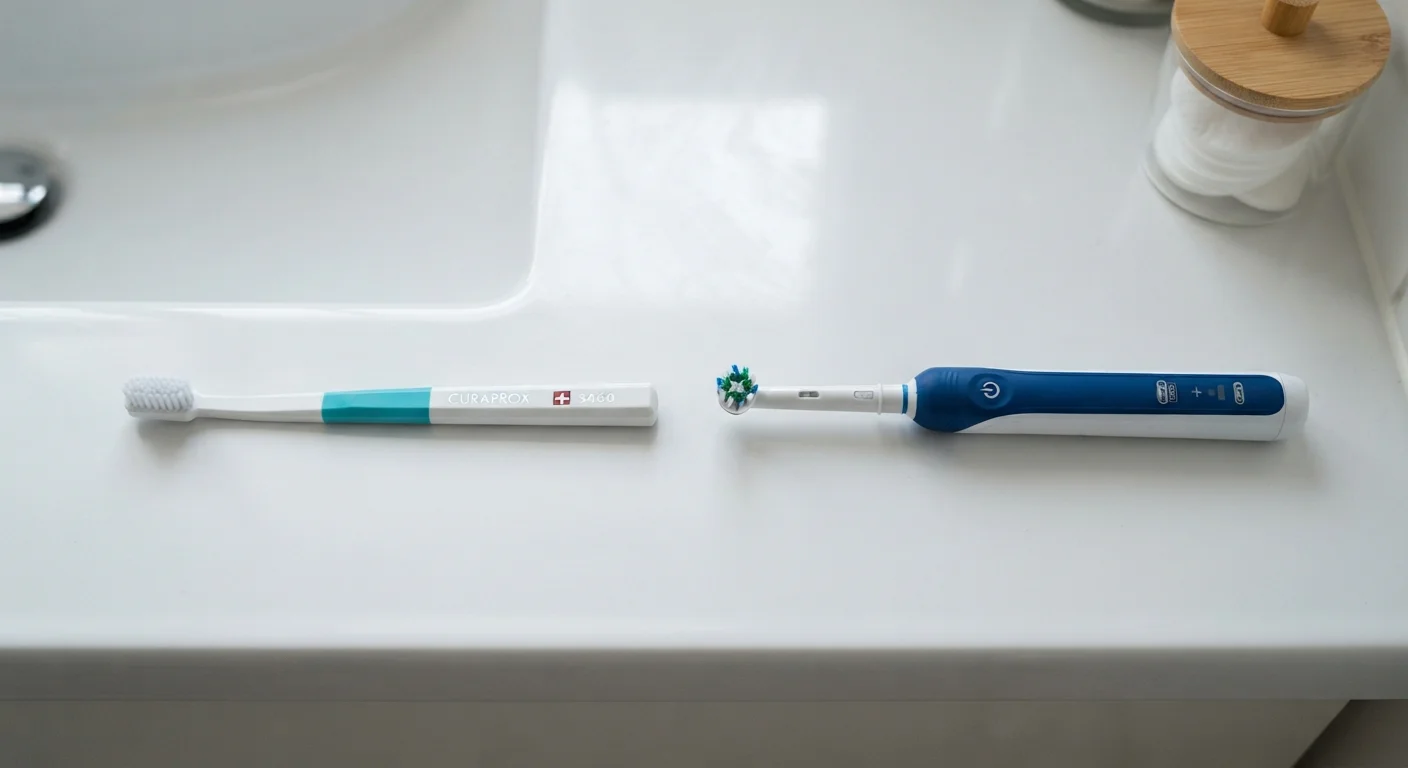
Photo: HerbHealWellness.com | Modern Guide To Wellness editorial
Key Takeaways
- Electric toothbrushes generally remove more plaque and reduce gingivitis more effectively than manual brushes.
- Manual toothbrushes work well when used with proper technique for a full two minutes.
- People with arthritis, limited dexterity, or orthodontic appliances often benefit most from electric brushes.
- Brush type matters less than consistency, duration, and correct technique.
- Both types require soft bristles and should be replaced every three months.
- Neither brush type eliminates the need for interdental cleaning such as flossing.
What the Research Actually Shows
The question of manual versus electric toothbrushes has been studied for decades. A landmark Cochrane systematic review — one of the most comprehensive analyses of the evidence — found that electric toothbrushes, specifically oscillating-rotating models, reduced plaque by 21% and gingivitis by 11% more than manual brushes after three months of use. These are meaningful clinical differences, not just marginal improvements.
That said, the research also consistently shows that a manual toothbrush used with correct technique for the recommended two minutes is genuinely effective. The gap between the two tools narrows considerably when manual brushing is performed well. The problem is that most people don't brush for long enough — studies suggest the average person brushes for under 60 seconds. Electric brushes with built-in timers help close that gap behaviorally. See why brushing duration matters for a deeper look at what happens during each stage of a two-minute session.
| Criterion | Manual Toothbrush | Electric Toothbrush |
|---|---|---|
| Plaque removal | Effective with correct technique | Clinically superior, especially oscillating-rotating models |
| Gingivitis reduction | Effective when used properly | Greater reduction shown in systematic reviews |
| Technique dependence | High — results vary with user skill | Lower — motor action compensates for technique gaps |
| Built-in timer | None | Often included; helps ensure full 2 minutes |
| Ease of use with limited dexterity | Challenging | Significantly easier |
| Cost | Very low | Higher upfront; ongoing brush-head cost |
| Travel convenience | Lightweight, no charging required | Requires charging; bulkier to pack |
| Bristle replacement | Replace whole brush every 3 months | Replace head every 3 months |
Who Benefits Most from Each Type
For most adults with no specific health concerns, either toothbrush type can maintain good oral health — provided the person brushes consistently and uses proper technique. However, certain groups have a clearer case for one option over the other.
Electric toothbrushes are particularly beneficial for:
- People with arthritis or limited dexterity, where fine motor control is difficult
- Those wearing braces or fixed retainers, where food and plaque accumulate around hardware
- Children and teens who tend to rush through brushing — see age-appropriate oral hygiene guidance for children
- Anyone with a history of gingivitis or periodontal disease who needs more consistent plaque control
Manual toothbrushes remain a sound choice for:
- Adults with established, disciplined brushing habits
- People who travel frequently and prefer simplicity
- Those for whom cost is a barrier to electric brush ownership
21%
More plaque reduction with electric brushes
A Cochrane systematic review found oscillating-rotating electric brushes reduced plaque 21% more than manual brushes after three months.
11%
Greater gingivitis reduction with electric brushes
The same Cochrane review found electric toothbrush users experienced 11% less gingivitis compared to manual brush users at three months.
<60 sec
Average brushing duration for most adults
Research indicates most adults brush for under one minute, well short of the two-minute guideline recommended by dental professionals.
Technique Matters More Than You Might Expect
Regardless of which brush you use, technique is the single most controllable variable in brushing effectiveness. The modified Bass technique — angling the brush at 45 degrees toward the gumline, using small circular or vibrating strokes — is widely recommended by dental professionals for its effectiveness at removing plaque at and just below the gumline.
One common mistake that affects both brush types equally is brushing too hard. Excess pressure does not improve cleaning; it can abrade enamel and irritate gum tissue over time. If you notice your brush bristles splaying out within weeks of use, that's a reliable sign of excessive force. Brushing habits that quietly damage teeth covers this and other common mistakes in detail.
Both brush types should use soft bristles — medium and hard bristles are not recommended by most dental associations, as they offer no benefit over soft ones and carry greater risk of enamel and gum damage. Replace your brush or brush head every three months, or sooner if bristles become visibly worn.
This article provides general information about oral hygiene tools and is not a substitute for personalized dental advice. Consult your dentist or dental hygienist for guidance tailored to your oral health needs.
The Bigger Picture: Brushing Is Only Part of the Equation
Whether you choose manual or electric, toothbrushing alone cannot clean the spaces between teeth — a zone that accounts for a significant proportion of plaque buildup and where cavities and gum disease frequently originate. Interdental cleaning remains essential regardless of brush type. Dental floss, interdental brushes, and water flossers each approach this problem differently, and the best choice depends on your anatomy and preference.
Similarly, the timing of your brushing routine — morning versus night, before or after breakfast — has implications that are independent of brush type. When you brush and floss can affect enamel protection and plaque control in ways worth understanding.
The bottom line: the best toothbrush is the one you use correctly and consistently. If an electric toothbrush makes it easier to brush longer, more thoroughly, or with less damaging pressure, then for most people it represents a meaningful upgrade. If a manual brush is already part of a disciplined, well-executed routine, it continues to be a clinically sound choice. Regular dental check-ups and professional cleanings remain important for both groups.
A Note on Special Populations
The content on this site is for informational purposes only and is not a substitute for professional advice. Always consult a qualified professional for guidance specific to your situation.