
The Science Behind Plaque: What It Is and Why It Keeps Coming Back

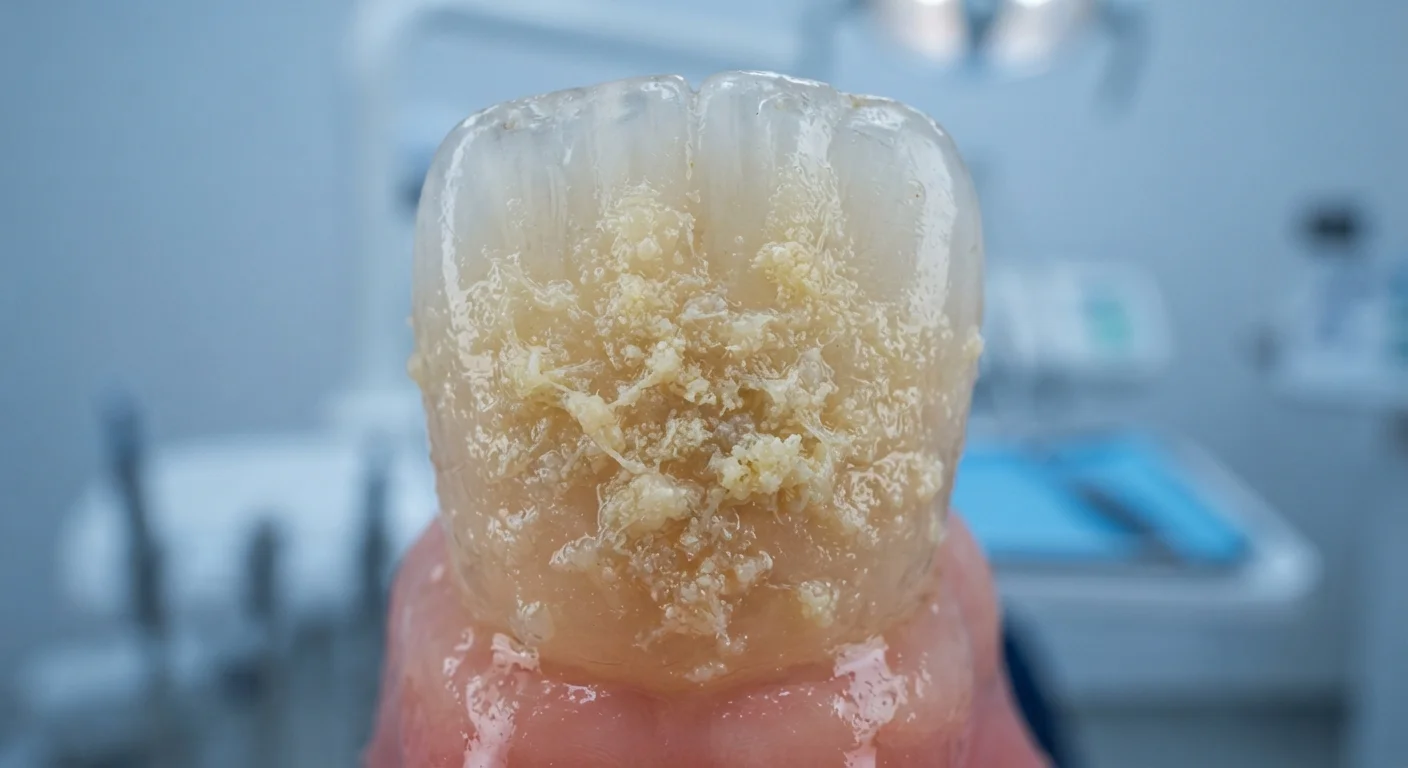
Photo: HerbHealWellness.com | Modern Guide To Wellness editorial
Key Takeaways
- Plaque is a living bacterial biofilm that begins reforming on teeth within hours of brushing.
- Bacteria in plaque produce acids after feeding on sugars, which can erode enamel over time.
- Plaque that is not removed within 24–72 hours can harden into tartar, which only a dental professional can remove.
- Consistent twice-daily brushing and daily flossing are the most effective ways to control plaque.
- Professional cleanings are essential because tartar buildup cannot be addressed with home care alone.
What Plaque Actually Is
Plaque is not simply food residue or dirt on your teeth. It is a living microbial community — a biofilm — composed of hundreds of bacterial species interacting in a carefully organized structure. These bacteria produce a sticky matrix of polysaccharides and proteins that anchors them to tooth surfaces, making the biofilm remarkably difficult to rinse away.
The process begins within minutes of brushing. Saliva deposits a thin protein coating called the acquired pellicle on clean enamel. Bacteria — primarily early colonizers like Streptococcus mutans — attach to this pellicle within hours. Over the following day, more species join and the biofilm matures into what we recognize as plaque.
Because it is organized at a microscopic level, the biofilm structure actually protects the bacteria inside it, making them more resistant to antiseptic rinses than they would be in isolation. This is why mechanical cleaning — physically disrupting the film — cannot be replaced by rinsing alone.
Plaque Is Always Present — That's Normal
How Plaque Damages Teeth and Gums
Plaque bacteria feed primarily on fermentable carbohydrates — the sugars and refined starches in your diet. When bacteria metabolize these carbohydrates, they produce organic acids as a byproduct. These acids lower the pH in the local environment around the tooth, and when pH drops below roughly 5.5, it begins dissolving the mineral content of enamel — a process called demineralization.
Repeated acid exposures, particularly when plaque is allowed to accumulate, can lead to cavities. Over time, persistent plaque along the gumline triggers an immune response in the surrounding tissue, causing the inflammation known as gingivitis. If left unmanaged, gingivitis can progress to periodontitis, a more serious form of gum disease involving the bone that supports the teeth.
The connection between oral and general health is an active area of research. Evidence suggests that chronic oral inflammation associated with gum disease may be linked to systemic conditions. This is one reason dental care is considered part of whole-body health, not separate from it.
Separately, the acids produced by plaque bacteria contribute directly to enamel erosion — a process explained in depth in our article on enamel erosion and what can't be reversed.
700+
Bacterial species found in dental plaque
Research published in the Journal of Bacteriology and supported by the Human Oral Microbiome Database has identified over 700 microbial species in the human mouth, many of which contribute to plaque biofilm.
24–72 hrs
Time for plaque to begin hardening into tartar
Clinical dental guidelines consistently indicate that undisturbed plaque can begin mineralizing into tartar within one to three days, underscoring the importance of daily mechanical removal.
47%
U.S. adults with some form of gum disease
According to the CDC, nearly half of American adults aged 30 and older have some degree of periodontal disease, a condition strongly associated with plaque accumulation along the gumline.
Why Plaque Never Stops Forming — and What You Can Do
Plaque reformation is a biological constant. No matter how thoroughly you clean your teeth, the cycle begins again within hours. This is not a failure of your technique — it is simply how the oral environment works. The goal of daily oral hygiene is not to eliminate bacteria permanently but to disrupt plaque before it matures and before tartar has a chance to form.
Plaque that remains undisturbed for 24–72 hours begins absorbing calcium and phosphate from saliva, mineralizing into tartar (also called calculus). Tartar is rough-surfaced and porous, providing an even better substrate for further plaque accumulation. Critically, it cannot be removed at home — only a dental professional using specialized instruments can scale tartar from tooth surfaces.
Make Flossing Non-Negotiable
This is why twice-daily brushing and daily flossing are considered the foundation of plaque control. Brushing disrupts plaque on exposed tooth surfaces; flossing reaches the interproximal spaces between teeth that a brush cannot access. For a structured approach to building this routine, see our complete daily oral hygiene routine guide.
The timing of your routine also matters. Plaque that builds up overnight or after meals follows a predictable pattern, and understanding when to brush can make your routine more effective. Our guide on timing your oral care covers this in detail.
This article is for informational purposes only and is not a substitute for professional dental advice. Consult a qualified dental professional for guidance specific to your oral health needs.
Frequently Asked Questions
The content on this site is for informational purposes only and is not a substitute for professional advice. Always consult a qualified professional for guidance specific to your situation.