
Tongue Cleaning: An Overlooked Step With Real Benefits

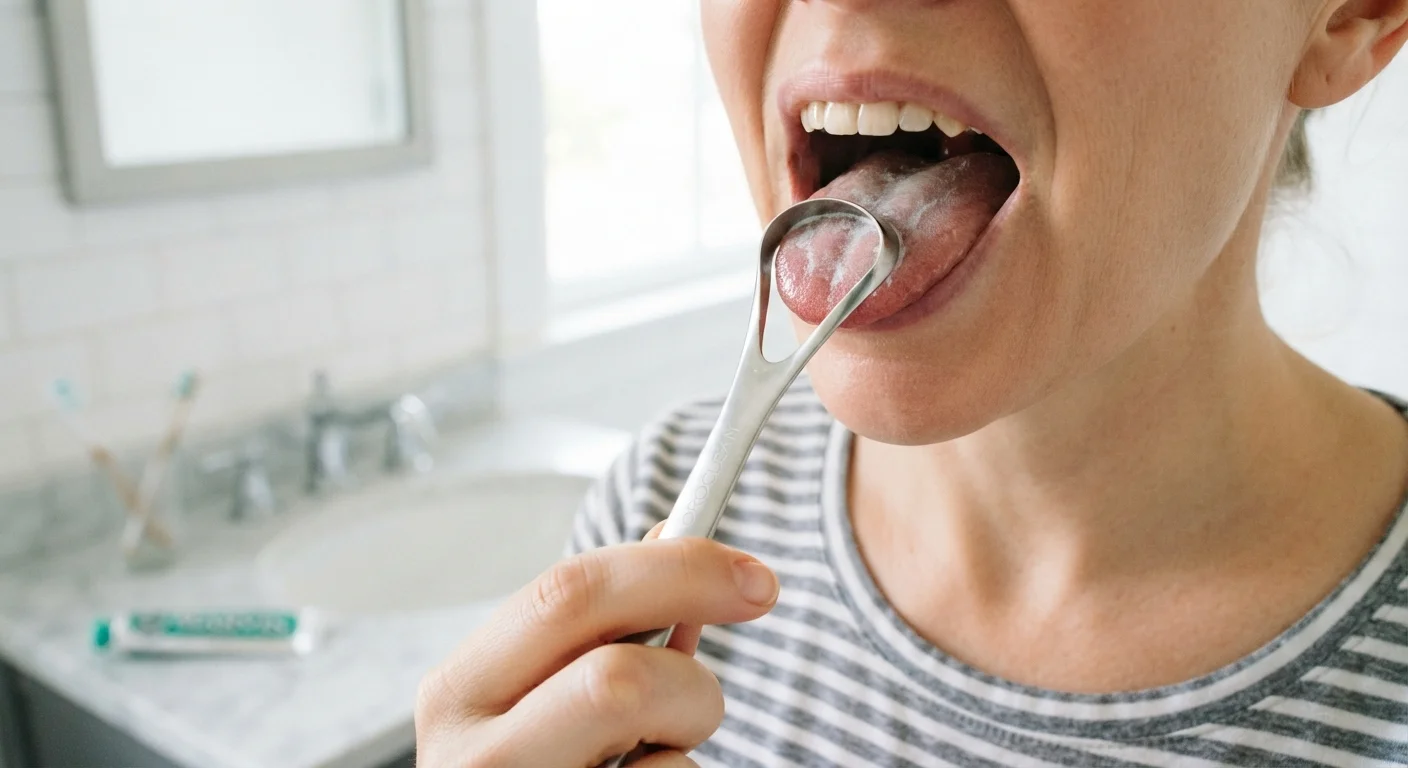
Photo: HerbHealWellness.com | Modern Guide To Wellness editorial
Key Takeaways
- The tongue harbours anaerobic bacteria that produce volatile sulfur compounds, the leading cause of bad breath.
- Tongue scrapers are modestly more effective than toothbrushes at removing tongue coating, according to clinical research.
- Regular tongue cleaning may reduce overall oral bacterial load, complementing brushing and flossing.
- Tongue cleaning does not replace professional dental care or treat underlying oral health conditions.
- Most adults can safely add tongue cleaning to their routine with minimal risk of side effects.
What Lives on Your Tongue
Your tongue is not a smooth surface. Its textured landscape — formed by thousands of tiny projections called papillae — creates sheltered pockets where bacteria, dead epithelial cells, and food particles accumulate throughout the day. This accumulation forms a soft coating commonly called tongue film or tongue biofilm.
The bacteria that colonise this film are largely anaerobic — they thrive without oxygen. As they break down proteins in your mouth, they release volatile sulfur compounds (VSCs), including hydrogen sulfide and methyl mercaptan. VSCs are the primary chemical cause of halitosis (bad breath). Studies consistently show that tongue coating is a major contributor to oral malodor, often more so than bacteria on teeth or gums alone.
Understanding the tongue's role in your oral microbiome helps explain why brushing and flossing, while essential, may leave a significant bacterial reservoir untouched. For a broader look at how oral bacteria connect to whole-body health, see The Mouth-Body Connection.
~80–90%
Of bad breath cases linked to the oral cavity
Research published in dental literature consistently attributes the majority of halitosis cases to oral sources, with tongue coating being a primary contributor.
~700
Bacterial species in the average human mouth
According to the Human Oral Microbiome Database, the oral cavity hosts one of the most diverse microbial ecosystems in the human body.
~75%
VSC reduction possible with regular tongue scraping
Some controlled studies have found tongue scrapers can reduce volatile sulfur compound levels by up to 75% compared to no tongue cleaning.
How Tongue Cleaning Works — and What the Evidence Shows
Tongue cleaning physically disrupts and removes the biofilm layer from the tongue's dorsal (top) surface. Two tools are commonly used:
- Tongue scrapers — U-shaped or flat instruments, typically made from stainless steel or plastic, that glide along the tongue surface to lift and collect the film.
- Toothbrush bristles — The back of many toothbrushes includes a textured pad specifically for tongue use, though standard bristles can also be used.
Clinical comparisons generally favour scrapers. A review published in the International Journal of Dental Hygiene found that tongue scrapers reduced VSC levels more effectively than toothbrushes, though both offered measurable benefit over no cleaning at all. Neither tool eliminates oral bacteria entirely — the mouth continuously repopulates — but regular cleaning reduces the bacterial load at any given time.
There is also some evidence that consistent tongue cleaning may modestly improve taste sensitivity by clearing debris from the areas around taste buds, though this effect varies and should not be overstated.
Starting Out: Keep It Simple
How to Add Tongue Cleaning to Your Routine
Tongue cleaning takes under 30 seconds and integrates easily into an existing oral care routine. Here is a straightforward approach supported by dental hygiene guidance:
- Time it well. Clean your tongue after brushing and before rinsing, or immediately after brushing your teeth — whichever feels natural. Morning is often preferred, as overnight bacterial activity peaks while saliva flow is reduced during sleep.
- Use gentle, consistent strokes. Place the scraper or brush at the back of the tongue as far as comfortable — never force it to a point that triggers gagging. Draw it forward toward the tip in a single smooth stroke. Rinse the tool and repeat two to three times.
- Apply light pressure only. The goal is to lift the soft coating, not to scrub aggressively. Excessive pressure can irritate the mucosal tissue.
- Rinse afterward. A water rinse clears loosened debris. If you use mouthwash, this is a natural point to include it — though it is worth understanding what mouthwash actually does in your routine.
Tongue cleaning works best as one component of a complete routine. For a structured self-assessment of your full oral hygiene habits, the Daily Oral Hygiene Audit provides a useful checklist.
Limitations and When to Seek Professional Guidance
Tongue cleaning is a low-risk, evidence-supported habit — but it is not a treatment for oral disease. There are important boundaries to keep in mind:
- If bad breath persists despite consistent tongue cleaning, brushing, and flossing, a dentist should evaluate for other causes such as gum disease, decay, dry mouth, or systemic conditions.
- A thick, persistent white or yellow tongue coating that does not respond to cleaning may indicate oral thrush (Candida overgrowth), leukoplakia, or another condition requiring clinical diagnosis.
- Tongue cleaning should feel comfortable. Soreness, bleeding, or recurring irritation are signals to stop and consult a dental professional.
People managing chronic health conditions, those who are pregnant, or parents considering tongue cleaning for children should discuss it with a qualified healthcare provider before starting. The oral-systemic connection means good tongue hygiene may contribute modestly to broader health, as outlined in how oral bacteria drive systemic inflammation — but it is one piece of a larger picture.
Tongue Colour and What It May Signal
This article is for general informational purposes only and does not constitute medical or dental advice. Consult a qualified dental professional for guidance specific to your oral health.
Frequently Asked Questions
The content on this site is for informational purposes only and is not a substitute for professional advice. Always consult a qualified professional for guidance specific to your situation.