
Oral Bacteria and Systemic Inflammation: The Missing Link Explained

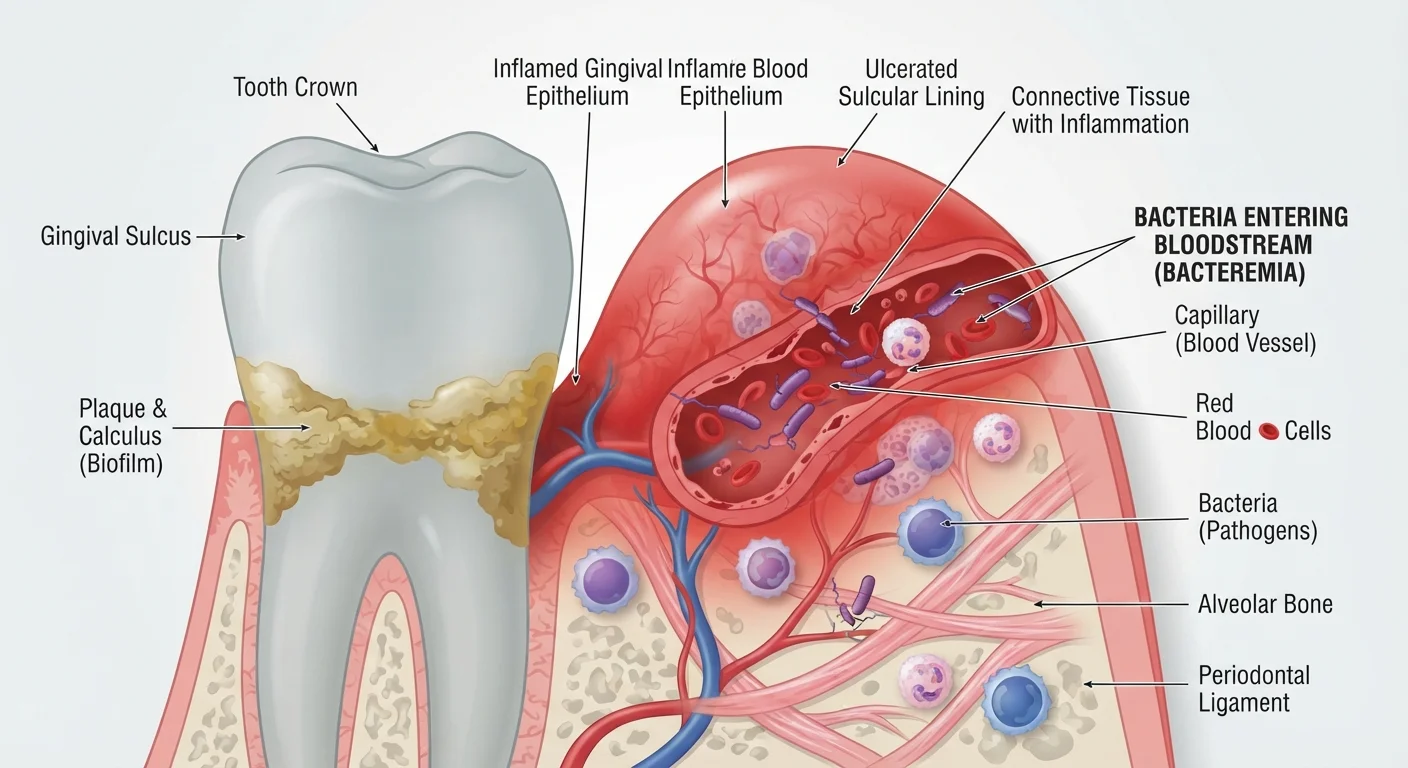
Photo: HerbHealWellness.com | Modern Guide To Wellness editorial
Key Takeaways
- Diseased or inflamed gum tissue can allow oral bacteria to enter the bloodstream.
- Once in circulation, these bacteria and their toxins can activate the immune system far from the mouth.
- Chronic periodontal disease is associated with elevated systemic inflammatory markers.
- The association between gum disease and conditions like heart disease is recognized, though causation is still being studied.
- Good oral hygiene supports gum barrier integrity and may reduce bacteremic episodes.
- Regular dental care is a practical step for managing both oral and broader inflammatory load.
How Bacteria Escape the Mouth
The mouth hosts more than 700 species of microorganisms, most of which coexist harmlessly with the immune system. Problems begin when harmful bacterial species accumulate in the gingival sulcus — the narrow groove between teeth and gums — and trigger an inflammatory response called periodontitis (severe gum disease).
Inflamed gum tissue becomes ulcerated and permeable. The total surface area of these ulcerated pockets in a person with moderate-to-severe periodontitis can equal the size of the palm of a hand — a substantial open wound in direct contact with a dense bacterial community. Ordinary daily activities such as chewing, tooth brushing, or professional cleaning can push bacteria into the underlying capillaries, producing bacteremia (the transient presence of bacteria in the bloodstream).
In healthy individuals, the immune system rapidly clears most of these bacteria. But in people with chronic gum disease, these episodes may occur repeatedly, keeping the immune system in a persistently activated state. This is where the systemic consequences begin.
Bacteremia Is Not Always Harmful
The Inflammatory Cascade That Follows
The bacteria most strongly implicated in periodontitis are gram-negative species such as Porphyromonas gingivalis, Tannerella forsythia, and Treponema denticola. Their outer membranes contain lipopolysaccharide (LPS), a molecule the immune system treats as a serious threat. When LPS enters circulation, it triggers macrophages and other immune cells to release pro-inflammatory cytokines — chemical messengers including interleukin-6 (IL-6) and tumor necrosis factor-alpha (TNF-α).
The liver responds to these signals by producing C-reactive protein (CRP), a widely used marker of systemic inflammation. Elevated CRP is independently associated with cardiovascular risk, and multiple population studies have found higher CRP levels in people with advanced gum disease compared to those with healthy gums.
Chronic, low-grade systemic inflammation — the kind sustained by repeated bacteremic episodes — is now understood to play a role in the development and progression of conditions including atherosclerosis, type 2 diabetes, and adverse pregnancy outcomes. Understanding this mechanism is central to the broader science of the mouth-body connection.
700+
Microbial species identified in the human mouth
According to the Human Oral Microbiome Database, the oral cavity hosts one of the most complex microbial ecosystems in the human body.
47%
U.S. adults with some form of periodontal disease
CDC and AAP surveillance data estimate that nearly half of American adults aged 30 and older have mild, moderate, or severe periodontitis.
2–3×
Elevated cardiovascular risk linked to severe gum disease
Multiple systematic reviews have found that people with severe periodontitis have approximately two to three times the risk of major cardiovascular events compared to those without gum disease, though shared risk factors complicate interpretation.
What This Means for Your Health — and Your Dental Visits
The oral-systemic inflammation pathway does not mean that having gum disease will inevitably damage your heart or worsen your blood sugar. Associations observed in epidemiological research do not establish direct causation, and most researchers emphasize that shared risk factors — smoking, poor diet, socioeconomic stress — may explain part of the correlation.
What the evidence does support is that managing gum disease is a legitimate component of managing overall inflammatory burden. Dentists and physicians increasingly recognize this, particularly for patients managing diabetes, cardiovascular disease, or autoimmune conditions. The relationship can also run in the other direction: systemic conditions can alter the oral environment in ways that worsen gum disease, as explored in our article on how systemic conditions can show up in the mouth first.
Simple Habits That Support the Gum Barrier
If you notice bleeding gums, persistent bad breath, or gum recession, these may be early warning signs worth discussing with a dental professional. More unusual oral symptoms may point to broader health issues — see our guide to signs your mouth may be flagging a systemic problem.
This article is for general informational and educational purposes only and does not constitute medical or dental advice. Always consult a qualified dentist or healthcare provider for guidance specific to your health situation.
Frequently Asked Questions
The content on this site is for informational purposes only and is not a substitute for professional advice. Always consult a qualified professional for guidance specific to your situation.