
The Gut-Oral Microbiome Axis: What Science Is Beginning to Understand

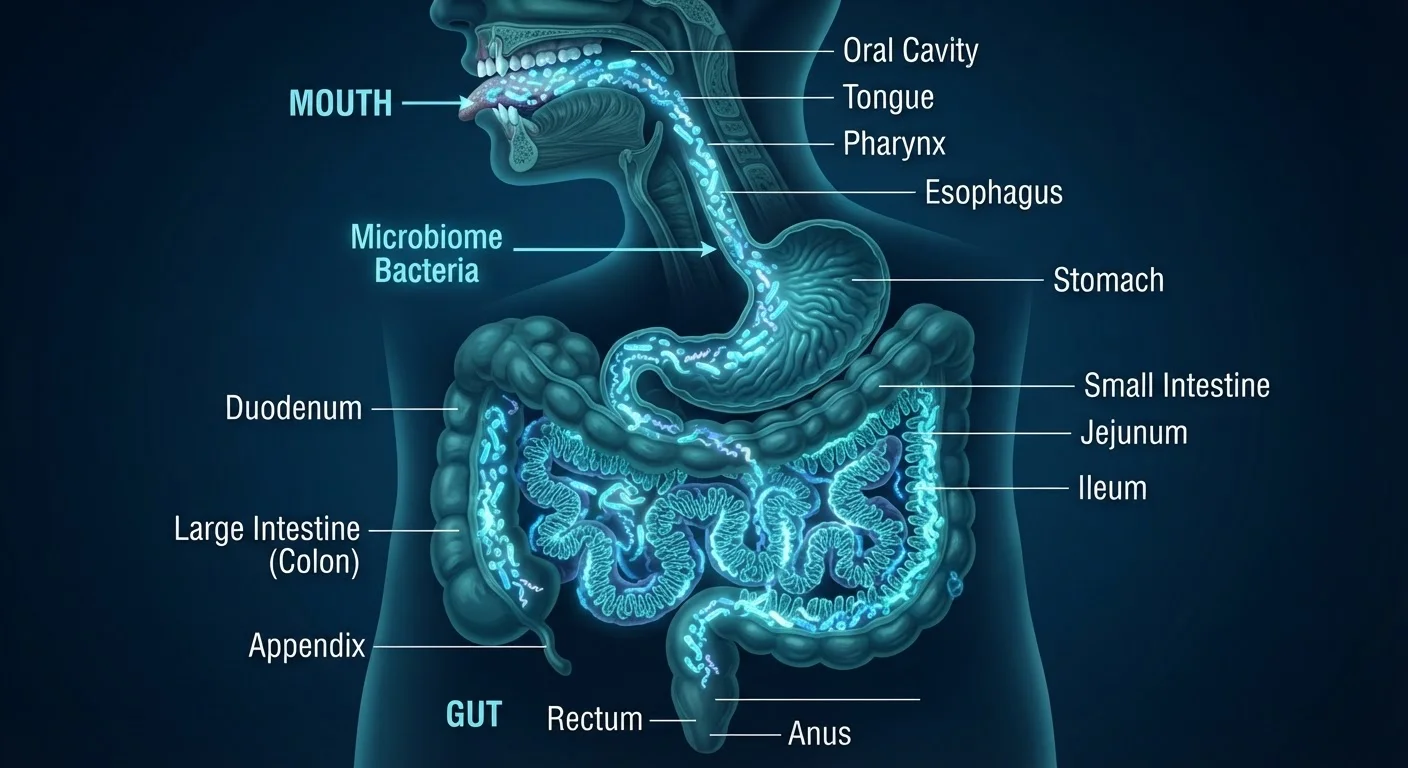
Photo: HerbHealWellness.com | Modern Guide To Wellness editorial
Key Takeaways
- The mouth harbors the body's second-largest and most diverse microbial community after the gut.
- Oral bacteria can travel to the gut and potentially disrupt the balance of intestinal microbes.
- Gum disease has been associated with altered gut microbiome profiles in early research.
- The relationship between oral and gut microbiomes is bidirectional, not a one-way street.
- This is an emerging area of science; findings are promising but not yet clinically definitive.
- Maintaining good oral hygiene supports both oral and potentially gut microbial balance.
Two Microbial Worlds, One Connected System
Your body hosts trillions of microorganisms — bacteria, fungi, viruses, and archaea — collectively called the microbiome. The gut is the most studied microbial ecosystem, but the mouth is home to more than 700 species of bacteria, making it the body's second most diverse microbial habitat. For a long time, these two communities were studied in isolation. That is beginning to change.
The gut-oral microbiome axis describes the biological crosstalk between oral and intestinal microbial communities. Every day, an adult swallows roughly one to 1.5 liters of saliva, delivering oral microorganisms directly into the digestive tract. Under normal circumstances, the acidic stomach environment and a healthy gut microbiome act as a filter, limiting how many oral bacteria take hold in the intestines. But when those defenses are weakened — by illness, antibiotic use, or gut barrier dysfunction — oral bacteria may colonize the gut and disrupt its microbial balance.
Understanding this connection is part of a broader scientific effort described in our article on the mouth-body connection.
700+
Bacterial species identified in the human mouth
According to the Human Oral Microbiome Database, the oral cavity hosts one of the most diverse microbial ecosystems in the body.
1–1.5 L
Saliva swallowed daily by an adult
This daily saliva swallowing continuously delivers oral microorganisms into the gastrointestinal tract, forming a direct microbial transmission route.
~47%
U.S. adults with some form of periodontal disease
Data from the CDC and the American Academy of Periodontology estimate nearly half of American adults aged 30 and over have periodontal disease.
What the Research Is Finding
Several research teams have detected oral bacteria — including Fusobacterium nucleatum, a species linked to gum disease — within colorectal tumor tissue and in the gut microbiomes of people with inflammatory bowel disease. These findings do not prove that oral bacteria cause these conditions, but they suggest that microbial migration from the mouth to the gut is a real and biologically significant process.
Studies comparing the gut microbiomes of people with and without periodontitis (a severe form of gum disease) have found notable differences in intestinal microbial composition. People with untreated gum disease tend to show reduced gut microbial diversity — a marker associated with poorer gut health. Conversely, patients with conditions like Crohn's disease and ulcerative colitis show higher rates of oral inflammation, hinting at a return pathway through which gut-driven immune signals may reach oral tissues.
As our coverage of oral bacteria and systemic inflammation explains, the mechanisms by which mouth microbes influence distant tissues are still being mapped.
“The mouth is not a separate entity from the rest of the body. What happens in the oral cavity has the potential to resonate throughout the gastrointestinal system and beyond — and vice versa. Understanding this bidirectionality is essential to the future of microbiome research.”
— Dr. Yvonne Vallès, Microbiome researcher, published in peer-reviewed literature on oral-gut microbial transmission
Immune Function: The Shared Language
One reason scientists believe the oral and gut microbiomes are meaningfully linked is their shared influence on immune regulation. Both the mouth and the gut contain specialized immune tissue that continuously samples microbial signals. When the microbial balance at either site is disturbed, immune cells can become dysregulated — producing inflammatory cytokines (protein messengers that drive inflammation) that circulate systemically.
This immune overlap may help explain why periodontal disease has been associated with systemic inflammatory conditions beyond the mouth, including cardiovascular disease. For a closer look at that specific association, see our analysis of gum disease and heart disease.
It is important to note that association is not causation. Many studies in this field are observational, meaning researchers identified patterns without being able to confirm that one factor directly caused another. Controlled clinical trials are underway to better establish cause-and-effect relationships.
Support Your Oral Microbiome With Daily Habits
What This Means for Everyday Oral Care
While the science continues to develop, there is already a clear practical takeaway: maintaining oral hygiene reduces the microbial load in the mouth and limits the quantity of potentially disruptive bacteria that reach the gut. Brushing twice daily, flossing, and attending regular dental check-ups are practices supported by decades of evidence for oral health — and may carry indirect systemic benefits that researchers are now beginning to quantify.
It is equally important not to overstate current findings. Not every claim linking oral health to gut or systemic health is equally supported by evidence. Our editorial on separating myth from evidence in oral-systemic health provides a grounded assessment of where the science is solid and where it is still speculative.
This article is for general informational and educational purposes only and is not a substitute for professional medical or dental advice. Always consult a qualified healthcare provider with questions about your oral or overall health.
Frequently Asked Questions
The content on this site is for informational purposes only and is not a substitute for professional advice. Always consult a qualified professional for guidance specific to your situation.