
Before Your Eye Appointment: What to Bring and What to Tell Your Doctor

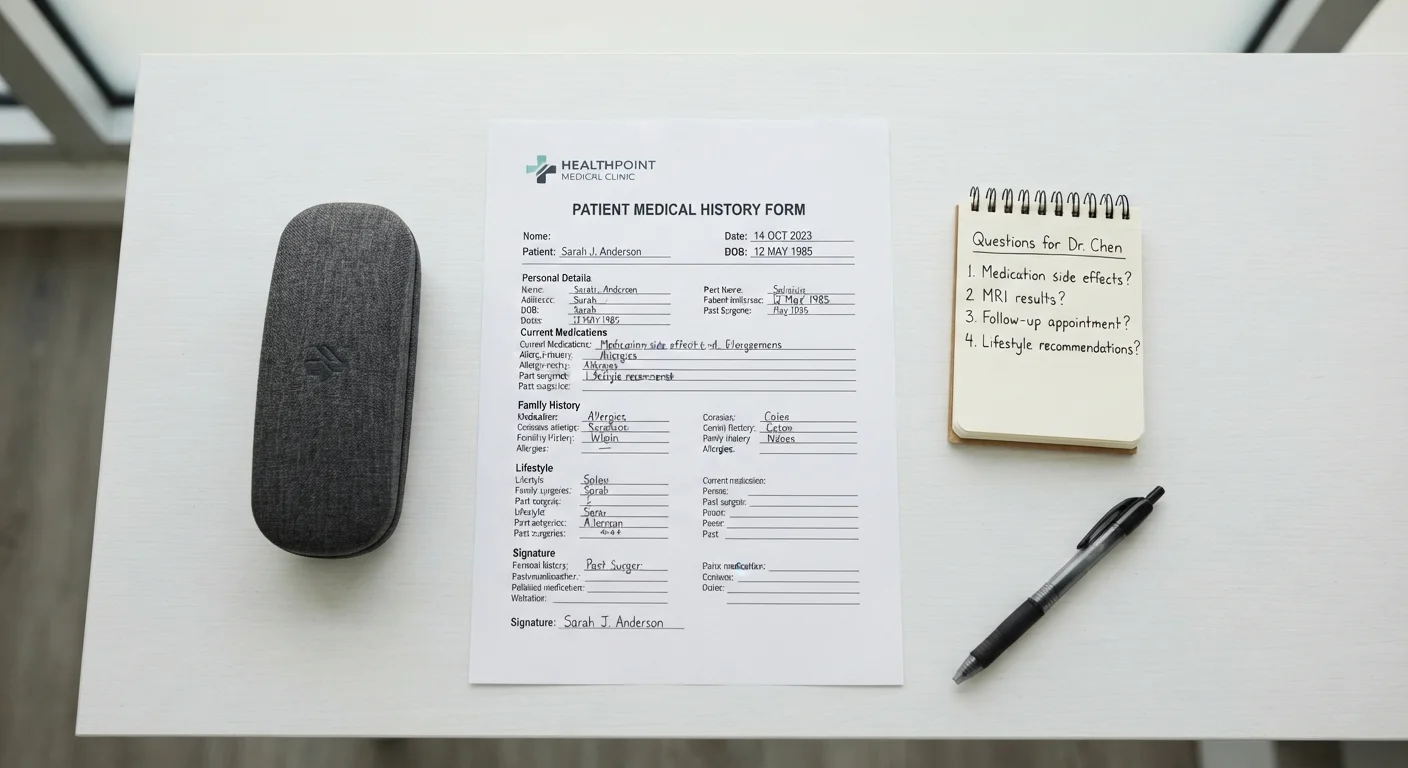
Photo: HerbHealWellness.com | Modern Guide To Wellness editorial
Key Takeaways
- Bringing a complete medication list helps your eye doctor identify drug-related vision side effects.
- Noting recent symptom changes before your visit makes it easier to communicate concerns accurately.
- Your family eye history is a critical risk factor for conditions like glaucoma and macular degeneration.
- Writing down questions in advance ensures you leave with the information you actually need.
- Wearing or bringing your current glasses or contacts gives your doctor a baseline for comparison.
Why Preparation Makes Your Eye Exam More Effective
A routine eye exam covers more ground than most patients expect. Beyond updating your glasses or contact lens prescription, your eye doctor evaluates the health of structures that can reflect systemic conditions across your entire body. As covered in our article on what your eye doctor can infer beyond your prescription, a dilated exam can reveal early signs of diabetes, hypertension, and neurological changes — often before symptoms appear elsewhere.
Getting the most from that visit requires a small investment of preparation time. When you arrive with organized records, a clear description of any symptoms, and a written list of questions, your doctor can spend less time gathering background information and more time on clinical assessment. This checklist walks you through exactly what to gather, what to share, and what to ask.
Medication List
A written or printed record of all current medications and supplements helps your doctor identify any that may affect intraocular pressure or visual function.
Current Eyeglasses or Contact Lens Packaging
Your existing correction gives the doctor a starting baseline and prevents relying solely on memory for prescription details.
Notepad or Notes App
Use it to record questions beforehand and capture your doctor's answers and recommendations during the appointment.
Insurance and Vision Benefit Card
Confirms your coverage details and helps the front desk verify benefits before services are performed.
Previous Eye Exam Records
Historical prescriptions and exam notes allow your doctor to track changes in vision and eye health over time.
Symptom Log
A brief written record of when symptoms started, how often they occur, and what makes them better or worse gives your doctor far more to work with than a general description.
Documents, Records, and Items to Bring
Having the right physical items with you prevents gaps in your doctor's assessment. Your current corrective lenses — glasses or contacts — are essential, since your provider will use them as a reference point when assessing whether your vision has changed. If you're being seen for the first time by this practice, bringing previous prescription records allows a meaningful comparison over time.
Your medication list is equally important. Several commonly used drugs — including certain antihistamines, antidepressants, and corticosteroids — can influence intraocular pressure, tear production, or visual clarity. For a more structured approach to tracking what to bring to any healthcare appointment, the symptom tracking checklist offers a useful complement to this guide.
Documents and Records to Bring
Medical History to Share
Symptoms to Describe
Questions to Ask Your Doctor
How to Describe Symptoms Clearly
Vague descriptions like "my eyes feel off" make it harder for your doctor to prioritize what to examine. Instead, aim to be specific: which eye is affected, when the symptom first appeared, whether it's constant or intermittent, and whether anything — screen time, bright light, reading — triggers or worsens it.
Sudden Vision Changes Need Urgent Attention
Writing this down before your appointment is far more reliable than trying to recall details on the spot. A log that covers the past few weeks gives your doctor a pattern rather than a single data point. This habit of pre-visit documentation is explored in more detail in how to track symptoms before a doctor's appointment.
Dilation Affects Your Ability to Drive
Related Appointments and Special Circumstances
If you're preparing a child for their first exam rather than attending for yourself, the preparation process has some specific differences — including how to ease anxiety and what developmental milestones eye doctors assess. Our guide on preparing your child for their first eye exam covers those details specifically.
If you're considering contact lenses for the first time, a fitting appointment has its own preparation steps. See our guide to before your first contact lens fitting for what to expect. And if your exam prompts a referral for further diagnostic testing, preparing for a diagnostic procedure can help you approach that next step with confidence.
Understanding any findings your doctor shares is easier when you have a broader sense of common conditions. Our common eye conditions hub is a useful starting point for learning about what may be flagged during your exam.
This article is for general informational purposes only and is not a substitute for professional medical advice, diagnosis, or treatment. Always consult a qualified eye care professional regarding any symptoms or concerns about your vision or eye health.
The content on this site is for informational purposes only and is not a substitute for professional advice. Always consult a qualified professional for guidance specific to your situation.