
Contact Lens Types at a Glance: Soft, Rigid, Daily, and Extended-Wear

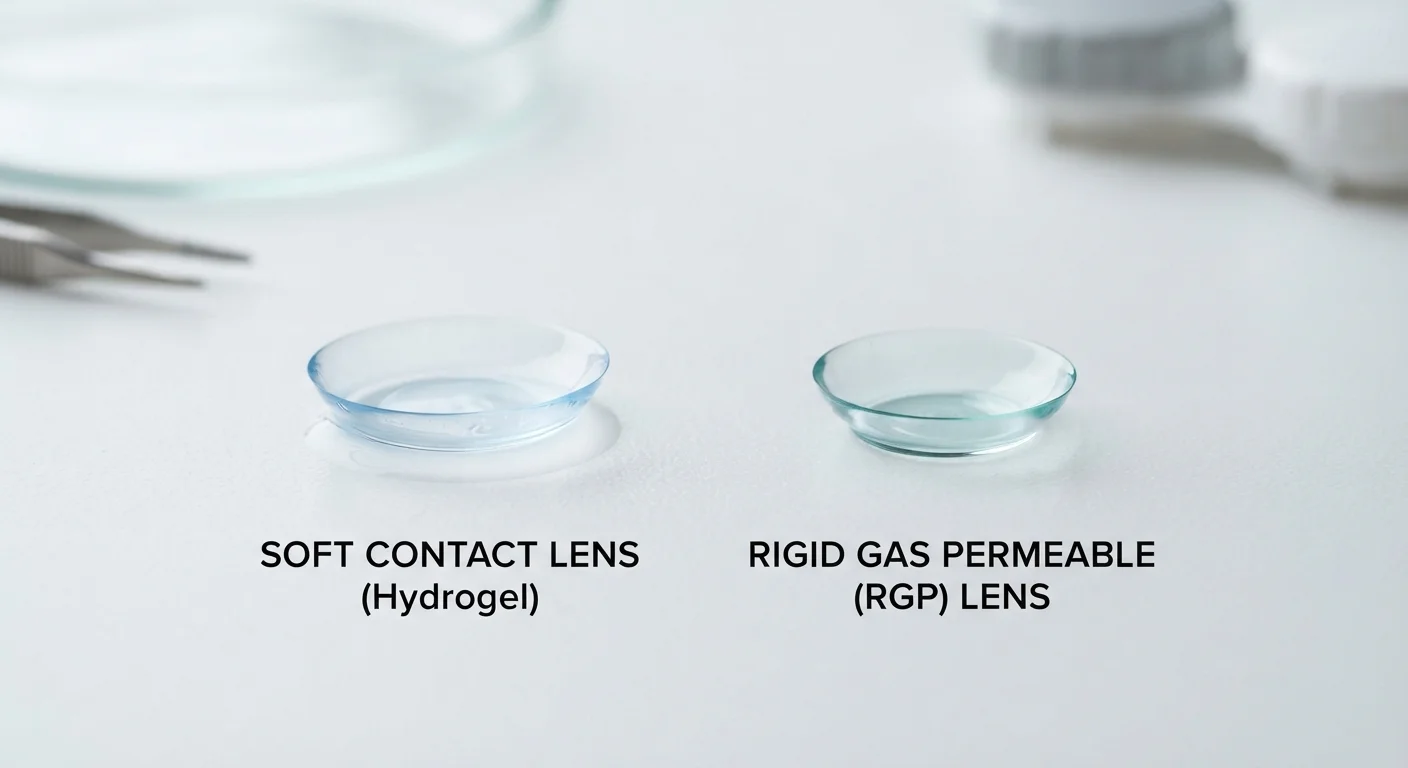
Photo: HerbHealWellness.com | Modern Guide To Wellness editorial
Soft Lenses: The Most Common Starting Point
Soft contact lenses are made from flexible, water-containing plastics — either traditional hydrogel or the newer silicone hydrogel. Silicone hydrogel lenses transmit significantly more oxygen to the cornea and have become the dominant material in modern fittings. Most people adapt to soft lenses within a few days, making them a practical first choice for new wearers.
Soft lenses address the most prevalent refractive errors:
- Myopia (nearsightedness) — spherical soft lenses in minus powers
- Hyperopia (farsightedness) — spherical soft lenses in plus powers
- Astigmatism — toric soft lenses, which have a stabilizing design to prevent rotation
- Presbyopia — multifocal soft lenses with distance and near zones
If you are still weighing lenses against frames, the Eyeglasses vs. Contact Lenses guide walks through lifestyle considerations that affect the choice.
Soft contact lens
A flexible lens made from hydrogel or silicone hydrogel materials that conforms to the shape of the eye. Soft lenses are the most widely prescribed type in the United States.
Rigid gas-permeable (RGP) lens
A firm, durable lens that holds its shape on the eye and allows oxygen to pass through the lens material. RGPs can deliver sharper vision than soft lenses for some prescriptions.
Toric lens
A contact lens designed with two different powers in perpendicular meridians to correct astigmatism. Toric lenses come in both soft and rigid materials.
Multifocal lens
A contact lens that incorporates two or more focusing zones, allowing correction of both near and distance vision — typically used by people with presbyopia.
Extended-wear lens
A contact lens approved by the FDA for continuous wear, including during sleep, for a specified number of consecutive nights — usually up to seven or thirty nights depending on the lens.
Oxygen transmissibility (Dk/t)
A measurement of how much oxygen passes through a contact lens to the cornea. Higher Dk/t values indicate better oxygen flow, which is important for corneal health.
Rigid Gas-Permeable and Specialty Lenses
Rigid gas-permeable (RGP) lenses are firm, durable lenses that hold their shape rather than conforming to the eye. Because RGPs maintain a precise optical surface, they can deliver sharper vision than soft lenses for people with significant astigmatism or irregular corneal surfaces.
Specialty rigid lens designs are frequently recommended for specific conditions:
- Keratoconus — a progressive thinning of the cornea that distorts vision; RGPs or scleral lenses (large-diameter lenses that vault over the cornea) are often necessary
- Post-surgical corneas — eyes that have undergone LASIK or other procedures may need scleral lenses if residual irregularity is present
- Orthokeratology (Ortho-K) — specially designed rigid lenses worn overnight to temporarily reshape the cornea, providing lens-free daytime vision; often discussed in myopia management for children and adults
Rigid lenses require a longer adaptation period than soft lenses, and the fitting process is more involved. Your eye care provider can determine whether an RGP design would benefit your specific prescription and corneal shape.
For context on the numbers in any lens prescription, see the plain-language prescription guide.
| Most common lens material | Silicone hydrogel (American Academy of Ophthalmology) |
| Daily disposable replacement schedule | Discard after each single day of wear |
| FDA-approved continuous wear maximum | Up to 30 consecutive nights (select lenses) (U.S. Food and Drug Administration) |
| Conditions corrected by specialty lenses | Keratoconus, high astigmatism, irregular corneas |
| Prescription required | Yes — in all 50 U.S. states (Fairness to Contact Lens Consumers Act) |
Replacement Schedules: Daily, Biweekly, Monthly, and Extended-Wear
Regardless of material, all contact lenses are categorized by how long they are worn before replacement. This schedule affects both eye health and care routine.
- Daily disposables
- A fresh lens is used each day and discarded at night. No cleaning solutions are required, making these the most hygienic and convenient option for many wearers — particularly those who wear lenses part-time or have allergies.
- Biweekly (two-week) lenses
- Worn for up to two weeks with nightly removal and cleaning. Require a storage case and multipurpose or hydrogen peroxide solution.
- Monthly lenses
- Replaced once a month after daily removal and proper disinfection. A cost-effective format for full-time wearers who adhere to cleaning routines.
- Extended-wear lenses
- Approved by the FDA for continuous wear — typically seven consecutive nights for some lenses, up to thirty nights for specific silicone hydrogel designs. Extended wear increases the risk of corneal hypoxia and infection; this schedule requires explicit approval and monitoring from an eye care provider.
Contacts Require a Valid Prescription
If you are preparing for your first fitting, the first contact lens fitting guide covers what checks to expect and habits to establish from day one.
This article is for informational purposes only and does not constitute medical advice. Consult a licensed eye care provider for guidance specific to your vision needs and eye health.
The content on this site is for informational purposes only and is not a substitute for professional advice. Always consult a qualified professional for guidance specific to your situation.