
Eyeglasses vs. Contact Lenses: Which Fits Your Lifestyle?

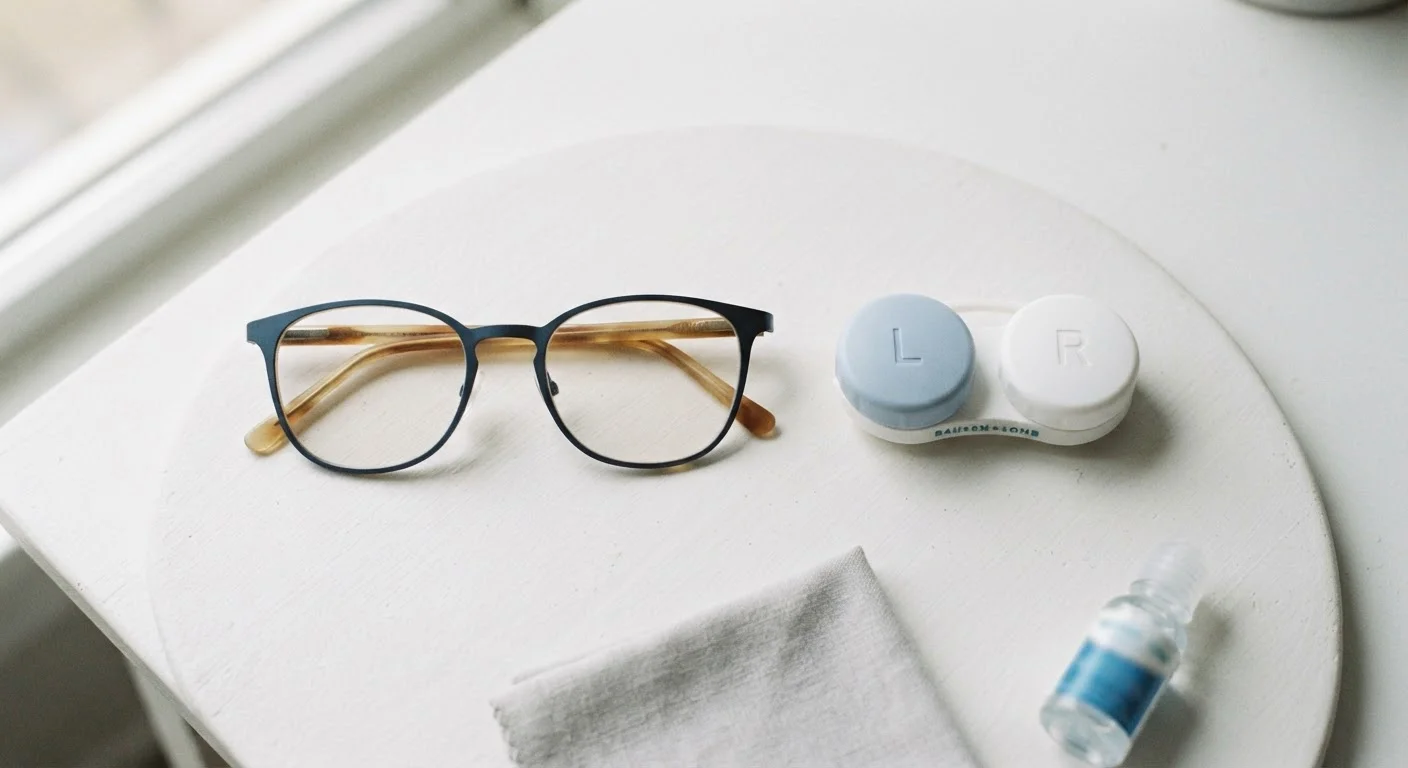
Photo: HerbHealWellness.com | Modern Guide To Wellness editorial
Key Takeaways
- Eyeglasses require less daily maintenance and carry a lower infection risk than contact lenses.
- Contacts offer a wider, uninterrupted field of view, which many wearers prefer for physical activity.
- Long-term costs differ significantly — glasses involve higher upfront costs, contacts have ongoing supply expenses.
- Some prescriptions or eye conditions make one option clinically more suitable than the other.
- Many people use both, switching based on the activity or situation rather than committing exclusively to one.
How Each Option Corrects Vision
Both eyeglasses and contact lenses correct refractive errors — the optical imperfections that cause blurry vision. Common examples include myopia (nearsightedness), hyperopia (farsightedness), astigmatism, and presbyopia. In each case, the lens bends incoming light so it focuses correctly on the retina.
Eyeglass lenses sit roughly 12 millimeters in front of the eye and correct vision through a fixed optical zone. Contact lenses sit directly on the tear film of the cornea, moving naturally with the eye. This positioning difference has real consequences: contacts provide a wider, more uniform field of corrected vision, while glasses create a small optical gap between the lens and eye that can slightly reduce peripheral clarity.
Not all prescriptions are equally well-served by both options. High prescriptions in glasses can cause some image magnification or distortion at the edges of the lens. Contacts eliminate this effect. Conversely, some corneal irregularities — such as keratoconus — may be better managed with rigid gas-permeable contact lenses than with glasses. Your eye care provider is the appropriate person to determine which format best suits your prescription and eye anatomy. For a detailed look at the lens categories available, see Contact Lens Types at a Glance.
Comfort, Convenience, and Daily Wear
Comfort is highly personal, but a few consistent patterns emerge. Glasses demand zero eye contact — there's no adaptation period, no insertion learning curve, and no discomfort from a foreign object on the eye. For people with sensitive eyes or chronic dryness, glasses are typically the more comfortable long-term option.
Contacts require an adjustment period, particularly for first-time wearers. Soft lenses are generally comfortable within days; rigid lenses may take several weeks. Environmental factors — dry air, wind, smoke, and prolonged screen time — can accelerate lens dehydration and cause discomfort, especially later in the day.
From a convenience standpoint, glasses win on simplicity. Contacts require clean hands, a sterile case, and appropriate solution. Wearing them longer than recommended or sleeping in non-extended-wear lenses significantly raises infection risk. For anyone considering their first fitting, Before Your First Contact Lens Fitting provides a useful preparation guide.
| Criterion | Eyeglasses | Contact Lenses |
|---|---|---|
| Field of vision | Limited by frame edges | Full peripheral correction |
| Infection risk | None | Low to moderate (hygiene-dependent) |
| Dry eye impact | None | Can worsen symptoms |
| Daily maintenance | Minimal — clean lenses occasionally | Daily cleaning or daily disposal |
| Upfront cost | Higher | Lower |
| Recurring cost | Low | Ongoing supply costs |
| Sports suitability | Limited — can slip or break | Generally well-suited |
| UV protection | Available via lens coating | Available in some lens brands |
Eye Health and Safety Considerations
Eyeglasses pose virtually no direct risk to eye health. They can provide a physical barrier against dust, wind, and some UV exposure (when UV-protective coatings are included), and they don't interact with the eye's surface at all.
Contacts, when properly used, are safe — but the margin for error is narrower. The American Academy of Ophthalmology notes that contact lens misuse is one of the most common causes of preventable corneal infections. Risks include microbial keratitis (a corneal infection), corneal hypoxia (oxygen deprivation from extended wear), and lens-related inflammation. Daily disposable lenses generally carry a lower infection risk than reusable lenses, since they eliminate the cleaning and storage steps where errors commonly occur.
Certain eye conditions make contacts less advisable — dry eye disease, blepharitis, recurrent corneal erosions, and some allergies may all be aggravated by lens wear. Visit the Common Eye Conditions hub for more detail on conditions that influence lens suitability. For practical hygiene guidance, Caring for Contact Lenses Safely outlines the habits that reduce risk most effectively.
When to Involve a Professional
Cost Over Time and Lifestyle Fit
Eyeglasses typically involve a higher upfront investment — frames plus lenses can range considerably depending on materials, coatings, and lens complexity — but once purchased, they carry no recurring cost beyond occasional repairs or updated prescriptions. A well-made pair can last two to three years before a prescription change necessitates replacement.
Contact lenses have lower per-unit costs but accumulate into meaningful ongoing expenses. Daily disposables, the most hygienic option, are used once and discarded. Monthly or bi-weekly lenses are less costly per pair but require solution, cases, and careful compliance. Annual contact lens supply costs vary widely by lens type and prescription complexity.
45M+
Estimated US contact lens wearers
The CDC estimates over 45 million Americans wear contact lenses, making it one of the most common forms of vision correction.
1 in 5
Contact wearers report complications
CDC data indicates roughly one in five contact lens wearers experiences at least one complication — most commonly related to hygiene lapses.
Many wearers sidestep the either-or question entirely by keeping both. Glasses serve as the default for home, desk work, and evenings; contacts are reserved for sports, social occasions, or days when frames feel impractical. This hybrid approach also provides a backup if one option is temporarily unavailable. If you're curious whether surgical correction might eventually enter the picture, candidacy factors for laser eye surgery is a useful next read. Regular eye exams remain essential regardless of which correction method you use — the Eye Exam and Prevention hub offers guidance on maintaining long-term eye health.
This article is for general informational purposes only and does not constitute medical advice. Consult a qualified eye care professional for guidance specific to your vision needs and eye health.
The content on this site is for informational purposes only and is not a substitute for professional advice. Always consult a qualified professional for guidance specific to your situation.