
Diagnostic Equipment Glossary: 40 Terms Clinicians Use and What They Mean

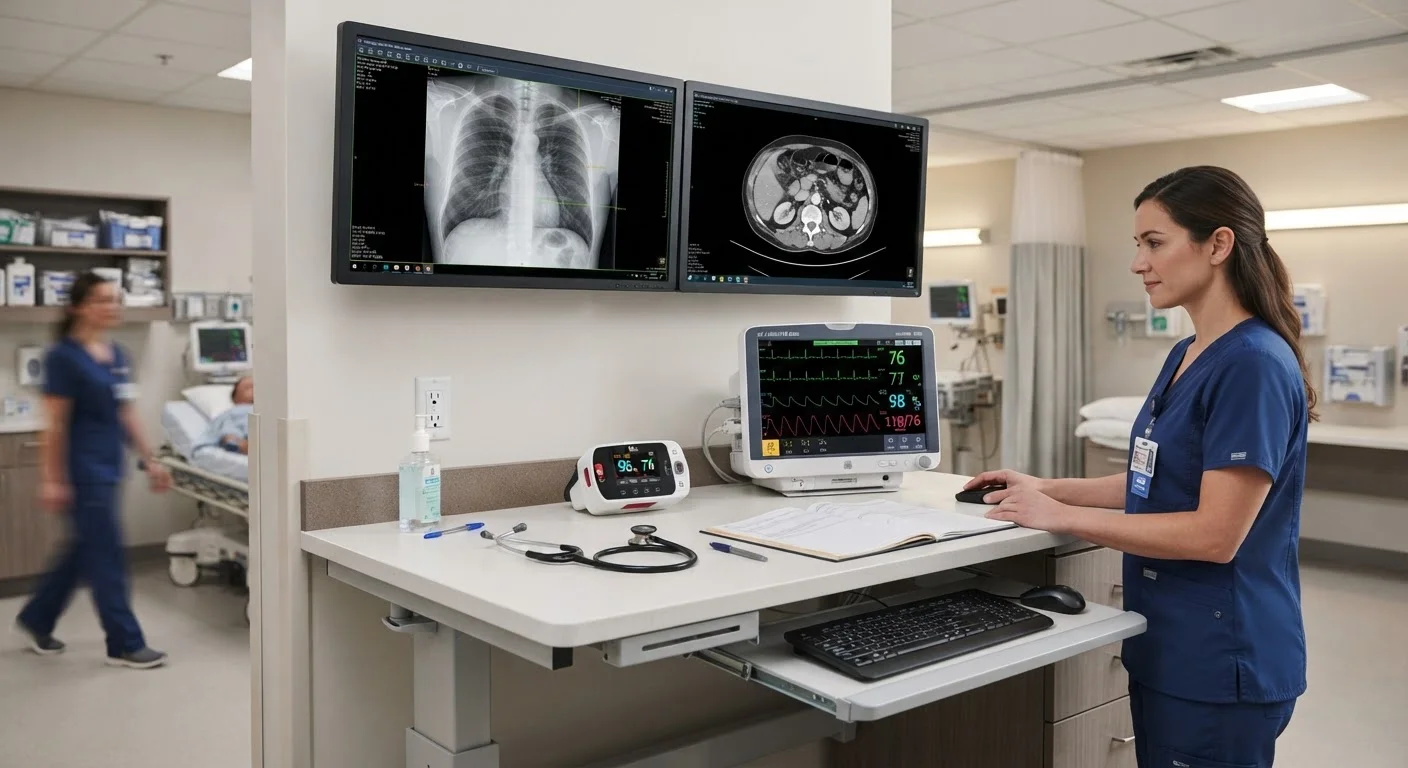
Photo: HerbHealWellness.com | Modern Guide To Wellness editorial
Why This Glossary Matters
Walking into a clinical encounter—whether a routine checkup or a specialist consultation—can feel overwhelming when the clinicians around you are speaking a shorthand built from decades of medical training. Understanding the names and purposes of the tools being used on or around you is a meaningful step toward informed participation in your own care.
This reference defines 40 terms spanning imaging systems, physiologic measurement devices, laboratory analyzers, and the technical vocabulary used to describe their outputs. It complements hands-on resources like our field guide to home health monitoring devices and the broader overview found in Inside the Diagnostic Lab.
Electrocardiogram (ECG/EKG)
A test that records the electrical activity of the heart over a period of time using electrodes placed on the skin. It produces a waveform tracing used to detect arrhythmias, ischemia, and structural abnormalities.
Spirometer
A device that measures the volume and speed of air a patient can inhale and exhale. Results are used to diagnose and monitor conditions such as asthma and chronic obstructive pulmonary disease (COPD).
Pulse Oximeter
A non-invasive sensor, typically clipped to a fingertip, that estimates the percentage of hemoglobin in the blood carrying oxygen (SpO2). Normal readings in healthy adults generally fall between 95% and 100%.
Sphygmomanometer
The clinical instrument used to measure blood pressure, consisting of an inflatable cuff and a pressure gauge. Results are expressed as two numbers: systolic pressure over diastolic pressure, in millimeters of mercury (mmHg).
Ultrasound Transducer
A handheld probe that emits and receives high-frequency sound waves to produce real-time images of internal organs and tissues. It is used across specialties including cardiology, obstetrics, and emergency medicine.
CT Scanner (Computed Tomography)
An imaging system that uses rotating X-ray beams and computer processing to generate cross-sectional images of the body. CT scans provide detailed views of bones, blood vessels, and soft tissues.
MRI (Magnetic Resonance Imaging)
A device that uses strong magnetic fields and radio waves to produce detailed images of soft tissue, organs, and the nervous system. It does not use ionizing radiation.
Fluoroscope
An X-ray-based imaging system that produces real-time moving images of internal structures. It is commonly used during procedures such as cardiac catheterization, barium swallow studies, and joint injections.
Hematology Analyzer
A laboratory instrument that performs a complete blood count (CBC), measuring red blood cells, white blood cells, platelets, hemoglobin, and related indices from a blood sample.
Point-of-Care (POC) Testing Device
Any diagnostic tool designed to deliver rapid results at or near the patient, without sending samples to a central laboratory. Common examples include bedside glucose meters and rapid antigen tests.
Capnograph
A monitor that measures the concentration of carbon dioxide (CO2) in exhaled air, expressed as end-tidal CO2 (EtCO2). It is used to confirm proper airway placement and monitor ventilation in sedated or critically ill patients.
Sensitivity and Specificity
Statistical measures of a diagnostic test's performance. Sensitivity refers to a test's ability to correctly identify those who have a condition (true positive rate); specificity refers to its ability to correctly identify those who do not (true negative rate).
This article is for general informational and educational purposes only. It is not medical advice. Always consult a qualified healthcare professional for questions about your health, symptoms, or care.
Key Measurements and Device Concepts at a Glance
Before diving into individual definitions, it helps to understand a few organizing principles. Diagnostic equipment generally falls into one of four categories: imaging systems (which produce visual representations of internal anatomy), physiologic monitors (which track real-time body functions), laboratory analyzers (which process biological samples), and point-of-care devices (which deliver rapid results at or near the patient).
| Primary imaging modalities in clinical use | X-ray, CT, MRI, Ultrasound, Nuclear Medicine (PET/SPECT) (American College of Radiology, general reference) |
| Standard blood pressure unit | mmHg (millimeters of mercury) (International clinical convention) |
| Normal adult resting SpO2 range | 95%–100% (General clinical reference; individual thresholds vary) |
| ECG leads in a standard 12-lead recording | 12 (Standard clinical protocol) |
| POC test result turnaround (typical) | Minutes to 1 hour (Compared to hours for central lab processing) |
| Radiation used in MRI | None (uses magnetic fields and radio waves) (FDA, general device classification) |
Understanding how these categories differ helps contextualize why imaging alone cannot diagnose most conditions — clinicians typically combine outputs from multiple device categories before reaching a conclusion. For a look at how the field has changed over time, see Diagnostic Equipment Through the Decades.
Diagnostic Devices vs. Therapeutic Devices
After tests are completed, the data generated by these devices enters a structured workflow. What Happens to Diagnostic Data After Your Test explains how results are stored, interpreted, and shared within a care team.
70%+
Clinical decisions informed by lab diagnostics
Widely cited estimate in clinical literature suggesting the majority of medical decisions involve some form of laboratory or diagnostic test result.
~40 ms
Time resolution of a standard 12-lead ECG
Standard ECG machines sample cardiac electrical activity at intervals as fine as 40 milliseconds, enabling detection of subtle rhythm abnormalities.
3–4 T
Magnetic field strength of clinical MRI scanners
Most hospital MRI systems operate at 1.5 to 3 Tesla; research-grade systems may reach higher field strengths.
The content on this site is for informational purposes only and is not a substitute for professional advice. Always consult a qualified professional for guidance specific to your situation.