
Inside the Diagnostic Lab: What the Machines Around You Actually Do

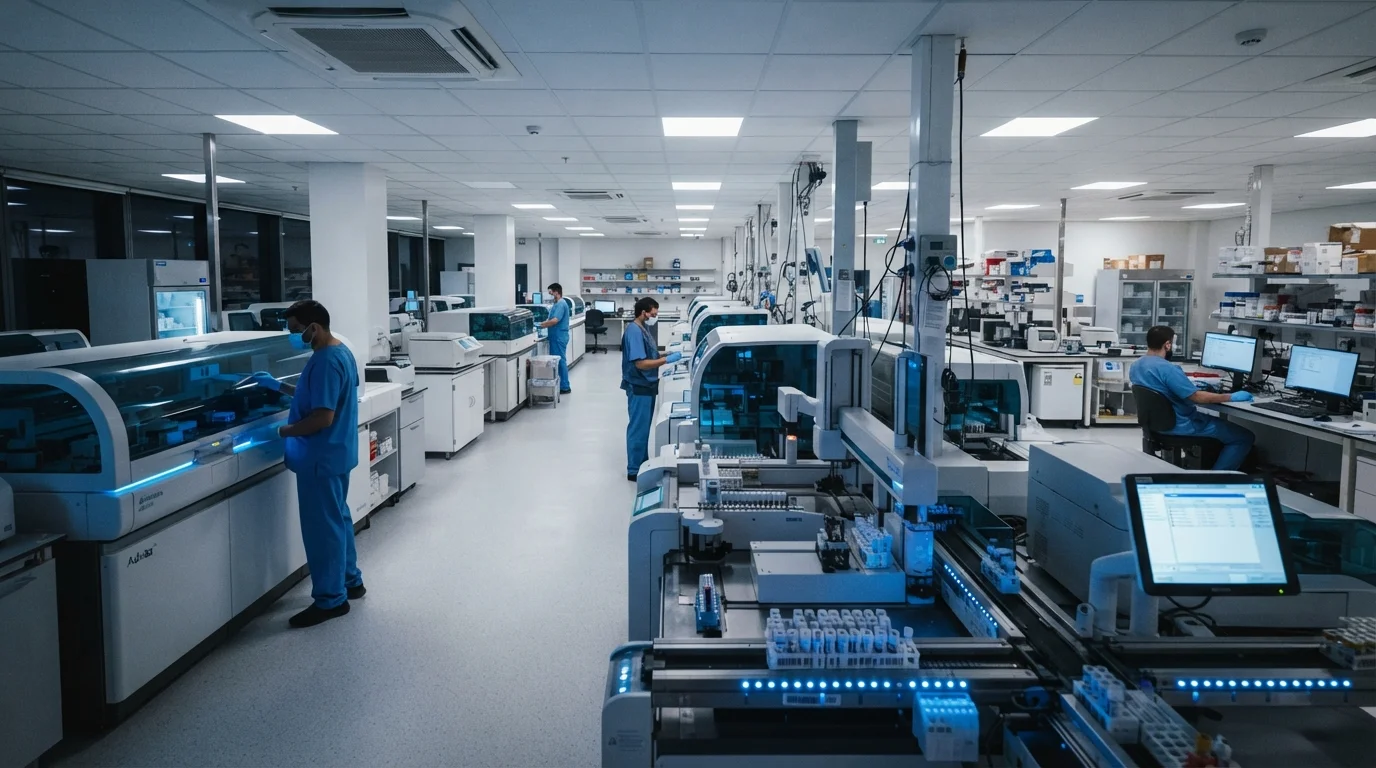
Photo: HerbHealWellness.com | Modern Guide To Wellness editorial
Key Takeaways
- Diagnostic labs use multiple categories of instruments, each targeting a different type of biological information.
- Hematology and chemistry analyzers examine blood and body fluids to detect disease markers and imbalances.
- Imaging machines create visual maps of internal structures using radiation, sound waves, or magnetic fields.
- No single machine can diagnose most conditions — clinicians combine results across instruments and patient history.
- Understanding what each machine does helps patients engage more meaningfully with their care.
What Is a Diagnostic Lab?
A diagnostic laboratory is a clinical workspace equipped with specialized instruments designed to detect, measure, and characterize biological information from patients. When a clinician orders a "workup," they are directing biological samples or the patient themselves to one or more of these instruments.
Labs range from large hospital facilities running thousands of tests daily to smaller outpatient collection centers. Despite their differences in scale, most share a common set of instrument categories: analyzers for body fluids, machines that produce internal images, monitors that read electrical signals, and instruments that identify microorganisms or examine tissue at the cellular level.
For a broader look at how these tools have changed over time, the history of clinical diagnostic equipment provides useful context. Understanding what each machine does — and what it cannot do — is a foundation for informed patient engagement.
Hematology analyzer
An automated machine that counts and measures the different types of cells in a blood sample, producing a complete blood count (CBC).
Immunoassay
A laboratory technique that detects specific proteins — such as hormones or antibodies — by exploiting their ability to bind to targeted molecules.
Ionizing radiation
A form of energy — used in X-rays and CT scans — powerful enough to pass through tissue and produce images, used at carefully controlled clinical doses.
PCR (Polymerase Chain Reaction)
A molecular technique that copies a specific segment of DNA or RNA millions of times so that even tiny amounts of genetic material can be detected and identified.
Pathologist
A physician who specializes in diagnosing disease by examining tissue, blood, and other body fluid samples, often under a microscope.
Electromyography (EMG)
A diagnostic test that records the electrical activity of muscles and the nerves that control them to help identify nerve or muscle disorders.
Blood and Fluid Analyzers
The most frequently used lab instruments are hematology analyzers and chemistry analyzers. A hematology analyzer counts and characterizes blood cells — red cells, white cells, and platelets — producing a report called a complete blood count (CBC). Abnormal cell counts or shapes can signal infections, anemia, clotting disorders, or certain cancers.
Chemistry analyzers measure dissolved substances in blood or urine: electrolytes like sodium and potassium, metabolic markers like creatinine and glucose, liver enzymes, lipids, and hormone levels. These values tell clinicians how well organs such as the kidneys, liver, and thyroid are functioning.
A third category, immunoassay analyzers, detects specific proteins — including antibodies and antigens — using highly targeted biochemical reactions. These instruments are central to allergy testing, hormone panels, and infectious disease screening, including tests for HIV and hepatitis markers.
Before Your Blood Draw: What Helps Accuracy
Imaging Machines: Looking Inside Without Surgery
Imaging instruments create visual representations of internal anatomy using different physical principles, each with distinct clinical strengths.
- X-ray machines pass ionizing radiation through the body. Dense structures like bone absorb more radiation and appear white on the image. X-rays are fast and effective for assessing fractures and lung conditions.
- CT scanners (computed tomography) rotate an X-ray source around the patient to produce detailed cross-sectional images. They are particularly useful for evaluating soft tissue injuries, internal bleeding, and complex bone fractures.
- MRI machines (magnetic resonance imaging) use powerful magnets and radio waves — no ionizing radiation — to image soft tissue in exceptional detail. They are commonly used for brain, spinal cord, joint, and organ evaluation.
- Ultrasound machines emit high-frequency sound waves that bounce off tissue interfaces, generating real-time images. They are widely used in obstetric, cardiac, and abdominal assessment and carry no radiation exposure.
It is important to understand that imaging reveals structure, not definitive diagnosis. The role of imaging in the broader diagnostic process explains why scans are always interpreted alongside other data.
Electrical Signal Monitors
Certain diagnostic instruments measure the electrical activity generated by organs rather than analyzing tissue or producing images.
An electrocardiograph (ECG/EKG) records the electrical signals coordinating heart muscle contractions. Electrodes placed on the skin detect these signals, and the output — a waveform tracing — allows clinicians to identify arrhythmias, evidence of prior heart attacks, conduction abnormalities, and other cardiac conditions.
An electroencephalograph (EEG) applies a similar principle to the brain, detecting electrical activity through scalp electrodes. EEGs are used to evaluate epilepsy, sleep disorders, and altered levels of consciousness.
Electromyography (EMG) instruments assess the electrical activity of muscles and the nerves controlling them, helping to distinguish nerve damage from muscle disease.
Implanted Devices and MRI Compatibility
Microbiology and Pathology Instruments
Microbiology analyzers identify bacteria, viruses, and fungi from patient samples such as throat swabs, blood cultures, or wound specimens. Modern automated systems can identify a pathogen and determine its susceptibility to antibiotics within hours, a process that once took days.
Molecular diagnostic platforms — including PCR machines (polymerase chain reaction) — amplify and detect specific genetic sequences from pathogens or human cells. PCR is used to diagnose infections, detect cancer-associated genetic mutations, and screen for inherited conditions.
In the pathology department, tissue processors and staining machines prepare biopsied material for examination under a microscope. A pathologist examines the stained slides to identify cellular changes consistent with cancer, inflammation, or other disease processes.
For an accessible reference to the terminology you may encounter across all these instruments, the diagnostic equipment glossary covers 40 key terms clinicians use in practice.
How Clinicians Use Multiple Machines Together
No single machine produces a complete diagnosis. A clinician interpreting an abnormal CBC result will typically correlate it with chemistry values, imaging findings, patient symptoms, and medical history before drawing a conclusion. This multi-source approach reduces error and accounts for the biological variability inherent in any single measurement.
After results are generated, they enter a documentation and communication chain. The journey of diagnostic data after your test describes how results are stored, reviewed, and used in ongoing care.
If you use monitoring devices at home, understanding clinical-grade instruments also provides useful context for how your home readings relate to the precision tools used in a care setting. The field guide to home health monitoring devices bridges that gap clearly.
This article is for general informational and educational purposes only and does not constitute medical advice. Always consult a qualified healthcare professional about your specific symptoms, test results, or health decisions.
Diagnostic Equipment Glossary: 40 Clinical Terms Explained
A concise reference covering the diagnostic tools, measurements, and technical terms you are most likely to encounter in a clinical setting — useful alongside this article.
Point-of-Care Testing: Diagnostics Outside the Lab
Explains how bedside and clinic-based rapid-test devices work, what they measure, and how their speed and portability compare to central laboratory analysis.
Home Health Monitoring Devices Field Guide
Covers the devices patients use at home — from blood pressure monitors to pulse oximeters — and explains what each measurement actually means.
Frequently Asked Questions
The content on this site is for informational purposes only and is not a substitute for professional advice. Always consult a qualified professional for guidance specific to your situation.