
Pulse Oximetry: What Oxygen Saturation Readings Tell You — and What They Don't

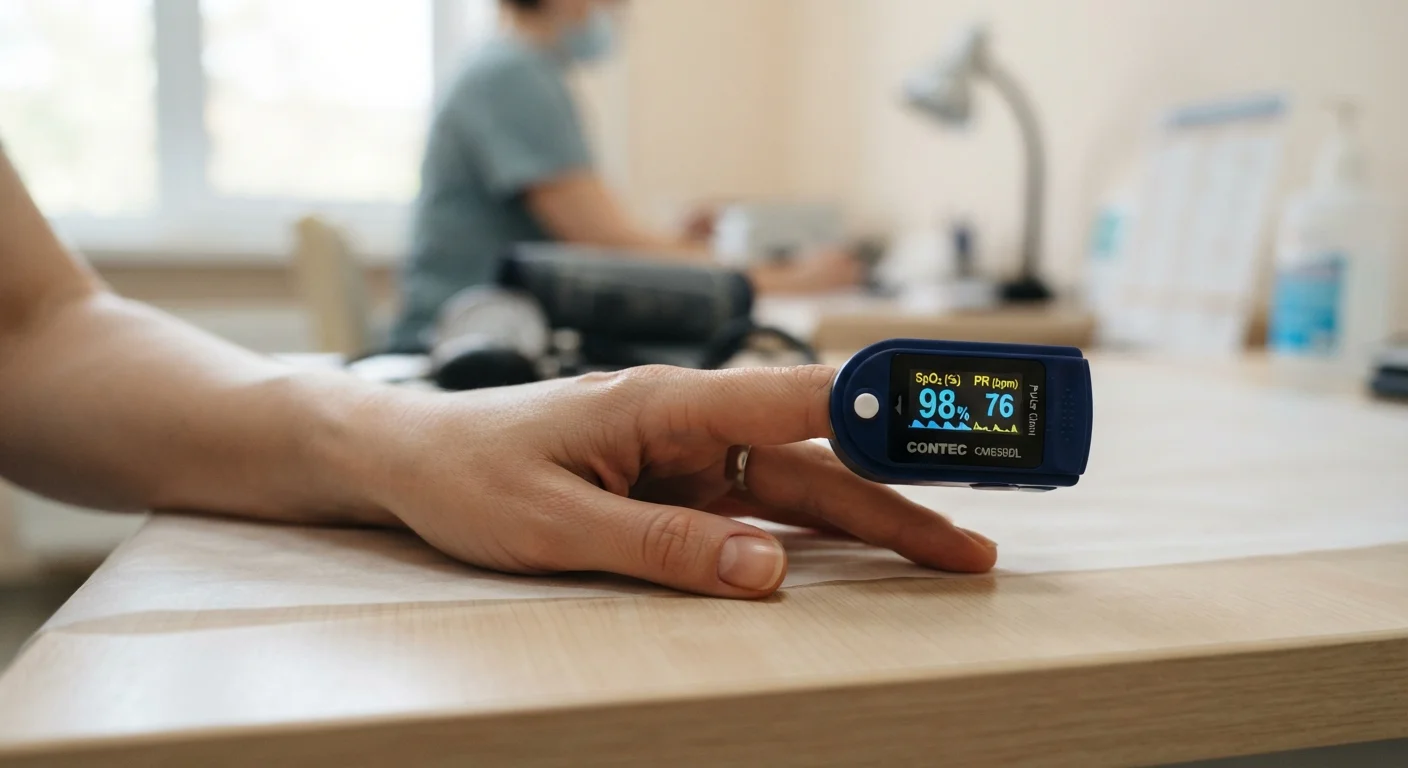
Photo: HerbHealWellness.com | Modern Guide To Wellness editorial
Key Takeaways
- A normal SpO2 reading for healthy adults falls between 95% and 100% at sea level.
- Readings below 90% are generally considered a medical concern requiring prompt evaluation.
- Pulse oximeters estimate oxygen saturation — they are not a substitute for arterial blood gas testing.
- Skin tone, nail polish, poor circulation, and motion can all reduce reading accuracy.
- A single reading provides a snapshot, not a full picture of respiratory or cardiovascular health.
- Always consult a healthcare professional if you are concerned about your oxygen levels.
How a Pulse Oximeter Actually Works
A pulse oximeter uses a principle called photoplethysmography — a technique that shines two wavelengths of light (typically red and infrared) through a translucent part of the body, most often a fingertip. Oxygenated and deoxygenated hemoglobin absorb these wavelengths differently. By measuring the ratio of light absorption, the device calculates an estimated percentage of hemoglobin carrying oxygen.
The device also detects the pulse wave with each heartbeat, which is why most oximeters display both SpO2 and heart rate simultaneously. A perfusion index or waveform bar is often shown as well — a strong, consistent waveform generally indicates a more reliable reading.
It is important to understand what the device is not measuring. A pulse oximeter does not measure how much oxygen is dissolved in plasma, how efficiently your lungs transfer oxygen, your carbon dioxide levels, or whether your tissues are actually using the oxygen delivered. For a broader look at the vital signs these devices fit alongside, see Vital Signs 101.
Understanding Your SpO2 Number
SpO2 is expressed as a percentage representing the proportion of hemoglobin molecules in your blood that are bound to oxygen. The American Thoracic Society and most clinical guidelines use the following general reference ranges for adults:
- 95%–100%: Normal range for healthy adults at sea level
- 91%–94%: Mildly low; may warrant monitoring and medical evaluation depending on symptoms and context
- 90% and below: Clinically significant hypoxemia — medical attention is generally recommended
Context matters enormously. A person with chronic obstructive pulmonary disease (COPD) may have an established baseline that is lower than average; what is acceptable for them differs from what is typical for a healthy young adult. Always interpret readings alongside symptoms and in discussion with a qualified healthcare provider.
±2–3%
Typical SpO2 measurement error range
FDA guidance notes that cleared pulse oximeters are generally accurate within 2–3 percentage points under ideal conditions compared to arterial blood gas measurement.
90%
SpO2 threshold for clinical hypoxemia concern
Most clinical guidelines, including those from the American Thoracic Society, treat sustained readings at or below 90% as clinically significant and warranting evaluation.
3x
Higher odds of occult hypoxemia in darker skin tones
A 2020 study in the New England Journal of Medicine found occult hypoxemia was nearly three times more common in Black patients than in white patients, despite similar pulse oximeter readings.
Key Limitations That Every User Should Know
The convenience of pulse oximetry comes with meaningful accuracy limitations that are especially relevant when making health decisions.
Skin Tone and the Overestimation Problem
Peer-reviewed research, including findings published in the New England Journal of Medicine, has documented that pulse oximeters can systematically overestimate SpO2 in individuals with darker skin tones — meaning the device may display a normal-looking number while actual oxygen levels are clinically low. This is a recognized gap in the technology, and the FDA has issued guidance encouraging manufacturers to address it.
Peripheral Circulation and Motion
Cold hands, low blood pressure, or Raynaud's phenomenon can reduce blood flow to the fingertip, degrading the signal quality and accuracy. Movement — even subtle tremors — introduces artifact that the sensor may misread as a pulse, causing erratic or falsely low readings.
Carbon Monoxide Poisoning: A Critical Blind Spot
Standard pulse oximeters cannot distinguish between hemoglobin bound to oxygen and hemoglobin bound to carbon monoxide (carboxyhemoglobin). In carbon monoxide poisoning, a person's SpO2 reading may appear normal while they are in serious danger. This is one of the most clinically consequential limitations of the technology.
For a deeper look at additional factors that can skew your reading, see why pulse oximeter readings may not be as reliable as you think.
Arterial Blood Gas: The Clinical Gold Standard
FDA Ongoing Review of Oximeter Accuracy
When a Pulse Oximeter Is — and Isn't — the Right Tool
Pulse oximeters are genuinely useful for specific, well-defined purposes. Clinicians use them continuously during surgery and in intensive care to detect rapid drops in oxygen saturation. People managing chronic respiratory conditions such as COPD or asthma may use them to monitor known patterns. During acute respiratory illness, they can help track whether symptoms are associated with a measurable decline in oxygenation.
They are less suited to general wellness screening in asymptomatic healthy people, where readings are almost invariably normal and the marginal information is low. They are also not a substitute for medical evaluation — a pulse oximeter reading, whether high or low, does not tell you why oxygen levels are what they are.
Getting the Most Accurate Reading
Pulse oximetry fits into a broader toolkit of home health monitoring. To understand how it compares with other common monitoring devices, the guide to home health monitoring devices provides useful context. For readers interested in a complementary vital sign, blood pressure monitor readings offer an instructive comparison of how different numbers tell different stories about cardiovascular health.
This article is for general informational and educational purposes only and does not constitute medical advice. Always consult a qualified healthcare professional for personal health concerns, symptoms, or before making any medical decisions.
Frequently Asked Questions
The content on this site is for informational purposes only and is not a substitute for professional advice. Always consult a qualified professional for guidance specific to your situation.