
Wearable Health Trackers: Separating Useful Data from Background Noise

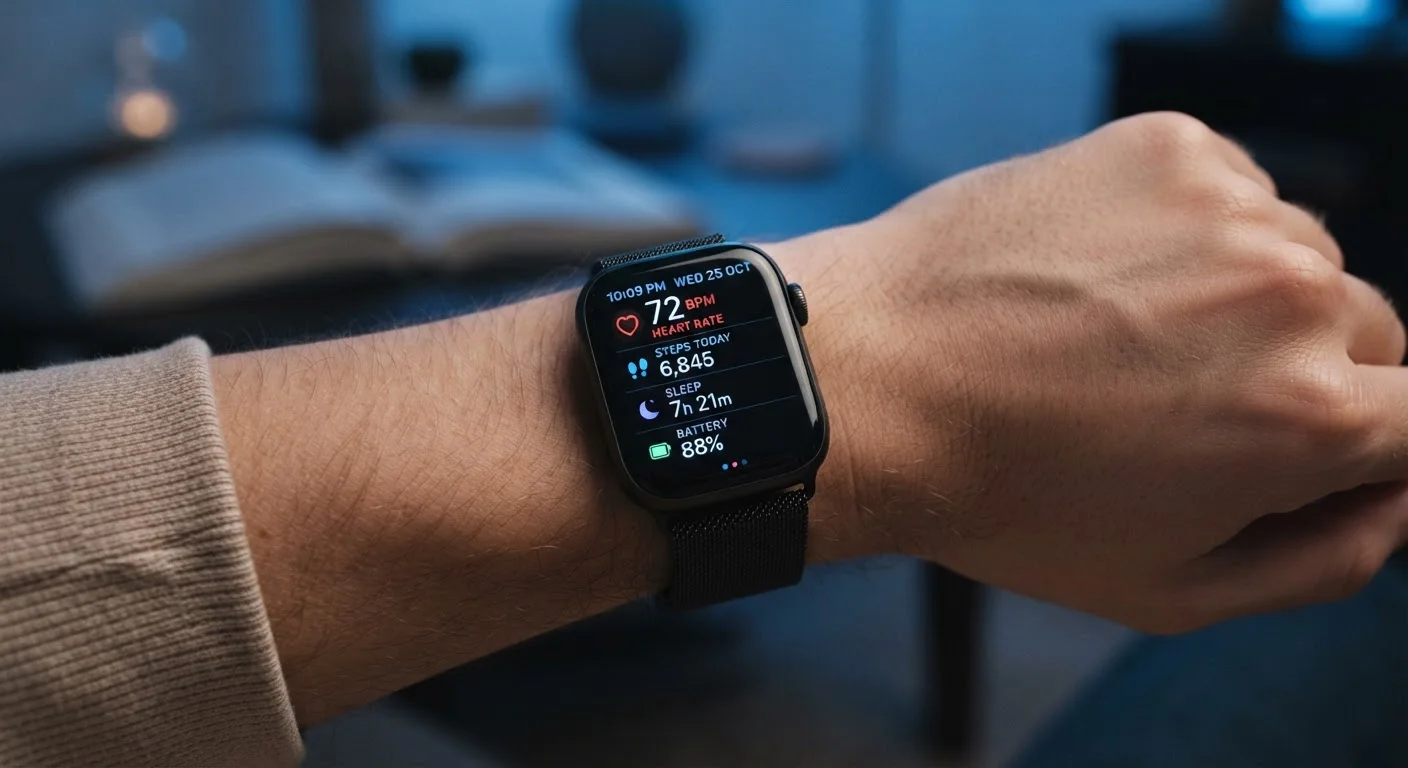
Photo: HerbHealWellness.com | Modern Guide To Wellness editorial
Key Takeaways
- Wearable trackers measure trends effectively but are not clinical diagnostic instruments.
- Heart rate and sleep pattern data can be genuinely useful when interpreted consistently over time.
- Metrics like stress scores and calorie burn are estimates based on algorithms, not direct measurements.
- Abnormal readings on a wearable should prompt a conversation with a clinician, not self-diagnosis.
- FDA-cleared features on some devices, such as ECG and irregular rhythm notifications, carry more clinical weight than general wellness scores.
What Wearables Actually Measure
Consumer wearables — smartwatches and fitness bands — rely primarily on photoplethysmography (PPG), a technology that uses light sensors pressed against the skin to detect blood volume changes. From this single optical signal, devices derive resting heart rate, heart rate variability (HRV), blood oxygen saturation (SpO2), and even estimated respiratory rate. Accelerometers contribute data on movement, step counts, and sleep stage detection.
Understanding this architecture matters. Many metrics displayed on your wrist are not direct measurements — they are algorithmically derived estimates built on top of raw sensor data. For foundational context on what these vital signs actually represent physiologically, see Vital Signs 101.
Accuracy varies significantly depending on skin tone, wrist placement, motion during measurement, and individual physiology. Independent studies have found that PPG-based SpO2 readings on consumer devices can be less reliable in people with darker skin tones — a known limitation that several manufacturers are actively working to address.
Common Myths About Wearable Health Data
Consumer perception of wearable accuracy tends to outpace what the underlying technology can deliver. The following myth-fact pairs address the most persistent misconceptions clinicians and researchers encounter.
Myth
My smartwatch's calorie burn count is an accurate measure of my daily energy expenditure.
Fact
Calorie estimates from wrist-worn devices carry significant error margins — research suggests they can be off by 20–93% depending on the device and activity type.
Wearables estimate energy expenditure by combining movement data from accelerometers with demographic inputs like age, weight, height, and sex. This formula-based approach cannot account for individual metabolic variation, and accuracy degrades substantially during non-step activities like cycling or weightlifting. Treat calorie burn figures as directional estimates useful for spotting relative changes, not precise numbers to anchor dietary decisions on.
Myth
A normal reading on my wearable means I don't need to see a doctor about a symptom I'm experiencing.
Fact
Consumer wearables are not diagnostic tools, and a normal-appearing reading does not rule out a medical condition.
Wearables measure a narrow slice of physiological data and are designed for wellness tracking, not clinical diagnosis. Many serious conditions — cardiac arrhythmias, hypertension, anemia — can exist without triggering an alert on a consumer device. If you are experiencing symptoms, consult a healthcare professional regardless of what your device displays. Wearable data can supplement a clinical conversation but should never replace it.
Myth
The stress score on my wearable is a clinically validated measure of psychological stress.
Fact
Proprietary stress scores are algorithmic estimates based primarily on heart rate variability; they are not validated clinical assessments of psychological or physiological stress.
HRV does have a genuine relationship with autonomic nervous system activity, and research supports its use as a general indicator of physiological load. However, each manufacturer's stress score uses its own algorithm, calibration, and weighting — none of which undergoes the standardized clinical validation process required of medical devices. These scores can be useful as personal trend indicators but should not be interpreted as medically meaningful stress diagnoses.
Myth
Wearable sleep tracking tells me exactly how much deep and REM sleep I'm getting.
Fact
Consumer sleep staging relies on movement and heart rate proxies and is considerably less accurate than polysomnography, the clinical gold standard for sleep measurement.
Clinical sleep studies (polysomnography) use electroencephalography (EEG) to directly measure brain wave activity and accurately classify sleep stages. Wearables infer sleep stages from accelerometer and PPG data — a reasonable approximation for general trends but subject to meaningful errors on any given night. Research comparing wearables to polysomnography consistently shows that consumer devices overestimate light sleep duration and can misclassify sleep stages. Use sleep data to observe broad patterns over weeks rather than scrutinizing individual night breakdowns.
Myth
All wearable health features are equivalent — if it shows on the display, it's medically meaningful.
Fact
There is a meaningful regulatory distinction between FDA-cleared medical features and general wellness features on the same device.
Some smartwatches include both FDA-cleared features — such as ECG recording for AFib detection or cleared SpO2 monitoring — alongside uncleared wellness features like body battery scores or skin temperature trends. The FDA-cleared features have passed a defined evaluation process for safety and effectiveness for a specific intended use. General wellness features have not. Reading your device's documentation to understand which category each feature falls into helps set appropriate expectations for how to use that data.
Which Metrics Are Worth Taking Seriously
20–93%
Error range in wearable calorie estimates
A Stanford University analysis of seven consumer fitness devices found energy expenditure errors ranging from roughly 27% to over 93% depending on the device.
~34 million
US adults living with AFib
The CDC estimates atrial fibrillation affects millions of Americans, many undiagnosed — context that makes FDA-cleared irregular rhythm detection a meaningful wearable feature.
< 50%
Sleep stage accuracy vs. clinical polysomnography
Multiple independent studies have found consumer wearables correctly classify individual sleep stages at rates that fall well short of clinical-grade measurement.
Not all wearable data belongs in the same category. Resting heart rate tracked consistently over weeks is a clinically meaningful signal — sustained elevation can reflect illness, overtraining, or cardiovascular stress. Similarly, HRV trends have legitimate research backing as an indicator of autonomic nervous system function, though individual baseline variation makes single-day readings difficult to interpret.
FDA-cleared features occupy a separate tier. Select devices carry clearance for single-lead ECG recordings capable of detecting atrial fibrillation (AFib), a condition associated with stroke risk. If a device's irregular rhythm notification or ECG feature is FDA-cleared, that output carries substantially more clinical relevance than a proprietary wellness score.
Compare how consumer wearables fit alongside dedicated diagnostic tools in our overview of wearable diagnostic sensors.
FDA Clearance Matters for Health Features
Using Your Data Constructively
The most practical approach treats wearable data as a longitudinal trend log rather than a moment-to-moment diagnostic feed. Sharing multi-week summaries with your healthcare provider gives them context they wouldn't otherwise have — particularly for conditions like sleep apnea screening conversations or unexplained fatigue workups.
For men especially, wearables can serve as a low-barrier entry point into health self-awareness. Our companion piece on self-monitoring vs. clinical screening maps out what home tracking can realistically detect versus what requires a clinician's assessment. And if you want to build a structured monitoring habit, setting up a home health monitoring routine offers practical guidance on timing, logging, and knowing when to act.
Don't Self-Diagnose Based on Wearable Alerts
This article is for informational purposes only and is not a substitute for professional medical advice, diagnosis, or treatment. Always consult a qualified healthcare provider with questions about your health or the interpretation of any health data.
The content on this site is for informational purposes only and is not a substitute for professional advice. Always consult a qualified professional for guidance specific to your situation.