
Self-Monitoring vs. Clinical Screening: What Men Can Track at Home and What Needs a Doctor

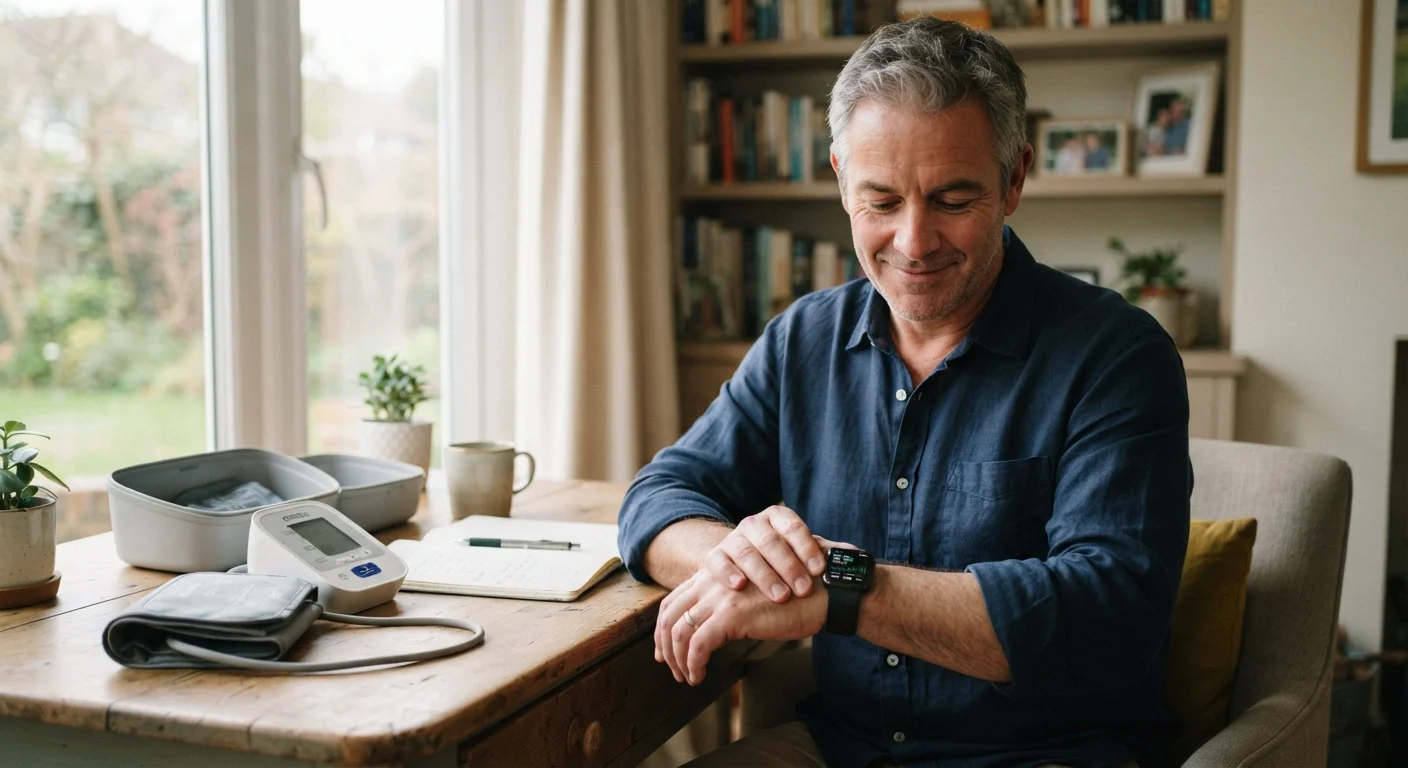
Photo: HerbHealWellness.com | Modern Guide To Wellness editorial
Key Takeaways
- Blood pressure, heart rate, and blood glucose can be tracked meaningfully at home with validated devices.
- Cholesterol panels, PSA testing, colonoscopy, and cancer screenings require clinical equipment and professional interpretation.
- Wearable data is most useful when shared with a clinician — it supports care, not replaces it.
- At-home symptom tracking helps identify patterns but cannot diagnose conditions.
- Gaps in self-monitoring coverage mean regular preventive care visits remain essential for men.
Why the Distinction Matters
The market for consumer health technology has expanded rapidly. Smartwatches flag irregular heart rhythms. At-home blood pressure cuffs rival clinic-grade devices in accuracy. Mail-in kits promise metabolic panels without a physician's order. For men who avoid doctor visits — a well-documented tendency — these tools can feel like a shortcut to self-sufficiency.
But there's an important distinction between monitoring (tracking ongoing trends) and screening (detecting disease in people without symptoms). Many home devices do the former reasonably well. Very few can do the latter reliably. Understanding where the line falls helps you make smarter decisions about your health — and know when you genuinely need to walk into a clinic.
For a broader look at what different devices actually measure, see our field guide to home monitoring devices.
Make Home Data Work Harder for You
What You Can Meaningfully Track at Home
Several health metrics translate well to home monitoring when the right devices are used correctly:
- Blood pressure: Validated upper-arm cuffs (look for devices validated by recognized independent programs) are accurate enough that many cardiologists now prefer home readings, which avoid the "white coat effect" seen in clinical settings. Taking multiple readings at consistent times provides more reliable trend data than a single clinic reading. Understanding what your blood pressure numbers mean is critical context for any home readings.
- Heart rate and rhythm: Wearable sensors can detect resting heart rate trends and flag possible atrial fibrillation (AFib). Personal ECG devices have real but limited capabilities — they're not a substitute for a clinical ECG, but they can be a prompt to seek one.
- Blood glucose: For men with diagnosed diabetes, both fingerstick meters and continuous glucose monitors (CGMs) are well-established tools. CGMs and fingerstick testing each have trade-offs worth discussing with your care team.
- Sleep and activity: Wearables capture sleep duration, steps, and activity intensity. These trend-level signals are useful context, though they don't meet clinical diagnostic standards. Knowing which wearable metrics have clinical relevance keeps the data actionable.
What Requires Clinical Screening
Several screenings cannot be replicated at home with consumer-grade tools — and the stakes for missing them are high:
| Health Metric | Home Monitoring | Clinical Screening | |
|---|---|---|---|
| Blood pressure | Validated cuffs — highly accurate | Single reading; white coat effect risk | |
| Heart rhythm (AFib) | Wearable ECG — good for flagging | 12-lead ECG — diagnostic standard | |
| Blood glucose | CGM/fingerstick — established for diabetics | Lab HbA1c — required for diagnosis | |
| Cholesterol | Mail-in kits — limited accuracy | Lab lipid panel — required for management | |
| Colorectal cancer | Stool DNA/FIT — supplementary only | Colonoscopy — gold standard | |
| Prostate (PSA) | Not available at home | Blood draw + clinical interpretation | |
| Sleep quality | Wearables — trend-level data | Sleep study (polysomnography) — diagnostic |
- Cholesterol panel (lipid panel): Mail-in fingerstick cholesterol kits exist, but full lipid panels with clinically validated results still require a blood draw analyzed by an accredited laboratory. Interpretation also depends on your cardiovascular risk profile — something a clinician calculates from multiple variables.
- Colorectal cancer screening: Colonoscopy remains the gold standard. While FDA-cleared stool DNA tests and fecal immunochemical tests (FIT) can be done at home, a positive result always requires a follow-up colonoscopy, and these tests are not appropriate substitutes for all men.
- Prostate-specific antigen (PSA) testing: PSA testing involves a blood draw and nuanced interpretation based on age, baseline trends, and individual risk factors. Results without clinical context are difficult to act on safely.
- Skin, testicular, and other physical exams: Self-exams for skin changes and testicular lumps are genuinely useful — but abnormal findings need prompt clinical evaluation, not watchful waiting at home.
Explore the full scope of conditions that disproportionately affect men in the Men's Common Conditions hub.
Don't Substitute Tests for Screenings
Building a Smarter Combined Approach
Home monitoring and clinical screening aren't competing strategies — they're complementary. The most proactive men use self-tracking to generate useful data between appointments, then bring that data to their physicians for interpretation. A log of 30 days of morning blood pressure readings tells your doctor far more than a single in-office measurement.
Setting up a consistent home monitoring routine increases the value of the data you collect. Equally important: tracking symptoms over time — even informally — can reveal patterns you'd otherwise miss and make your clinical appointments more productive.
For men managing chronic conditions remotely, remote patient monitoring programs represent a middle ground where clinician-supervised tracking happens outside a hospital setting.
No home device changes the schedule of recommended preventive screenings. If you're unsure which screenings apply to your age and risk profile, that conversation belongs with a primary care physician.
This article is for general informational purposes only and does not constitute medical advice. Always consult a qualified healthcare professional for guidance on screening schedules, device selection, and interpretation of health data specific to your situation.
The content on this site is for informational purposes only and is not a substitute for professional advice. Always consult a qualified professional for guidance specific to your situation.