
Grapefruit and Medication: The Interaction That Surprises Most Patients

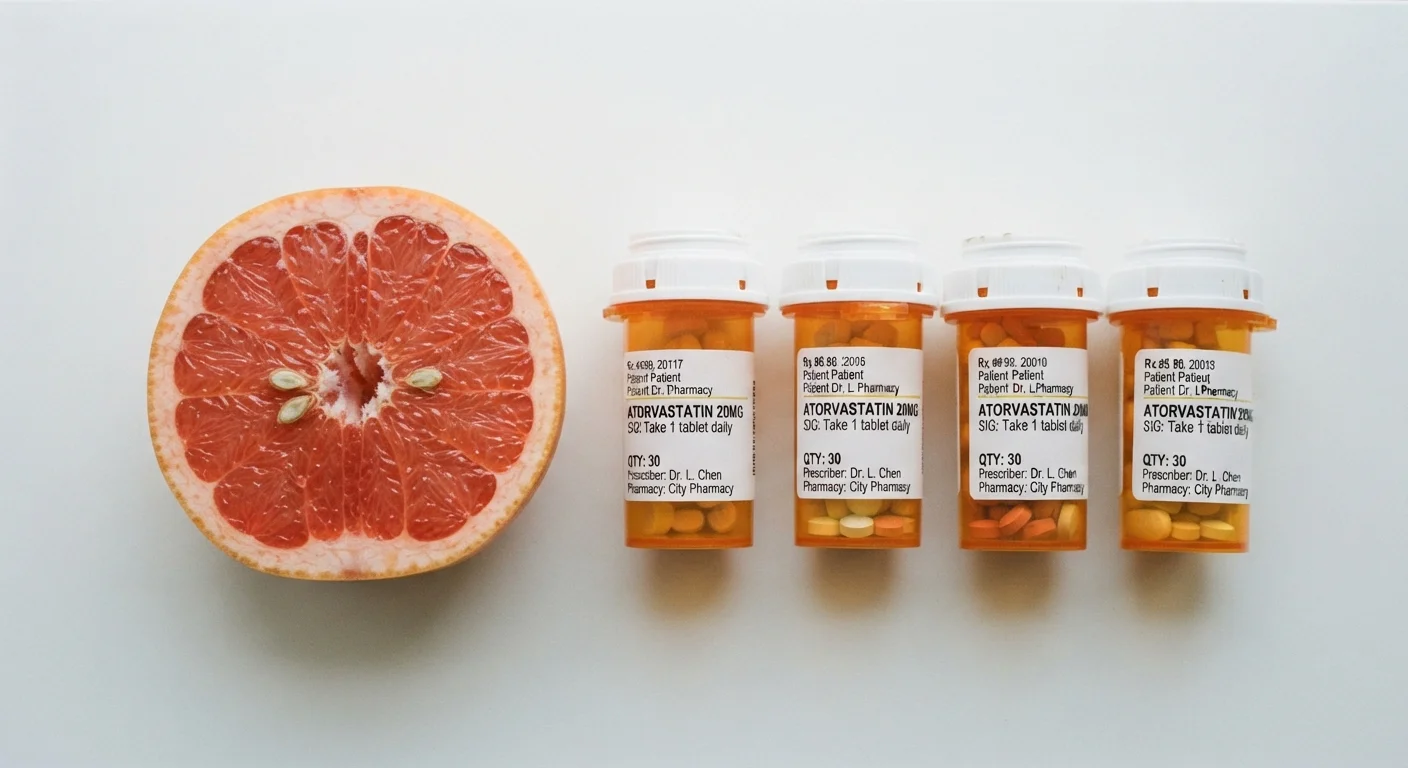
Photo: HerbHealWellness.com | Modern Guide To Wellness editorial
Key Takeaways
- Grapefruit blocks an intestinal enzyme that normally limits how much of a drug enters your bloodstream.
- The interaction affects dozens of common medications, including some statins, blood pressure drugs, and immunosuppressants.
- Even a single glass of grapefruit juice can trigger the interaction — the effect can last up to three days.
- Not every drug in an affected class is equally at risk; your pharmacist can tell you whether your specific medication is a concern.
- Always read medication labels and ask your pharmacist before consuming grapefruit while on any prescription drug.
How Grapefruit Gets in the Way of Your Medication
Most people assume that what they eat and what they take are separate matters — food goes to the stomach, medicine goes to the bloodstream. In reality, the two systems are deeply intertwined. Grapefruit is one of the clearest examples of how a seemingly harmless dietary choice can have real consequences for how a drug performs in your body.
The culprit is a group of naturally occurring plant compounds called furanocoumarins, found abundantly in grapefruit. When you consume grapefruit or its juice, these compounds travel to your small intestine, where they latch onto and permanently inactivate an enzyme called CYP3A4. This enzyme normally breaks down a substantial portion of many oral medications before they even reach general circulation — acting as a natural ceiling on drug levels. When CYP3A4 is blocked, that ceiling disappears.
The result: more of the drug passes into your bloodstream than intended. Depending on the medication, this can range from a mild increase in side effects to a dangerous overdose-equivalent scenario. For some drugs, grapefruit can effectively double or triple the blood concentration — without any change in your prescribed dose.
This is fundamentally different from most food-drug interactions, which typically affect absorption speed. Grapefruit alters the amount of drug that gets through. For a deeper look at how food generally shapes medication behavior, see why some drugs must be taken with food.
Grapefruit Juice Is Not Safer Than Whole Fruit
Which Drug Classes Are Commonly Affected
The grapefruit interaction is not limited to one type of medication. Because CYP3A4 metabolizes a wide range of drugs, the affected list spans several therapeutic categories:
- Statins — Certain cholesterol-lowering medications, including atorvastatin, simvastatin, and lovastatin, can reach elevated blood levels when combined with grapefruit. Elevated statin concentrations raise the risk of muscle pain or a rare but serious condition called rhabdomyolysis (muscle breakdown). Pravastatin and rosuvastatin are generally considered unaffected.
- Calcium channel blockers — Some blood pressure medications in this class, such as felodipine, nifedipine, and amlodipine, are processed by CYP3A4. Grapefruit may amplify their blood-pressure-lowering effect, potentially causing dizziness or fainting.
- Immunosuppressants — Drugs like cyclosporine, used to prevent organ rejection, have a very narrow window between an effective dose and a toxic one. Grapefruit-driven increases in blood concentration are especially hazardous in this category.
- Anti-anxiety medications — Certain benzodiazepines, including buspirone and triazolam, may be affected, potentially intensifying sedative effects.
- Antiarrhythmics — Some heart rhythm medications, like amiodarone, also rely on CYP3A4 for clearance.
Importantly, not every drug within these classes is equally at risk. The interaction is drug-specific, not class-wide. Your pharmacist is the best resource for checking whether your particular medication appears on the interaction list.
85+
Drugs known to interact with grapefruit
Research published in the Canadian Medical Association Journal identified over 85 drugs with documented grapefruit interactions, including 43 with potentially serious consequences.
24–72 hrs
Duration of enzyme inhibition after one serving
Clinical studies show that a single serving of grapefruit can suppress intestinal CYP3A4 enzyme activity for up to three days, making timing workarounds unreliable.
~50%
Of all prescription drugs metabolized by CYP3A4
CYP3A4 is the most important drug-metabolizing enzyme in humans, responsible for processing an estimated half of all oral medications, according to established pharmacology literature.
Why the Timing Doesn't Save You
A common misconception is that spacing grapefruit away from your medication dose — say, eating it at breakfast and taking your pill at dinner — is a safe workaround. It generally is not.
Unlike most food-drug interactions that resolve within hours, grapefruit's effect on CYP3A4 is irreversible. The enzyme cannot be reactivated once inactivated. Your body must synthesize entirely new enzyme molecules, a process that takes anywhere from 24 to 72 hours. During that window, your intestinal enzyme activity remains suppressed regardless of when you consumed the grapefruit.
This means a single glass of grapefruit juice in the morning can still be influencing your evening dose — and potentially your dose the following day. For people on sensitive medications, even occasional grapefruit consumption may need to be discussed with a prescriber or pharmacist.
For context on how other substances — including alcohol — create similarly persistent interaction risks, the article on alcohol and medication combinations covers the clearest risk categories.
Keep a Simple List for Your Pharmacist
What You Can Do to Stay Safe
Awareness is the most practical tool. Here's how to reduce your risk:
- Read your medication label and package insert. Many affected medications include an explicit grapefruit warning. If yours does, take it seriously.
- Ask your pharmacist directly. When picking up a new prescription, simply ask: "Does this drug interact with grapefruit?" Pharmacists are trained to catch these interactions and can advise on whether avoidance is necessary.
- Don't assume a switch to Seville orange or tangelo is safer. These citrus varieties also contain furanocoumarins and carry similar risks.
- Tell your provider if you eat grapefruit regularly. In some cases, an alternative medication that doesn't interact with CYP3A4 may be available.
- Don't stop your medication without guidance. If you've been eating grapefruit and are concerned, speak with your pharmacist or prescriber before making any changes to your regimen.
Grapefruit interactions are a well-established example of how diet and drugs intersect in unexpected ways. They also illustrate a broader principle: drug interactions don't only come from other drugs. To understand the full landscape of what can affect medication behavior, drug interactions explained provides essential background. For interactions involving supplements and herbal products, see supplements and prescription drug interactions.
This article is for informational purposes only and is not a substitute for professional medical advice. Always consult your pharmacist or healthcare provider with questions about your specific medications and diet.
Frequently Asked Questions
The content on this site is for informational purposes only and is not a substitute for professional advice. Always consult a qualified professional for guidance specific to your situation.