
Why Some Drugs Must Be Taken With Food — and Others on an Empty Stomach

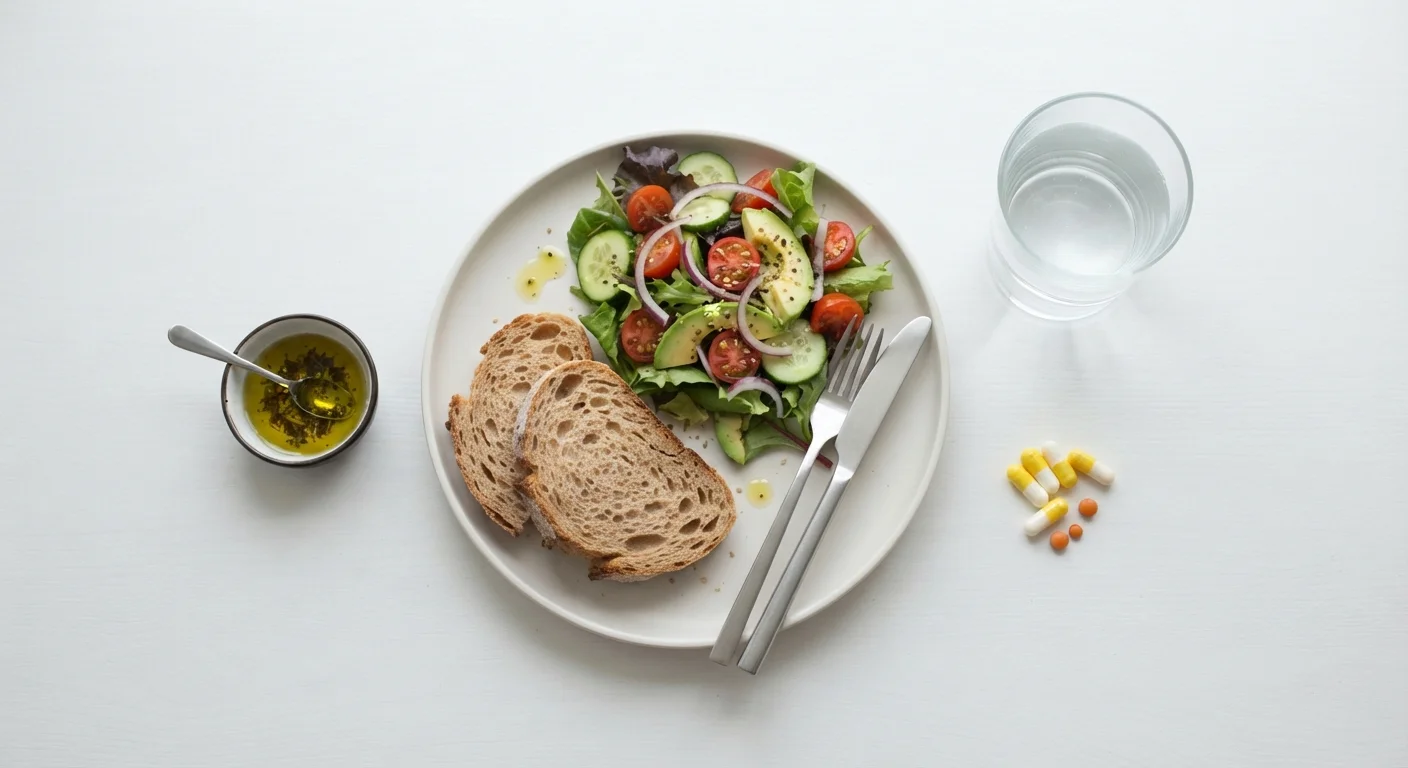
Photo: HerbHealWellness.com | Modern Guide To Wellness editorial
Key Takeaways
- Food changes stomach pH and emptying speed, directly affecting how much of a drug is absorbed.
- Some drugs need food to increase absorption; others need an empty stomach to avoid being blocked.
- Certain foods — not just the timing of meals — can chemically interact with specific medications.
- Always follow the label or pharmacist's instructions on food timing for each individual drug.
- Getting food timing wrong can reduce a medication's effectiveness or increase side-effect risk.
How Food Changes What Happens in Your Stomach
When you swallow a pill or capsule, it enters a dynamic environment — your stomach — where conditions shift dramatically depending on whether you've just eaten. To understand why this matters, it helps to know what food actually does inside your digestive tract. See our step-by-step guide to drug absorption for the full picture.
Food raises stomach pH, making it less acidic. It also slows gastric emptying — the rate at which contents move from your stomach into the small intestine, where most drug absorption actually occurs. A slower transit time means a drug lingers in the stomach longer. Depending on the drug, that's either helpful or harmful.
Food also increases blood flow to the intestines and stimulates bile release. Bile helps dissolve fat-soluble compounds, so fatty meals can dramatically increase how much of certain medications gets absorbed.
~50%
Variation in absorption for some drugs taken with vs. without food
Pharmacokinetic studies have shown that bioavailability of certain medications can differ by up to 50% or more depending on fed versus fasted state at the time of dosing.
>85
Medications known to interact with grapefruit
According to research published in the Canadian Medical Association Journal, more than 85 drugs have documented interactions with grapefruit, including some with potentially serious consequences.
30–60 min
Typical fasting window before certain medications
Standard clinical guidance for drugs requiring an empty stomach generally defines this as 30 to 60 minutes before eating, or at least two hours after a meal.
When Food Helps a Drug Work Better
Some medications genuinely need food to reach effective levels in your body. A classic example is a group of drugs that are poorly soluble in water but dissolve well in fats. Taken with a high-fat meal, their absorption can be several times higher than on an empty stomach.
Food also protects the stomach lining from drugs that irritate it. Nonsteroidal anti-inflammatory drugs (NSAIDs) — a category that includes common over-the-counter pain relievers — are frequently recommended with food or milk precisely because they can damage the stomach's protective mucus layer when taken without it.
Additionally, slow gastric emptying caused by food can actually smooth out the absorption curve for some drugs, leading to more consistent blood levels over time rather than a sharp spike followed by a rapid drop.
Build Food Timing Into Your Daily Routine
When Food Gets in the Way
For other drugs, food is a barrier. Some antibiotics, certain thyroid medications, and specific osteoporosis treatments are well-known examples where food — or even certain beverages — can significantly impair absorption.
The interference can happen in several ways. Minerals like calcium, iron, magnesium, and zinc can bind directly to drug molecules in the gut, forming complexes that the body cannot absorb. This is why some antibiotics and certain thyroid drugs must be taken on a completely empty stomach and at least a few hours away from calcium-rich foods or supplements. Supplement interactions are an often-overlooked part of this picture.
High-protein meals can compete with some drugs that use the same transport proteins to cross the intestinal wall. And an acidic or alkaline stomach environment — shifted by food — can prevent certain drug coatings from dissolving at the right place in the digestive tract.
Specific Foods That Change Drug Behavior
It isn't only whether you eat but what you eat that can matter. Grapefruit is the most widely cited example — it blocks an intestinal enzyme that normally metabolizes many drugs, causing blood levels to rise unpredictably. Grapefruit's interaction with medications affects dozens of drug classes and persists for more than a day after consumption.
Vitamin K–rich foods like leafy greens affect how blood-thinning medications are processed, which is why people taking those drugs are often counseled to keep their vegetable intake consistent rather than avoiding greens entirely.
Tyramine found in aged cheeses, cured meats, and fermented products can interact dangerously with a specific class of antidepressants, producing a rapid and severe rise in blood pressure. These interactions underscore why food timing instructions are drug-specific, not universal.
Food and nutrient interactions also connect to broader absorption science — how your gut absorbs what you consume is relevant context here. And because liver enzymes process both drugs and dietary compounds, organ function plays a central role in predicting these effects.
Reading Your Label — and When to Ask More
Prescription labels and medication guides use specific language for a reason. Phrases like "take with food," "take on an empty stomach," "avoid dairy," or "take with a full glass of water" are not suggestions — they reflect how the drug was tested and approved for use.
If your label instructions conflict with your routine, or if you experience side effects related to how you're taking a medication, your pharmacist is the right first contact. They can explain the rationale, suggest practical timing strategies, and flag any food-drug combinations worth watching. Drug interactions extend beyond foods to other medications, making a full medication review worthwhile if you take multiple drugs.
Food timing is one of the most controllable factors in how well a medication works. Understanding the reasoning behind the instructions makes it far easier — and more motivating — to follow them consistently.
This article is for general informational and educational purposes only and is not a substitute for professional medical or pharmaceutical advice. Always consult your pharmacist or healthcare provider before changing how or when you take any medication.
Frequently Asked Questions
The content on this site is for informational purposes only and is not a substitute for professional advice. Always consult a qualified professional for guidance specific to your situation.