
The Language of Drug Labels: A Plain-English Glossary

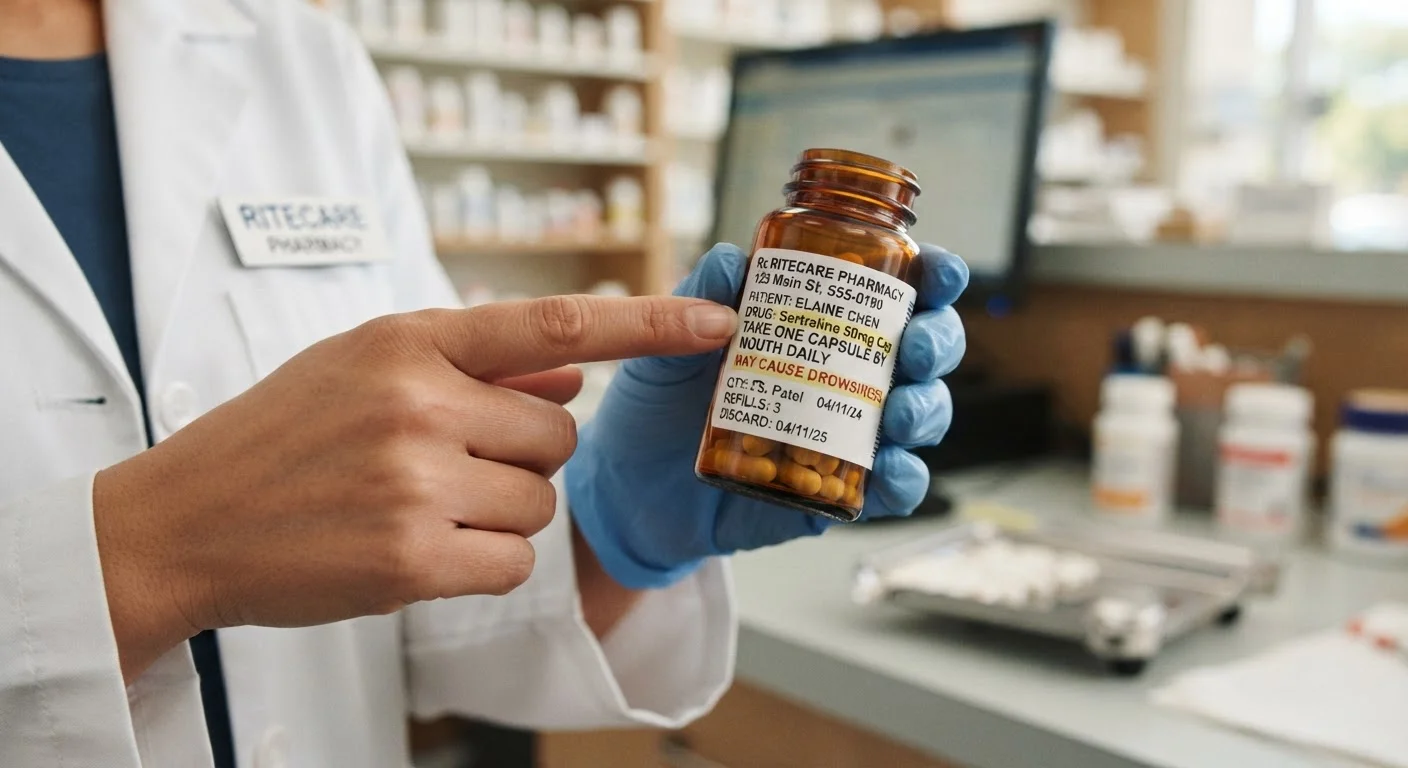
Photo: HerbHealWellness.com | Modern Guide To Wellness editorial
Why Label Language Matters
Every medication — whether prescription or over-the-counter — comes with a label or package insert loaded with clinical terminology. Words like contraindication, bioavailability, and excipient appear routinely, yet most people have never had them explained. That gap between label language and plain English is more than a minor inconvenience; misreading a warning or misunderstanding a dosing instruction can have real safety consequences.
This glossary defines the terms you are most likely to encounter on drug labels, package inserts, and pharmacy printouts — in plain language, without a medical degree required. For a deeper look at how labels are physically laid out, see Reading a Medicine Label Without the Guesswork. And if your prescription is covered in Latin abbreviations, Prescription Abbreviations Decoded covers those separately.
Active ingredient
The chemical component in a medication that produces the intended therapeutic effect. Everything else in the pill or liquid is considered inactive.
Bioavailability
The proportion of a drug dose that actually reaches the bloodstream and is available to act on the body. Oral drugs typically have lower bioavailability than injected ones because they must pass through the digestive system first.
Black box warning
The FDA's most serious label warning, printed inside a bold black border on prescription drug inserts. It signals a significant risk of serious or life-threatening adverse effects.
Contraindication
A specific condition, situation, or combination of drugs that makes using a particular medication inadvisable or unsafe. Unlike a precaution, a contraindication is generally a firm clinical boundary.
Excipient
Any inactive ingredient in a medication — such as fillers, binders, dyes, or preservatives — that is not intended to have a direct therapeutic effect. Some excipients can still cause allergic reactions in sensitive individuals.
Half-life
The time it takes for the concentration of a drug in the bloodstream to fall by half. Half-life helps determine how often a drug needs to be taken and how long it remains detectable in the body.
Indication
The officially approved medical condition or symptom that a drug is authorized to treat. Using a drug for a purpose other than its indication is called off-label use.
Pharmacokinetics
The study of how the body absorbs, distributes, metabolizes, and excretes a drug. These four stages collectively determine how much drug reaches its target and for how long.
Therapeutic index
The range between a drug's effective dose and its toxic dose. A narrow therapeutic index means there is little room between a dose that works and one that causes harm, requiring careful monitoring.
Adverse effect
An unintended and potentially harmful reaction to a medication taken at a standard dose. Adverse effects differ from side effects in that they imply harm rather than merely an unwanted outcome.
Metabolism (drug)
The process by which the body — primarily the liver — chemically transforms a drug into other compounds. These metabolites may be active, inactive, or sometimes more toxic than the original drug.
PRN (pro re nata)
Latin for 'as needed.' A PRN instruction means you should take the medication only when a specific symptom arises, not on a fixed schedule.
Key Concepts Behind How Drugs Work
Beyond the definitions themselves, a few underlying concepts appear again and again across labels. Understanding them makes the rest of the terminology click into place.
| Most common label warning type | Adverse effects / side effects section (FDA prescription drug labeling requirements) |
| Strongest FDA label alert | Black box (boxed) warning (U.S. Food and Drug Administration) |
| IV drug bioavailability | 100% (by definition) (Standard pharmacokinetic principle) |
| Primary drug metabolism organ | The liver (General pharmacology consensus) |
| Half-lives to near-complete clearance | Approximately 5 half-lives (General pharmacokinetic rule of thumb) |
Bioavailability explains why the same drug at the same dose can behave differently depending on whether you swallow a tablet, dissolve one under your tongue, or receive an injection. An intravenous drug enters the bloodstream directly and has 100% bioavailability; an oral tablet must survive the digestive process and liver filtration first, so less of the active ingredient reaches circulation.
Half-life is one of the most practically useful concepts for patients. A drug with a short half-life clears your body quickly, which usually means more frequent dosing. A drug with a long half-life lingers — which can be convenient or can mean side effects persist longer if a problem arises. What 'Half-Life' Actually Means for Your Medication explains this in full detail.
These pharmacokinetic principles — absorption, distribution, metabolism, and excretion — form the backbone of how any drug moves through the body. For a complete walkthrough, see Pharmacokinetics: A Beginner's Map of How the Body Handles Drugs.
Generic vs. Brand-Name: Same Active Ingredient
Warnings, Interactions, and Special Populations
Some of the most important label language relates to safety. Contraindications are conditions or situations in which a drug should not be used — not a suggestion to be cautious, but a firm boundary based on clinical evidence. A black box warning (also called a boxed warning) is the strongest safety alert the FDA can require on a prescription drug label, signaling serious or life-threatening risks.
Drug interactions occur when one substance alters the way another behaves — sometimes reducing effectiveness, sometimes amplifying it to a dangerous degree. Interactions can involve other prescription drugs, over-the-counter medications, supplements, or even certain foods. Always review the interaction section of any new medication insert and discuss your full medication list with your pharmacist.
Labels also frequently flag special populations — groups such as pregnant individuals, nursing parents, children, or people with kidney or liver impairment who may need adjusted doses or should avoid the drug entirely. If you belong to one of these groups, always consult a qualified healthcare provider before starting or changing any medication. Similarly, the line between tolerance, dependence, and addiction is important when labels carry abuse-potential warnings — these are distinct concepts with different clinical implications.
This article provides general educational information about medication terminology and is not a substitute for professional medical or pharmacist advice. Always consult a licensed healthcare provider about your specific medications and health needs.
The content on this site is for informational purposes only and is not a substitute for professional advice. Always consult a qualified professional for guidance specific to your situation.