
Cataracts: Why the Eye's Lens Clouds Over and What It Means for Vision

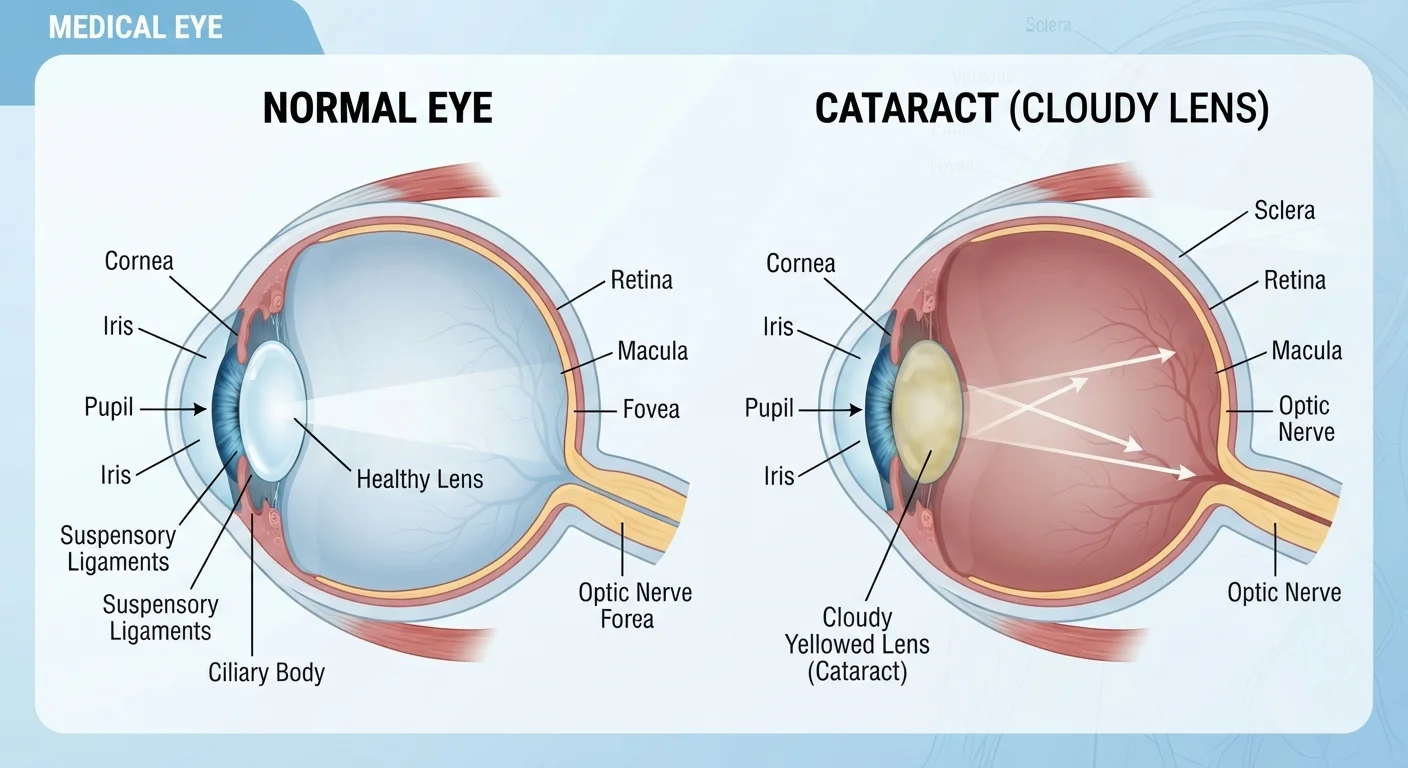
Photo: HerbHealWellness.com | Modern Guide To Wellness editorial
Key Takeaways
- Cataracts develop when proteins in the eye's lens clump together, scattering light and reducing visual clarity.
- Aging is the most common cause, but UV exposure, diabetes, smoking, and certain medications can accelerate development.
- Early cataracts may cause no symptoms; as they progress, blurred vision, glare sensitivity, and color dulling are typical signs.
- Cataracts are not a medical emergency but should be monitored through regular eye exams.
- Surgery to remove the clouded lens is highly effective and is one of the most commonly performed procedures in the US.
- Routine eye exams remain the most reliable way to detect cataracts before they significantly affect daily life.
What Happens Inside the Eye When a Cataract Forms
The eye's natural lens sits just behind the iris and pupil. Its job is to focus incoming light precisely onto the retina, which sends visual signals to the brain. For this to work, the lens must remain highly transparent — a quality maintained by a precise arrangement of proteins called crystallins.
Over time, oxidative stress, UV radiation, and normal metabolic byproducts cause these proteins to degrade and clump together. These protein aggregates scatter and block light instead of allowing it to pass cleanly through, creating the characteristic clouding known as a cataract. The result is vision that may appear foggy, dim, or distorted.
Cataracts tend to develop slowly, often over years or decades, which is why many people don't notice a significant change until the clouding becomes more advanced. As the lens becomes increasingly opaque, it can also take on a yellowish or brownish tint — subtly altering color perception before more obvious blurring occurs.
24.4M
Americans affected by cataracts
According to the National Eye Institute, approximately 24.4 million Americans age 40 and older have cataracts.
#1
Leading cause of reversible blindness worldwide
The World Health Organization identifies cataracts as the leading cause of blindness globally, yet the condition is largely treatable with surgery.
~3.8M
Cataract surgeries performed annually in the US
Cataract surgery is one of the most frequently performed operations in the United States, with millions of procedures completed each year.
Types of Cataracts and What Causes Them
Not all cataracts are the same. The most common type — age-related (nuclear) cataract — forms in the central part of the lens and is strongly associated with aging. A cortical cataract starts at the outer edges of the lens and extends inward like spokes on a wheel, often causing glare and difficulty with contrast. A posterior subcapsular cataract forms at the back surface of the lens and tends to affect reading vision and night vision more rapidly, even at an earlier stage.
While aging is the dominant risk factor, several other elements can accelerate lens clouding:
- Prolonged UV exposure without protective eyewear
- Cigarette smoking, which promotes oxidative damage
- Diabetes, which alters the lens's internal chemistry
- Long-term corticosteroid use (oral or inhaled)
- Eye injuries or prior eye surgery
- Genetic predisposition
Congenital cataracts — present at or shortly after birth — represent a distinct category and require prompt attention to protect vision development in infants. For older adults, the relationship between aging and eye health involves several overlapping changes, of which cataracts are among the most common.
Recognizing the Symptoms: What Cataracts Feel Like
Cataracts often develop so gradually that early changes go unnoticed without a professional exam. As clouding progresses, however, a recognizable set of symptoms typically emerges:
- Blurry, cloudy, or hazy vision that doesn't fully clear with glasses or contact lenses
- Increased sensitivity to glare, especially from headlights at night or bright sunlight
- Faded or yellowed color perception
- Difficulty reading in low light or needing significantly brighter lighting
- Frequent changes in eyeglass prescription that don't resolve the problem
- Double vision in one eye (a phenomenon called monocular diplopia)
It's worth noting that unlike some serious eye conditions, cataracts do not typically cause pain or eye redness. However, the absence of pain doesn't mean absence of progression — regular monitoring matters.
Protect Your Lens from UV Damage
When to See an Eye Doctor — and What Comes Next
If you notice any of the symptoms above, scheduling a comprehensive dilated eye exam is the appropriate next step. An eye care professional can identify lens clouding, assess its severity, and distinguish cataracts from other causes of vision change — including age-related macular degeneration, which can present with overlapping symptoms.
Cataracts don't always require immediate intervention. When changes are mild, updated corrective lenses, better lighting, and anti-glare coatings may provide adequate support for day-to-day tasks. Surgery becomes the recommended option when cataracts interfere meaningfully with activities like driving, reading, or work.
Cataract surgery is among the most commonly performed procedures in the United States. The clouded lens is removed and replaced with a clear artificial intraocular lens (IOL). Outcomes are generally very favorable, and the procedure is performed on an outpatient basis. Your eye doctor can help you understand whether and when surgery is appropriate for your specific situation.
For those exploring how surgery fits within the broader landscape of vision correction, navigating vision correction choices offers useful context. Regardless of where you are in the process, routine preventive eye care remains the foundation of long-term vision health.
This article is for informational purposes only and does not constitute medical advice. Always consult a qualified eye care professional for evaluation, diagnosis, or treatment recommendations specific to your situation.
Frequently Asked Questions
The content on this site is for informational purposes only and is not a substitute for professional advice. Always consult a qualified professional for guidance specific to your situation.