
ECG Monitors at Home: What Personal Cardiac Devices Can and Cannot Detect

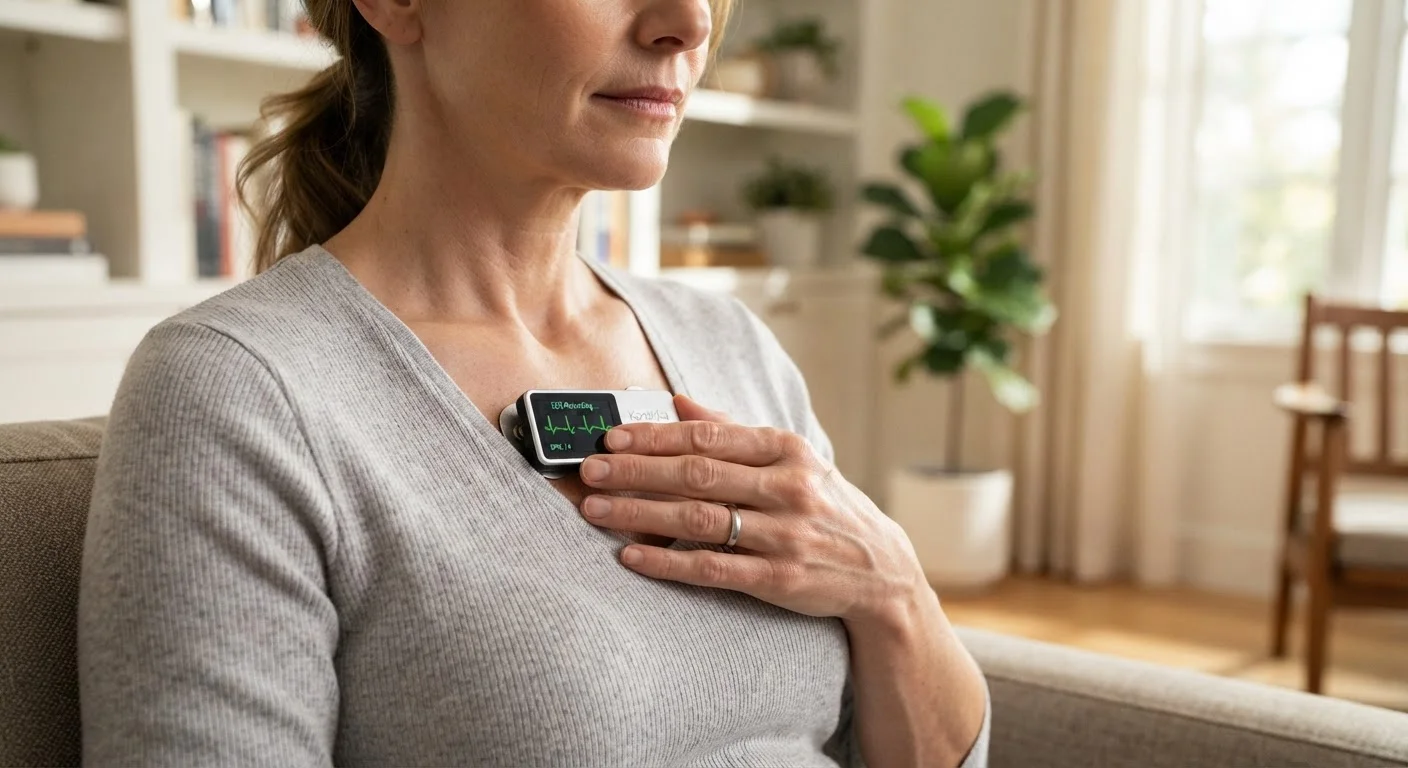
Photo: HerbHealWellness.com | Modern Guide To Wellness editorial
Key Takeaways
- Personal ECG devices can detect certain arrhythmias, including atrial fibrillation, with reasonable accuracy.
- They record single-lead or limited-lead tracings, which is far less comprehensive than a clinical 12-lead ECG.
- Home ECG data can be valuable when shared with a physician, but it cannot replace a clinical diagnosis.
- False positives and false negatives both occur, and interpretation requires medical expertise.
- Anyone experiencing chest pain, fainting, or severe palpitations should seek immediate medical care.
Captures intermittent arrhythmias between clinical visits
Many rhythm abnormalities occur unpredictably and briefly, making them nearly impossible to catch during scheduled appointments. A personal ECG device allows users to record a tracing at the moment symptoms occur.
FDA-cleared devices have validated AFib detection
Several consumer ECG devices have received FDA clearance specifically for AFib detection, meaning they have demonstrated a defined level of accuracy in regulated testing — a meaningful bar that distinguishes them from purely wellness-focused gadgets.
Accessible and easy to use without clinical training
Most personal ECG devices are designed for lay users, requiring only finger contact or wrist placement to generate a readable tracing, lowering barriers to regular monitoring.
Generates shareable data for clinical review
Exported PDF tracings and app logs give clinicians documented evidence of a patient's rhythm events over time, enriching the clinical picture beyond what a single in-office reading provides.
May improve early detection of undiagnosed AFib
AFib often produces no symptoms, meaning it can go undiagnosed for years. Routine use of a personal ECG device may surface previously undetected episodes that prompt timely clinical follow-up.
Single-lead recording misses many cardiac conditions
With only one electrical perspective, personal devices cannot detect ischemia, most ST-segment abnormalities, or regional conduction defects that a 12-lead ECG would reveal. This is a fundamental hardware constraint, not a software limitation.
Cannot diagnose structural heart disease
Valve abnormalities, cardiomyopathy, and heart failure are structural problems invisible to ECG tracings of any kind. Diagnosis requires echocardiography or other imaging, which no personal ECG device provides.
Motion artifact leads to unreliable readings
Poor electrode contact, tremor, or movement during recording introduces noise that can cause algorithms to misclassify tracings — producing false alarms or missing genuine abnormalities.
Algorithm-generated labels are not clinical diagnoses
When a device reports "possible AFib" or "inconclusive," these are algorithmic classifications — not medical diagnoses. Misinterpreting them without professional context can cause unnecessary anxiety or, conversely, false reassurance.
Not suitable for acute cardiac emergency assessment
Chest pain, severe shortness of breath, or suspected heart attack require emergency services — not a personal ECG device. Relying on a consumer monitor in a potential emergency wastes critical time.
How Personal ECG Devices Work
Personal electrocardiogram (ECG) monitors measure the electrical activity of the heart by detecting voltage changes through electrodes placed on the skin. Most consumer devices — including smartwatch-integrated sensors and handheld patch-style monitors — use a single-lead configuration, meaning they record electrical signals from one angle across the heart. By contrast, the standard clinical 12-lead ECG captures electrical activity from twelve distinct perspectives simultaneously.
When you place your fingers on a handheld device or press a watch sensor against your wrist or chest, the electrodes complete a circuit and record a short tracing — typically 30 seconds to two minutes. That tracing is then analyzed by an algorithm trained to identify specific rhythm patterns. For a deeper understanding of what those signals actually represent, see our guide to understanding ECG tracings.
FDA Clearance vs. FDA Approval
What Personal ECG Devices Can Detect
The most clinically validated capability of consumer ECG devices is the detection of atrial fibrillation (AFib) — an irregular, often rapid heart rhythm originating in the upper chambers. Studies evaluating FDA-cleared consumer ECG devices have shown sensitivities and specificities for AFib detection that can exceed 90% under controlled conditions, though real-world performance varies.
Beyond AFib, personal ECG monitors may flag:
- Bradycardia (unusually slow heart rate, typically below 60 bpm)
- Tachycardia (unusually rapid heart rate, typically above 100 bpm)
- Irregular rhythm patterns that warrant further clinical investigation
These devices are particularly valuable for capturing symptomatic episodes — moments of palpitations, dizziness, or perceived fluttering — that are notoriously difficult to catch during a brief office visit. Personal ECG monitoring fits into a broader landscape of wearable diagnostics; wearable diagnostic sensors are increasingly bridging everyday life and clinical-grade data collection.
Captures intermittent arrhythmias between clinical visits
Many rhythm abnormalities occur unpredictably and briefly, making them nearly impossible to catch during scheduled appointments. A personal ECG device allows users to record a tracing at the moment symptoms occur.
FDA-cleared devices have validated AFib detection
Several consumer ECG devices have received FDA clearance specifically for AFib detection, meaning they have demonstrated a defined level of accuracy in regulated testing — a meaningful bar that distinguishes them from purely wellness-focused gadgets.
Accessible and easy to use without clinical training
Most personal ECG devices are designed for lay users, requiring only finger contact or wrist placement to generate a readable tracing, lowering barriers to regular monitoring.
Generates shareable data for clinical review
Exported PDF tracings and app logs give clinicians documented evidence of a patient's rhythm events over time, enriching the clinical picture beyond what a single in-office reading provides.
May improve early detection of undiagnosed AFib
AFib often produces no symptoms, meaning it can go undiagnosed for years. Routine use of a personal ECG device may surface previously undetected episodes that prompt timely clinical follow-up.
What Personal ECG Devices Cannot Detect
The single-lead limitation is significant. Conditions that manifest in specific regions of the heart — such as ischemia (reduced blood flow, often a precursor to heart attack), bundle branch blocks, or ST-segment changes associated with cardiac injury — require the multi-angle perspective that only a 12-lead ECG provides. A personal device will not reliably detect these conditions and should never be used as a screening tool for them.
Personal ECG devices also cannot diagnose structural heart problems such as valve disorders, heart failure, or cardiomyopathy. These require imaging studies like echocardiography. Additionally, motion artifact — signal noise caused by movement or poor electrode contact — can produce tracings that algorithms may misclassify, generating both false positives (incorrectly flagging a problem) and false negatives (missing a real one).
Single-lead recording misses many cardiac conditions
With only one electrical perspective, personal devices cannot detect ischemia, most ST-segment abnormalities, or regional conduction defects that a 12-lead ECG would reveal. This is a fundamental hardware constraint, not a software limitation.
Cannot diagnose structural heart disease
Valve abnormalities, cardiomyopathy, and heart failure are structural problems invisible to ECG tracings of any kind. Diagnosis requires echocardiography or other imaging, which no personal ECG device provides.
Motion artifact leads to unreliable readings
Poor electrode contact, tremor, or movement during recording introduces noise that can cause algorithms to misclassify tracings — producing false alarms or missing genuine abnormalities.
Algorithm-generated labels are not clinical diagnoses
When a device reports "possible AFib" or "inconclusive," these are algorithmic classifications — not medical diagnoses. Misinterpreting them without professional context can cause unnecessary anxiety or, conversely, false reassurance.
Not suitable for acute cardiac emergency assessment
Chest pain, severe shortness of breath, or suspected heart attack require emergency services — not a personal ECG device. Relying on a consumer monitor in a potential emergency wastes critical time.
1 in 4
Lifetime AFib risk for adults over 40
According to estimates published in medical literature, approximately one in four adults over age 40 will develop atrial fibrillation during their lifetime, underscoring the relevance of accessible detection tools.
~90%
Sensitivity for AFib in controlled studies
Research evaluating FDA-cleared consumer ECG devices has reported AFib detection sensitivity above 90% under controlled conditions, though real-world accuracy varies with user technique and device placement.
12 leads
Clinical ECG vs. 1 lead in most home devices
Standard clinical electrocardiography uses 12 leads to capture electrical activity from multiple cardiac axes; most consumer personal ECG devices record from a single lead, limiting diagnostic scope.
Using Home ECG Data Effectively With Your Healthcare Team
A personal ECG recording is most useful when it becomes part of a clinical conversation rather than a self-contained diagnostic conclusion. Most FDA-cleared consumer ECG apps allow you to export PDF summaries of recorded tracings, which a physician, cardiologist, or cardiac electrophysiologist can review alongside your symptoms and medical history.
If your device flags an irregular rhythm, do not adjust any medications or treatments based solely on that reading. Schedule a follow-up with your healthcare provider, share the recording, and describe exactly what you were doing and feeling when it was captured. For context on how clinicians use remote monitoring data in ongoing care, the article on remote patient monitoring explains how clinical-grade tracking works outside the hospital setting.
Home monitoring is one piece of a larger self-care picture. Understanding what home tools can realistically detect versus what requires clinical assessment is essential for anyone integrating these devices into their routine. Personal ECG monitors sit alongside other home devices covered in our field guide to home health monitoring devices.
This article is for general informational purposes only and does not constitute medical advice. Always consult a qualified healthcare professional regarding any cardiac symptoms, device readings, or personal health decisions.
The content on this site is for informational purposes only and is not a substitute for professional advice. Always consult a qualified professional for guidance specific to your situation.